Hoonji Temple is a significant cultural site in Morioka, renowned for its peaceful ambiance and the extraordinary collection of 500 Arhat statues. These statues, carved between the 15th and 16th centuries, are a testament to historical craftsmanship, each depicting a unique facial feature and clothing detail, many still retaining their original gilding. The temple provides a unique glimpse into Japanese Buddhist art and offers a contemplative experience away from urban bustle.
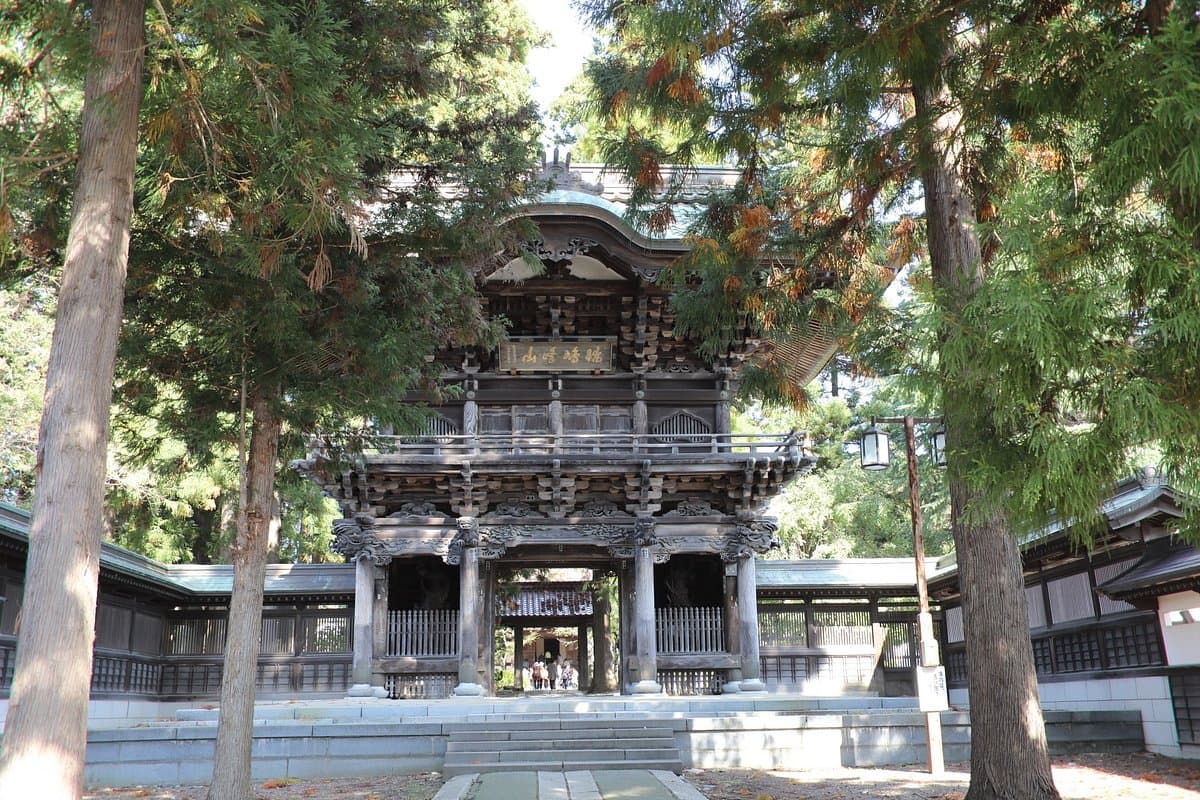
Visitors frequently highlight the temple's serene and quiet atmosphere, often describing it as a 'pine haven' or a 'quaint and serene' spot. The 500 Arhat statues are consistently praised for their overwhelming number, impressive detail, and individual uniqueness, with many finding them 'quite impressive' and 'amazing'. Several reviewers mention the helpfulness and excellent English proficiency of the staff or volunteers, who often provide insightful information and enhance the visitor experience. The main gate is also noted for its impressive appearance.
To fully appreciate the tranquility, consider visiting early in the day or during a weekday afternoon, as some visitors reported being the only ones there. An hour or so is generally sufficient to explore the main hall and admire the statues. Remember to remove your shoes before entering the main temple and stepping onto the wooden stairs. While some find the temple a bit challenging to locate, the effort is consistently described as worthwhile. The entry fee is reasonable, often around 300 Yen, which can be placed in an offering bowl.
The temple is situated in the temple district of Kitayama, Morioka. While it's described as 'tucked away' and 'a little difficult to locate', it is generally considered walkable from the city center, about a kilometer north past the Prefecture office. Reviewers suggest that despite the slight trek, it is 'definitely worth the effort'. There is no specific public transport mentioned in reviews, implying walking or a short taxi ride might be the most common ways to reach it.
A minor complaint noted by one visitor was the unclear signage within the temple, even in Japanese, and inconsistent marking of out-of-bounds areas. Entry procedures were also not always clearly described. To mitigate this, visitors can ask the often English-speaking staff for guidance upon arrival, as many reviewers found them to be very welcoming and informative.