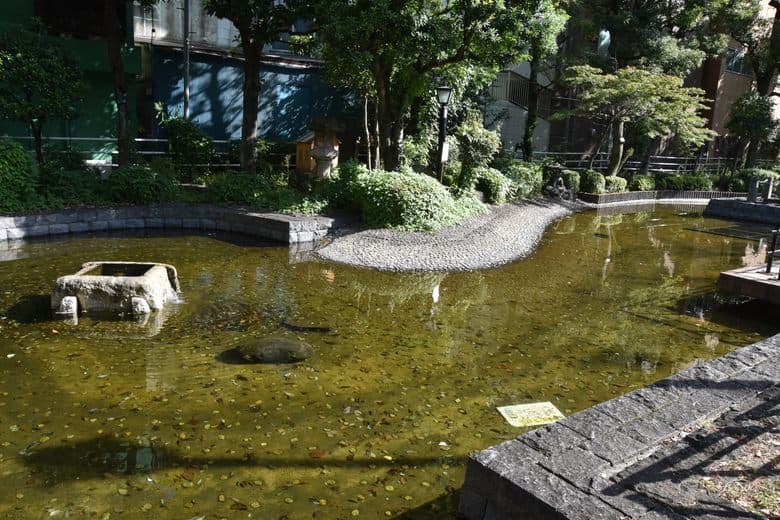
Ubagaike Pond, or the 'Hag's Pond,' is a historically significant site in Tokyo's Asakusa district, though its physical presence today is a modest recreation within a children's park. It marks the location of a chilling 6th-century legend about a serial killer known as the 'Hag' who preyed on travelers. This dark folklore deeply influenced Edo period artists like Utagawa Kuniyoshi and Hiroshige, making the pond an important, albeit subtle, cultural landmark for those interested in Japanese art and storytelling.
Visitors primarily come here for the historical and legendary context rather than for the pond itself, which is quite small. The site serves as a quiet memorial to a gruesome tale, offering a moment of reflection on the darker side of ancient Japanese folklore. There are no specific visitor reviews detailing experiences, but the Atlas Obscura entry highlights its significance for those interested in the macabre and historical legends.
To fully appreciate Ubagaike Pond, it is recommended to read about its legend beforehand. A visit typically takes no more than 15-30 minutes, as it is a small, commemorative site. There are no entry fees. It is best visited during daylight hours, perhaps as a brief detour if you are already exploring the Asakusa area, particularly Sensō-ji Temple, which is linked to the legend.
The pond is located in the Hanakawado neighborhood of Asakusa. It is easily accessible via public transport. The nearest major station is Asakusa Station, served by the Tokyo Metro Ginza Line, Toei Asakusa Line, and Tobu Skytree Line. From Asakusa Station, the pond is approximately a 10-15 minute walk. Look for the children's park in the Hanakawado area. Driving is not recommended due to limited parking and the excellent public transport network in Tokyo.
There are no common complaints about the site itself, given its nature as a small, historical marker. However, visitors expecting a large, scenic pond might be disappointed by its modest size. Managing expectations by understanding its role as a legendary site rather than a natural attraction will enhance the visit.