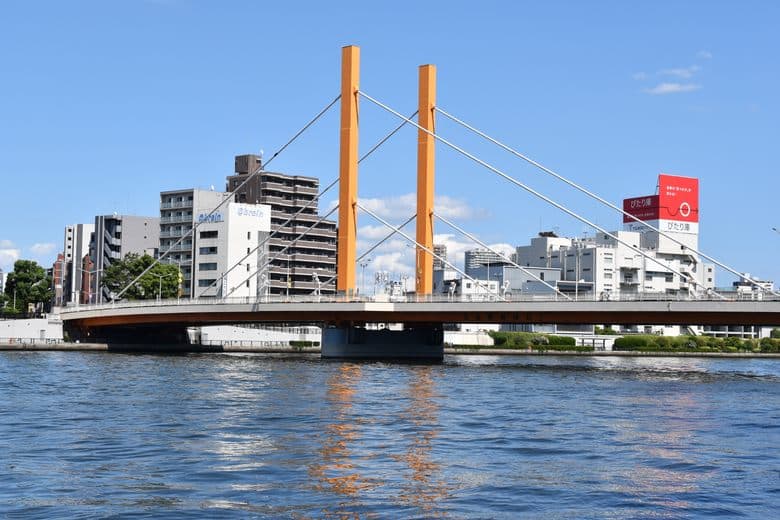
Kölner Aussicht, or "Cologne View," is a designated spot offering a perspective on Tokyo's Kiyosu Bridge. This bridge holds historical significance as it was modeled after the Deutz Suspension Bridge in Cologne, Germany, which was once considered one of the world's most beautiful bridges. Built as part of Tokyo's post-1923 earthquake reconstruction, the Kiyosu Bridge was designed for seismic resistance and durability, symbolizing hope and recovery for the city.
Visitors interested in urban history and architectural influences might find this spot intriguing. While the original intent was to evoke a "Cologne view" over the Sumida River, modern redevelopment with tall buildings has significantly altered the panorama. Reviewers note that the view is no longer as clear or unobstructed as it once was, making it less of a grand vista and more of a historical curiosity.
To make the most of a visit, it's recommended to combine it with a stroll along the riverside promenade or a walk across the Mannen Bridge, which runs almost parallel to Kiyosu Bridge. This allows for various angles of the Kiyosu Bridge itself, even if the specific "Cologne View" is compromised. Plan to spend no more than 15-30 minutes here, as it's a very specific, limited viewpoint. There are no facilities or amenities directly at the Kölner Aussicht, so bring any water or snacks you might need.
The Kölner Aussicht is located near the Kiyosu Bridge. Public transport is the most convenient way to reach the area. The nearest subway stations are Kiyosumi-shirakawa Station (Tokyo Metro Hanzomon Line and Toei Oedo Line) or Morishita Station (Toei Shinjuku Line and Toei Oedo Line). From either station, it's approximately a 10-15 minute walk to the Kiyosu Bridge area and the Kölner Aussicht. Look for signs pointing towards the Sumida River or Kiyosu Bridge. Driving is generally not recommended due to limited parking and heavy traffic in central Tokyo.
The primary complaint from visitors is the obstructed view due to contemporary high-rise buildings. To mitigate this, adjust expectations and focus on the historical context and the architectural details of the Kiyosu Bridge itself rather than anticipating a sweeping, unobstructed panorama. Visiting during daylight hours offers the best visibility, though the bridge can also be lit up at night, offering a different ambiance.