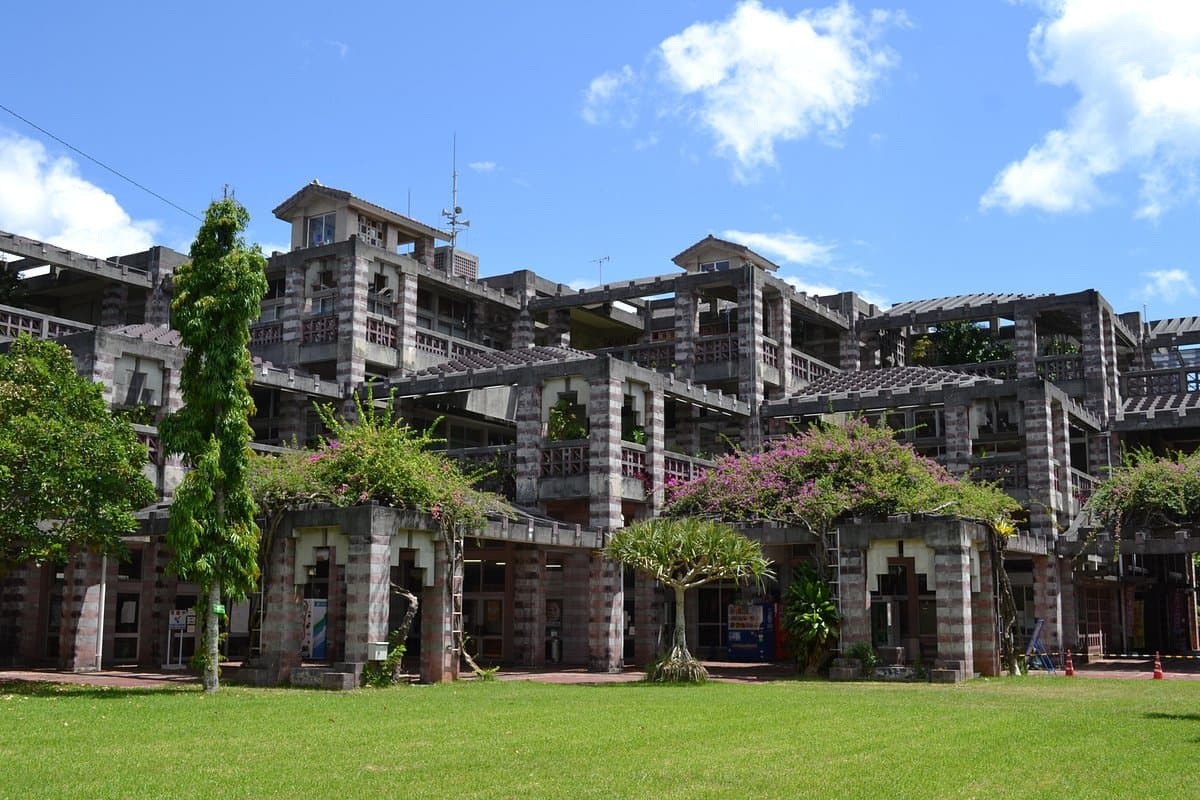
The Nago City Hall is an architectural marvel, recognized for its distinctive Brutalist style blended with traditional Okinawan influences. Designed by Team Zoo, it's not just a functional government building but a significant example of post-war Japanese architecture, featuring an open-air design and numerous shisa (Okinawan guardian lion-dogs) statues adorning its exterior.
Visitors consistently praise the building's unique appearance, noting the interesting interplay of concrete, greenery, and the numerous shisa, each with a different expression. Many find it a captivating subject for photography, appreciating the way light and shadow play on its complex structure. However, some reviewers find the Brutalist style to be imposing or out of place in a beach community, describing it as dark and foreboding. The interior is generally described as a typical government office, with low ceilings and fluorescent lighting, which may not be as visually striking as the exterior.
For those interested in architecture, particularly Brutalism, this site is considered a must-see. A visit typically takes about 15-30 minutes, primarily to admire the exterior and take photos. There isn't much to do inside for tourists, as it is a working government building. It's best visited during daylight hours to fully appreciate the architectural details and the shisa statues. There are no specific items to bring, but a camera is recommended for capturing its unique design.
The Nago City Hall is located at 1-1-1 Minato, Nago, Okinawa Prefecture, centrally located within Nago city. It is easily recognizable when driving along National Route 58. While specific public transport details are not frequently mentioned in reviews, its central location suggests it is accessible by local bus routes or a short taxi ride from major points in Nago. Parking is available for those driving, as many visitors mention driving past or stopping by car.
The primary complaint among visitors is the limited tourist appeal beyond its exterior architecture. While visually striking, there are no dedicated tourist facilities or exhibits, and the interior functions as a standard office space. To mitigate this, visitors should manage expectations and view it as a brief architectural appreciation stop rather than a comprehensive attraction. Combining a visit with other activities in Nago is recommended.