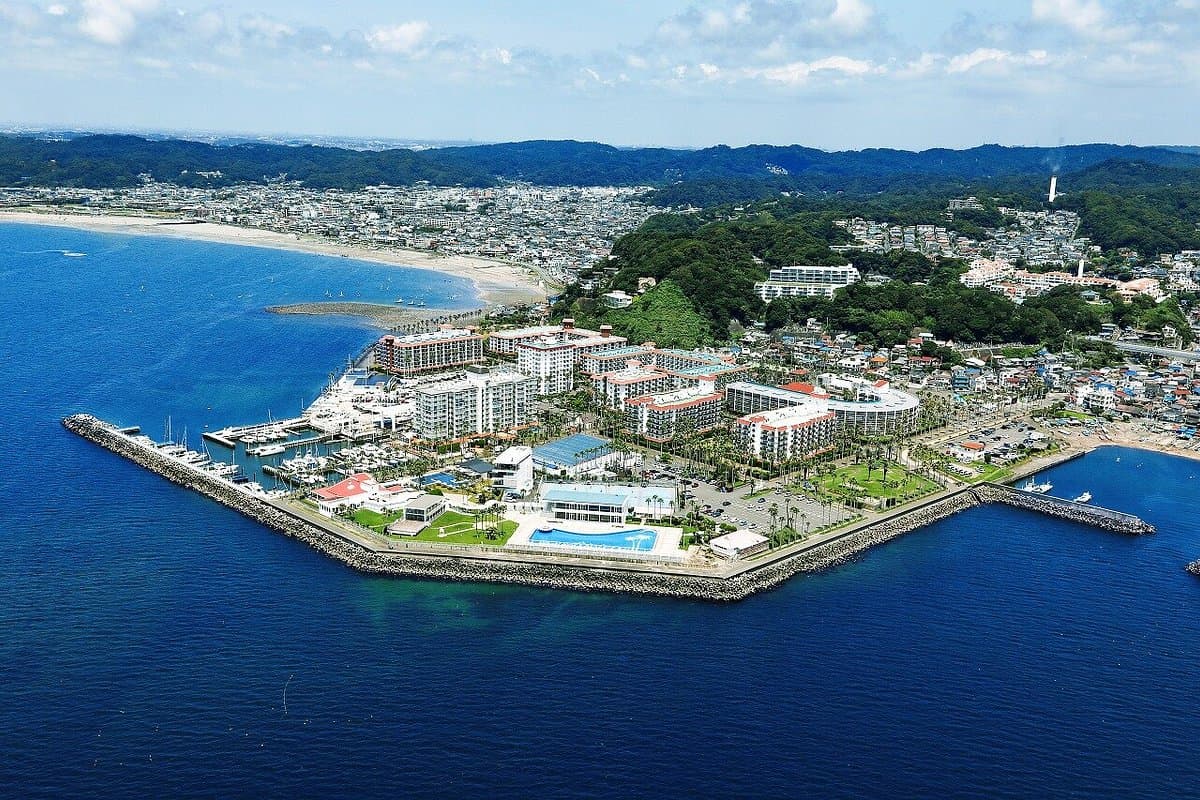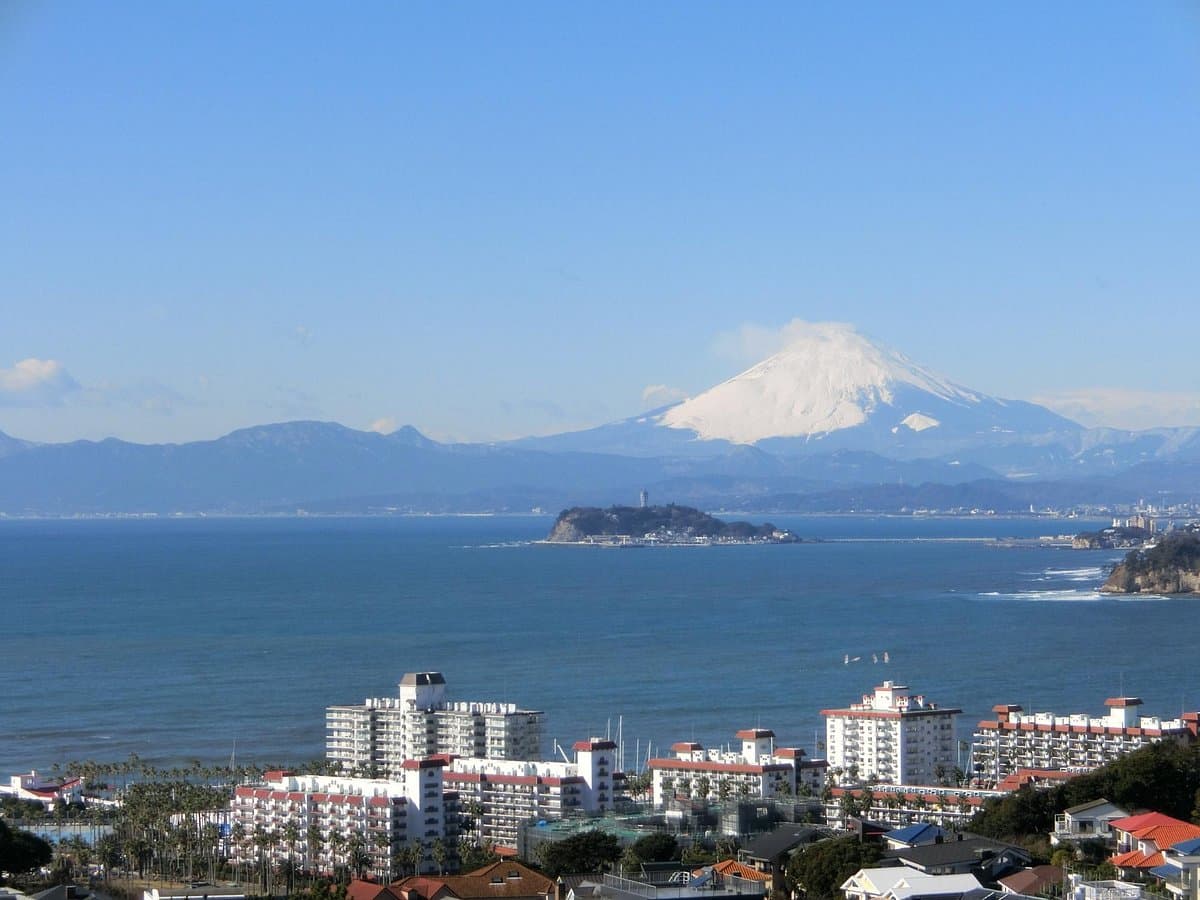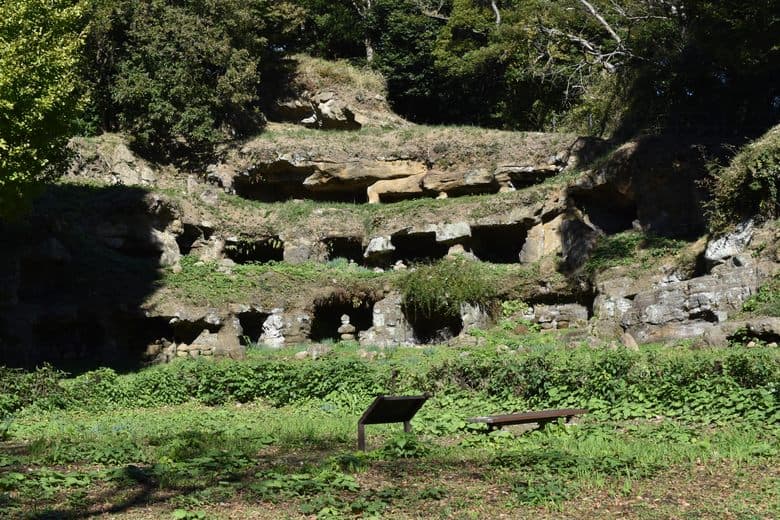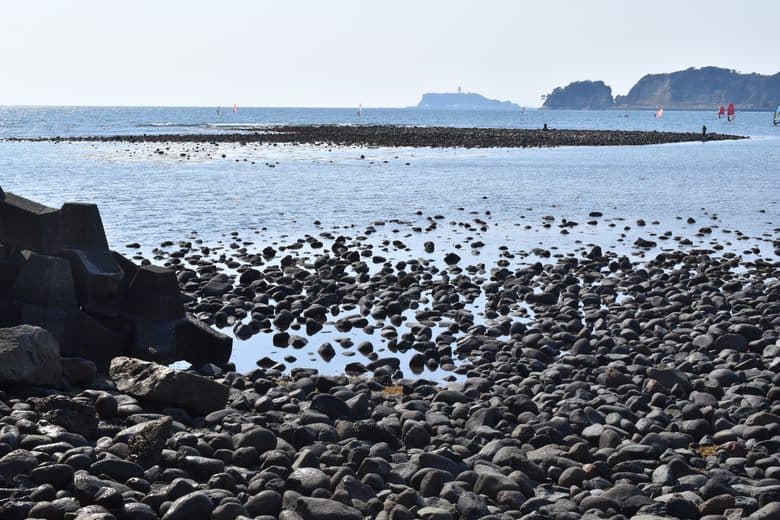
The Wakae Island Ruins are the remains of Japan's oldest artificial island, constructed in 1232 during Kamakura's period as the capital of medieval Japan. Built to provide a safe mooring for ships in the shallow Sagami Bay, which was prone to shipwrecks, this site highlights the historical importance of Kamakura as a bustling port for international trade. Declared a National Historic Site in 1968, it serves as a tangible link to the region's rich maritime past.
Visitors appreciate the historical significance of the island, noting its unique place in Japanese engineering and trade history. While not a grand structure, its age and purpose resonate with those interested in the practicalities of medieval life. Reviewers often mention the peaceful atmosphere of Zaimokuza Beach, from which the ruins are visible, making it a suitable spot for quiet reflection rather than an active exploration.
For a visit, allocate about 30 minutes to an hour. The best time to see the ruins is during low tide, as they become more prominent and, on rare occasions, are accessible by foot. It's advisable to check local tide charts beforehand. There is no entry fee, and the experience is primarily visual, so comfortable walking shoes for the beach are recommended. Bring a camera if you wish to capture the unique historical landscape.
To reach Wakae Island Ruins, visitors typically head to Zaimokuza Beach in Kamakura. The nearest train station is Yuigahama Station on the Enoshima Electric Railway (Enoden Line), which is about a 15-20 minute walk to the beach. Alternatively, Kamakura Station (JR Yokosuka Line) is a longer walk or a short bus ride away. Buses from Kamakura Station often stop near Zaimokuza Beach. Driving is also an option, though parking can be limited, especially during peak season.
Common complaints revolve around the ruins being less dramatic than expected, with some visitors finding them to be merely a pile of rocks. To mitigate this, manage expectations by understanding that this is an archaeological site, not a fully preserved structure. Focus on the historical context and the serene beach environment rather than expecting a grand monument.