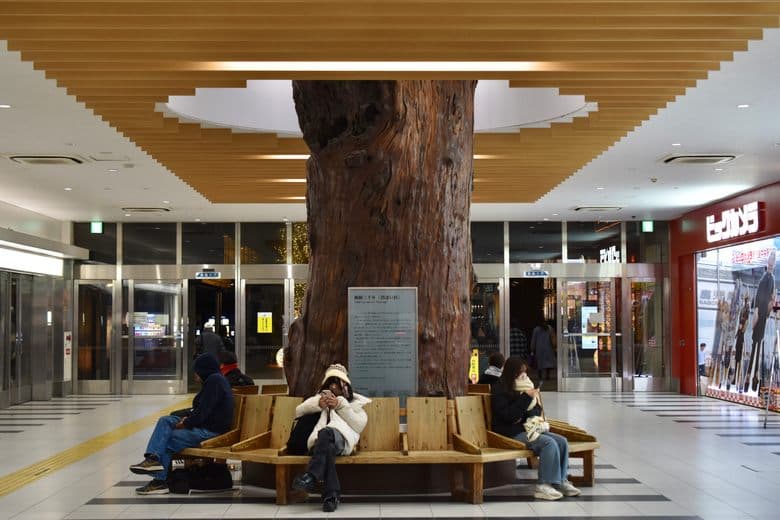
The Deai-sugi Cedar Tree is a remarkable natural exhibit situated within Kagoshima Chuo Station. This ancient Yakusugi cedar, originating from the UNESCO World Heritage site of Yakushima Island, is estimated to be over 3,000 years old. It stands as a testament to the island's unique ecosystem and the historical significance of these trees, which were once extensively logged by samurai but are now protected. The tree was gifted to the station to commemorate the inauguration of an express railway named after Yakushima, serving as a symbolic link between the island's natural beauty and the urban hub.
Visitors consistently praise the tree's impressive size and age, often noting its unexpected presence within a modern train station. Many appreciate it as a convenient and easily accessible photo opportunity, especially for those with limited time in Kagoshima. Reviewers highlight its role as a distinctive meeting point, making it easy to locate friends or family amidst the station's activity. The historical context, particularly its age and origin from Yakushima, adds to its appeal, prompting some to learn more about the island's natural wonders.
For a visit, no special preparation is needed. The tree is located directly at the West Exit of Kagoshima Chuo Station, making it impossible to miss. A quick stop of 5-10 minutes is sufficient for viewing and taking photos. There are benches surrounding the tree, offering a convenient spot to rest or wait. It's best to visit during off-peak hours if you prefer fewer crowds, though its central location means it's always somewhat busy. There is no entry fee, making it a free and accessible attraction.
Kagoshima Chuo Station is a major transportation hub, easily accessible by various means. It is the terminal station for the Kyushu Shinkansen (bullet train) and numerous local JR lines. Several city bus routes and the Kagoshima City Tram also stop directly at the station. The Deai-sugi Cedar Tree is located at the West Exit, a short walk from any platform or entrance within the station complex. Given its location inside the station, driving is generally not recommended unless you plan to use the station's parking facilities, which can be costly.
Common complaints are rare, but some visitors might find it less impressive if they are expecting a grand natural park rather than an indoor exhibit. To mitigate this, approach it as a unique historical artifact and a convenient landmark rather than a standalone natural wonder. Its primary function as a meeting point means it can get crowded, so patience is advised during busy periods.