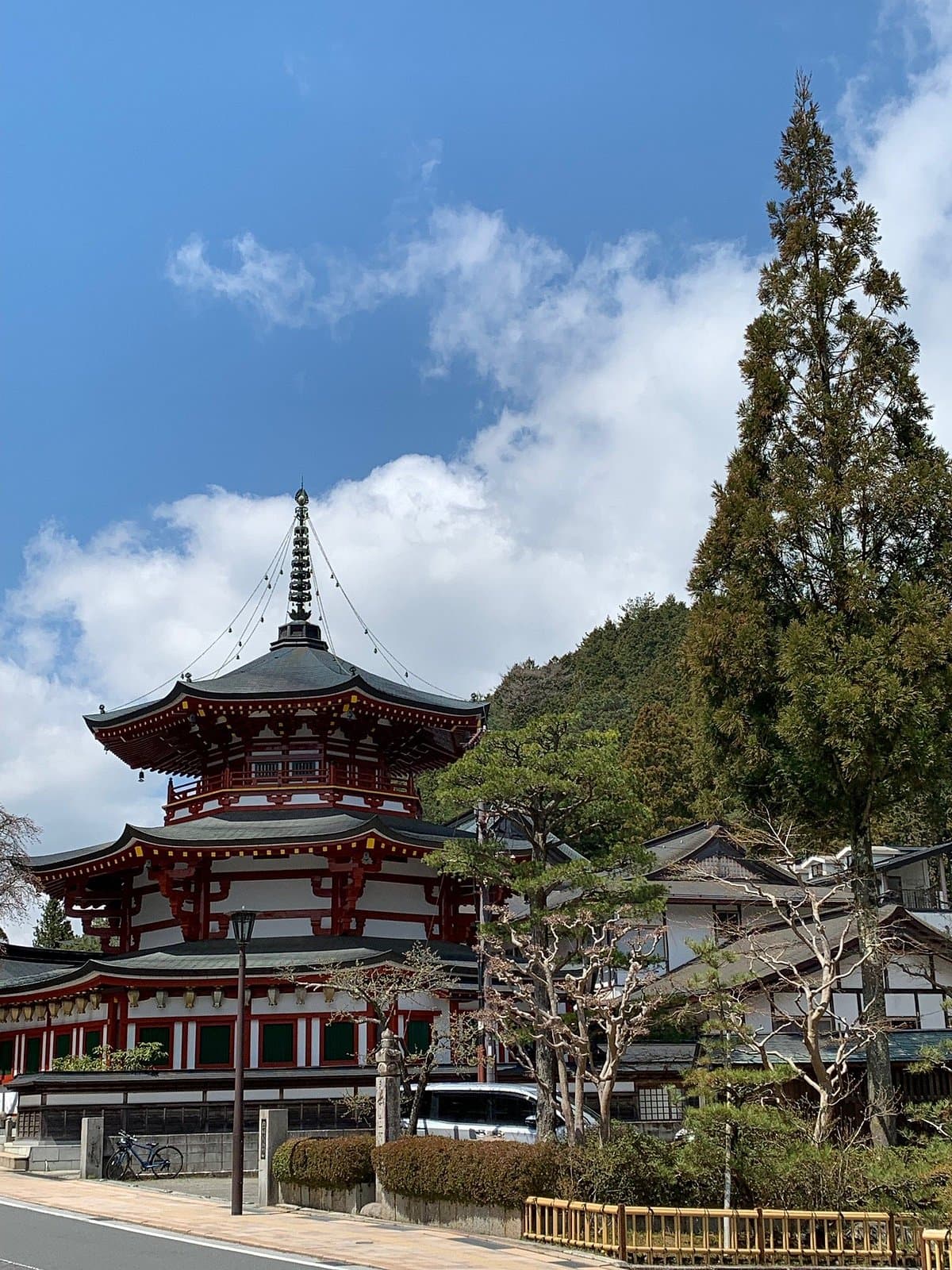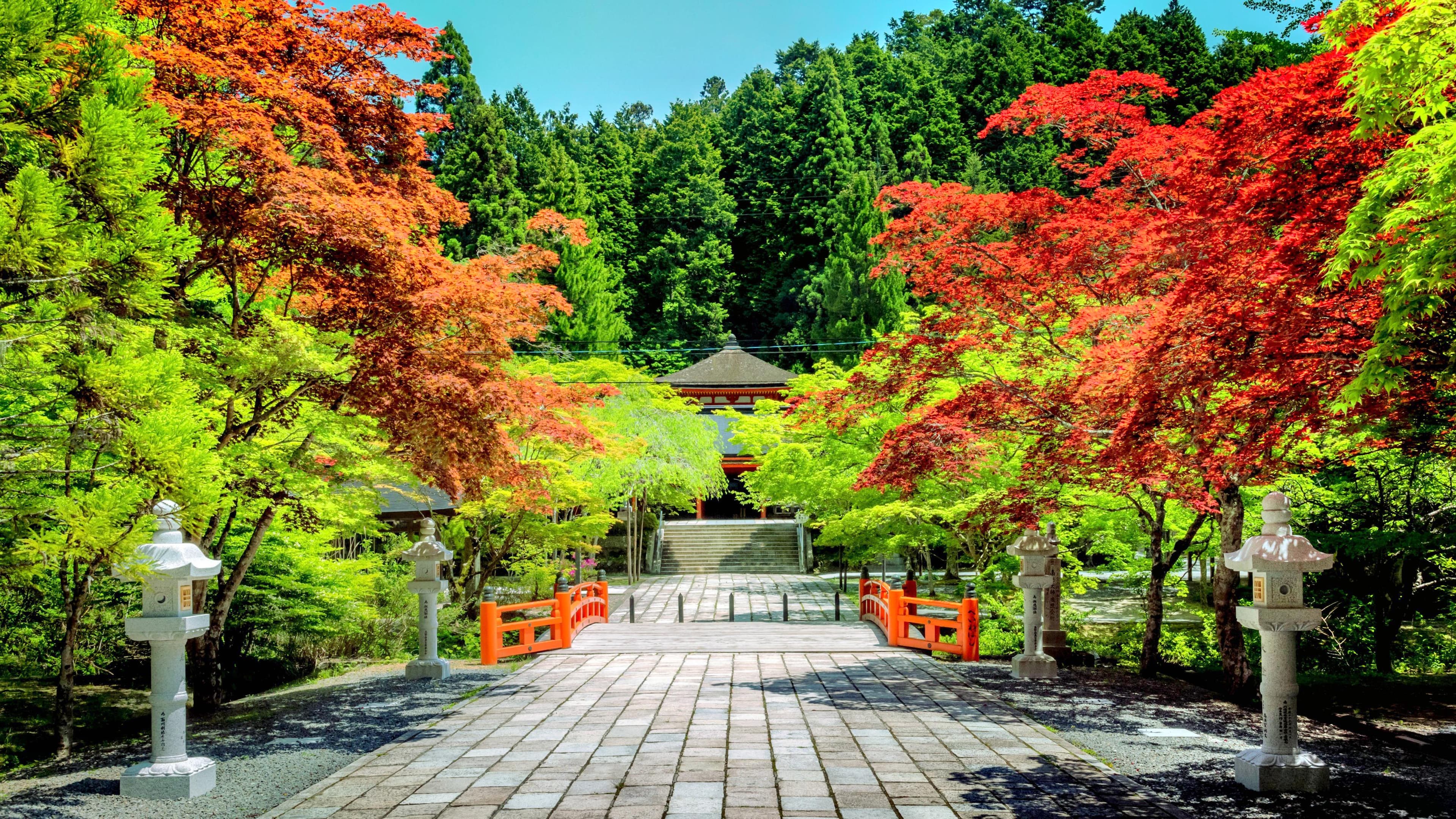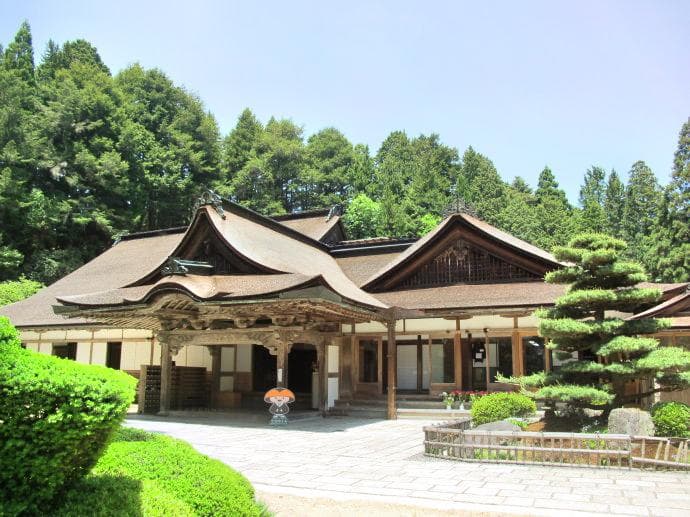
Kongobu-ji is the spiritual and administrative headquarters of Koyasan Shingon Buddhism, founded by Kobo Daishi (Kukai) over 1,200 years ago. While Koyasan itself is a vast temple complex, Kongobu-ji is considered its central pillar, embodying the rich history and profound teachings of this esoteric Buddhist sect. It's a place where visitors can connect with centuries of spiritual practice and architectural heritage.
Visitors consistently praise the temple's tranquil atmosphere and its impressive architectural features. The highlight for many is the Banryutei rock garden, the largest in Japan, which reviewers describe as 'magnificent' and 'awe-inspiring,' with its symbolic representation of two dragons. The interior, with its numerous tatami rooms, beautifully painted sliding doors (fusumae), and intricate calligraphy, also receives high acclaim. Many appreciate the opportunity to sit in silence, reflect, and enjoy the complimentary green tea and rice snack offered in the tea room, which several visitors found to be a very pleasant and unexpected experience. The presence of monks going about their daily activities adds to the authentic and atmospheric feel.
To make the most of your visit, plan to spend 1.5 to 2 hours exploring the complex. Arriving early in the morning, around 8:30 AM, is highly recommended by reviewers to avoid crowds and tour buses, allowing for a more peaceful and contemplative experience. Wear comfortable shoes that are easy to slip on and off, as you will need to remove them frequently when entering the temple buildings. Visitors suggest taking time to sit by the rock garden and simply observe, as this is where much of the tranquility lies. While photography is generally not allowed inside the main halls to protect ancient artifacts, the exterior and gardens offer ample photo opportunities.
Kongobu-ji is centrally located within Koyasan. From Koyasan Station, you can take a local bus directly to the Kongobu-ji-mae bus stop, which is right in front of the temple. Alternatively, many visitors walk from other key attractions in Koyasan, as the area is quite walkable. Parking is available for those driving, though public transport is generally recommended for navigating Koyasan. The temple is part of the larger Koyasan pilgrimage route, and its proximity to other significant sites like Danjo Garan makes it easily accessible.
A common point of confusion for some visitors is the sheer number of temples in Koyasan; some reviewers initially felt that after seeing one, they had seen them all. However, Kongobu-ji stands out due to its scale, historical significance, and unique features like the Banryutei garden and the complimentary tea service. To mitigate this, approach Kongobu-ji as the central hub of Koyasan, distinct from the many sub-temples, and allow sufficient time to appreciate its specific offerings rather than rushing through it.