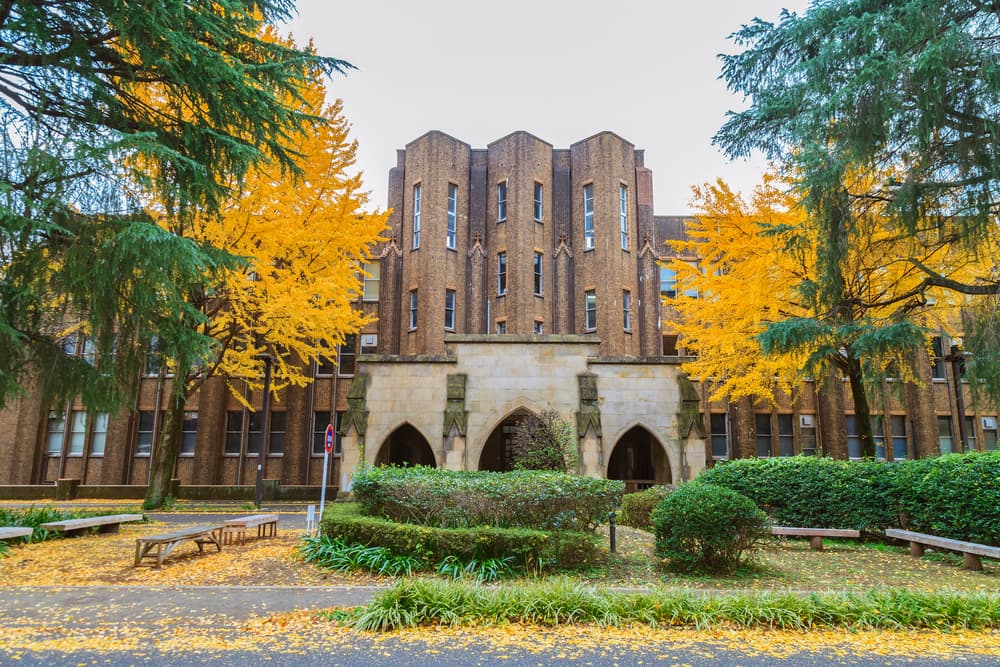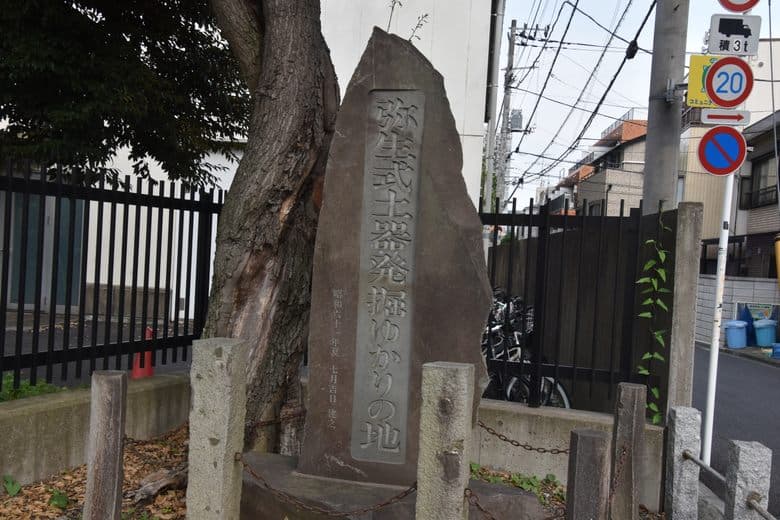
The Yayoi Archaeological Site is historically significant as the namesake location for Japan's Yayoi period (10th century B.C. to 3rd century A.D.), a transformative era when proto-Japanese people shifted from a hunter-gatherer lifestyle to an agricultural civilization and entered the Iron Age. The period is named after the Yayoi district where distinctive terracotta vessels were first unearthed in 1884. While the original discovery site was lost due to urban development, a later excavation in 1974 on the University of Tokyo's Asano campus uncovered a contemporary shell midden, which was designated as the "Yayoi 2-chōme archaeological site."
Visitors consistently note that the actual archaeological site itself is largely underwhelming. It is often described as a patch of ground, mostly covered with a blue tarp and overgrown with weeds, with only a nondescript marker indicating its historical status. Reviewers emphasize that there is very little to visually engage with, making it unsuitable for those seeking a typical tourist attraction. Its primary appeal is to those with a deep interest in Japanese archaeology or history, who appreciate the conceptual significance over physical remains.
For those determined to visit, a quick stop of 15-30 minutes is sufficient to see the marker and the covered site. There is also a "Memorial to the Site of the Discovery of the Yayoi Pottery" located just outside the Asano campus, which commemorates the local history rather than marking the exact discovery spot. A highly recommended detour for anyone in the area is the University Museum on the main Hongo campus, which exhibits an extensive collection of ancient earthenware, including Yayoi artifacts. The museum is free to enter and open from 10 AM to 5 PM, closed on Saturdays and Sundays.
The Yayoi 2-chōme archaeological site is situated at the back of the Asano campus of the University of Tokyo, specifically behind Faculty of Engineering Building 9. To reach the campus, visitors can use public transport to the Hongo district. From there, it's a walk up a sloping street. The Memorial to the Site of the Discovery of the Yayoi Pottery is found outside the Asano campus, on the left-hand corner when walking towards Hongo. While driving is possible, parking in central Tokyo can be challenging and expensive; public transport is generally recommended.
The main complaint from visitors is the lack of visible archaeological remains or interpretive displays at the site itself. To mitigate this, manage expectations by understanding that this is a historical marker rather than an excavated ruin. Supplement your visit with a trip to the University Museum to see actual artifacts and gain a better understanding of the Yayoi period.