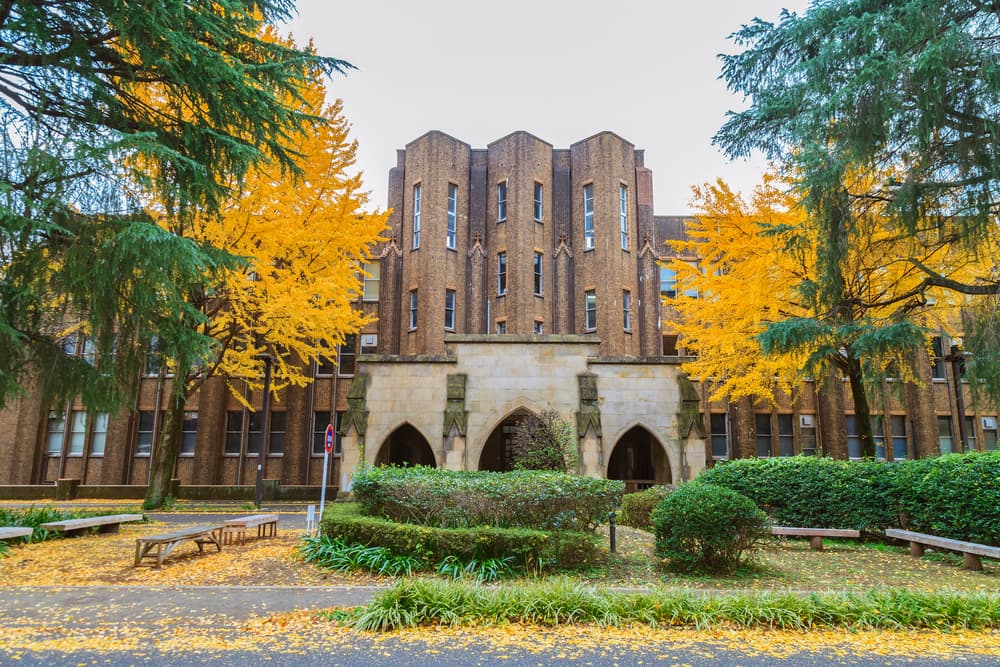
The University of Tokyo, founded in 1877 as Japan's first national university, is a world-class research institution that ranks among Asia's top universities and has produced 11 Nobel Prize winners. The Hongo campus, the main and historic heart of the university, is freely open to the public without registration or reservation required. The campus features a distinctive blend of European-influenced architecture from the Meiji era alongside modern buildings, creating an atmosphere that visitors consistently describe as peaceful, quiet, and intellectually inspiring.
Visitors consistently praise the campus's natural beauty and architectural heritage. The most celebrated features include the Akamon Gate (Red Gate), an Important Cultural Property that serves as the iconic entrance; the Yasuda Auditorium, a striking 1925 structure donated by industrialist Zenjiro Yasuda; and Ginkgo Avenue, where hundreds of ginkgo trees line the pathways. In autumn, these ginkgo trees turn brilliant golden yellow, creating what many reviewers describe as a stunning natural spectacle that justifies a visit during fall months (late October through November). The campus also features Sanshiro Pond, a serene water feature in the central green space, and numerous historic buildings with Gothic-influenced design. Visitors note that the campus feels refreshingly different from typical tourist areas in Tokyo—it is genuinely quiet, rarely crowded, and offers a genuine glimpse into Japanese academic culture. The university cafeteria is accessible to tourists and serves affordable, high-quality food in buffet style, allowing visitors to experience student life firsthand.
Practical advice from visitor experiences: Plan to spend 1-2 hours exploring the campus, though 2-3 hours allows for a more leisurely experience. Visit on a weekday morning or early afternoon to avoid the few crowds that do gather, particularly on weekends. The best time to visit is late autumn (late October to early November) when ginkgo leaves are at their peak; however, the campus is beautiful year-round with lush greenery in summer and a contemplative atmosphere in winter and rainy weather. Bring comfortable walking shoes, as the campus is large and involves considerable walking. The cafeteria is recommended for lunch or a light meal—visitors suggest arriving after 1:30 PM to avoid peak student meal times and to enjoy a wider selection of dishes. Drinks are complimentary. Photography is permitted throughout the campus. There is no formal entrance fee, and visitors can enter and exit freely through multiple gates. Bring a camera or smartphone for photography, particularly if visiting during ginkgo season. The campus is genuinely quiet on weekends and holidays, making these ideal times for a peaceful visit if you prefer solitude.
Getting there: The University of Tokyo is easily accessible by public transport. Take the Tokyo Metro Marunouchi Line or Chiyoda Line to Hongo-Sanchome Station; the Akamon Gate entrance is a clearly marked 5-minute walk from the station exit. Alternatively, the Todai-mae Station on the Oedo Line provides direct access. From Ueno Park (a major tourist hub), the university is approximately 10-15 minutes away by train or a 20-25 minute walk. Visitors note that the area is well-signposted in English. Driving is not recommended due to limited campus parking; public transport is the standard and most convenient option. The campus connects directly to Ueno Park at its southern boundary, making it easy to combine both attractions in a single outing.
Common complaints and mitigation: Some visitors mention that the campus can feel small compared to universities in their home countries, but this is actually part of its charm—the compact size makes it easy to explore thoroughly in a short time. A few reviewers note that the campus can feel isolated or lacking in surrounding amenities, but this quietness is precisely what attracts many visitors seeking respite from Tokyo's crowded tourist zones. The main gate is occasionally closed on holidays, so check ahead if visiting on a national holiday. Some visitors arrive expecting a grand, ornate entrance but find the Akamon Gate modest in appearance; however, this understated aesthetic is intentional and reflects Japanese design principles. Weather can affect the experience—rainy days create a moody, atmospheric quality that some visitors find appealing, while others prefer clear weather for photography.
