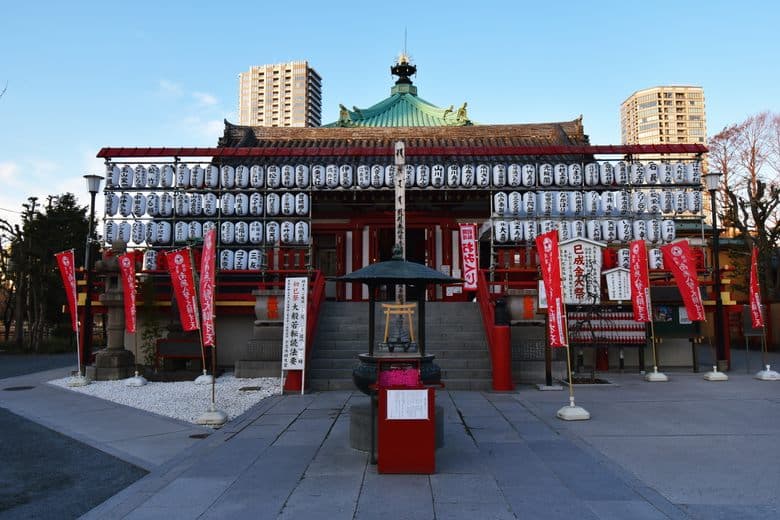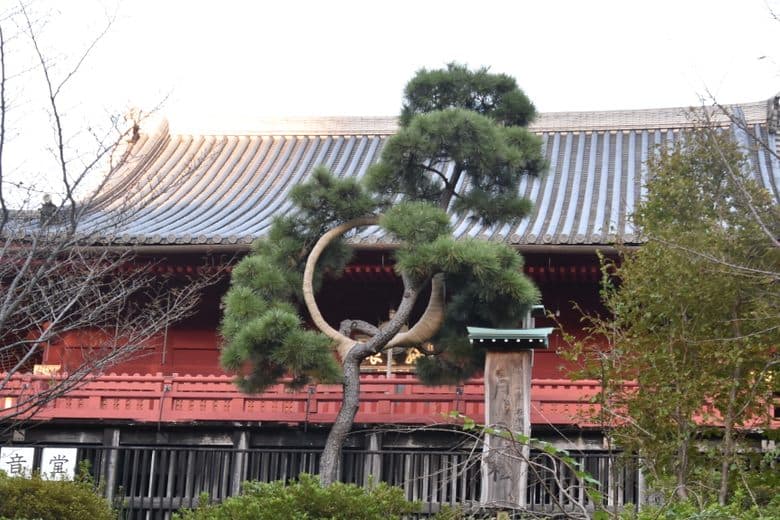
The Moon Pine Tree, or 'Tsuki no Matsu,' is a meticulously reconstructed horticultural marvel located within Tokyo's Ueno Park, specifically near the Kiyomizu Kannon-dō Temple. This tree is a living homage to a famous Edo-era landmark, immortalized in Hiroshige's 'One Hundred Famous Views of Edo.' Its distinctive feature is a long branch trained to form a perfect circle, through which visitors can frame a scenic view of Shinobazu Pond, reminiscent of a full moon.
Visitors consistently praise the tree for its unique aesthetic and the historical connection it provides. Many find it to be a charming and unexpected discovery within the bustling Ueno Park, offering a moment of tranquility and a picturesque photo opportunity. Reviewers often highlight the ingenuity of its reconstruction and the pleasant view it affords, especially when seen from the Kiyomizu Kannon-dō Temple's 'stage.' While not a primary destination for most, those who stumble upon it or seek it out often express delight at its beauty and the historical narrative it represents.
To fully appreciate the Moon Pine Tree, visitors should plan to spend about 15-30 minutes. The best time to visit is during the temple's opening hours (9 a.m. - 5 p.m.) to access the 'stage' of Kiyomizu Kannon-dō, which offers the iconic framed view. It's a relatively small attraction, so it's best combined with a visit to the temple itself and other sights within Ueno Park. No special items are needed, but a camera is recommended for capturing the unique perspective.
The Moon Pine Tree is situated within Ueno Park, which is easily accessible by public transport. The nearest major station is Ueno Station, served by multiple JR lines (Yamanote, Keihin-Tohoku, Utsunomiya, Takasaki, Joban) and Tokyo Metro lines (Ginza, Hibiya). From Ueno Station, the park entrance is a short walk, and the Kiyomizu Kannon-dō Temple, where the tree is located, is clearly signposted within the park. Walking from the station to the tree takes approximately 10-15 minutes. Parking is available around Ueno Park, but public transport is generally recommended due to traffic and parking costs in Tokyo.
A common complaint, if any, is that some visitors might overlook the tree entirely or not understand its historical significance without prior knowledge. To mitigate this, it's advisable to read up on its history before visiting or look for the informational plaques nearby. Some might also find the view less dramatic than expected if not viewed from the specific vantage point of the temple's stage. Ensure you visit during temple hours to access this optimal viewing spot.