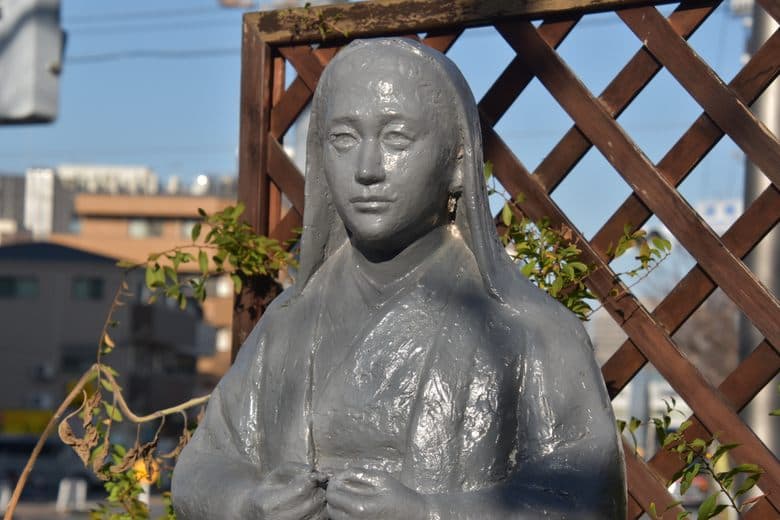
Maria of the Ant Village is a Catholic church with a profound historical significance, commemorating Satoko Kitahara, known as 'Maria Elisabeth,' who dedicated her life to the impoverished 'bataya' community in post-World War II Tokyo. This community, nicknamed the 'Ant Village,' faced constant threats of eviction during the city's reconstruction. The church's establishment in 1951, championed by Kitahara and others, not only provided a spiritual home but also helped the community secure its place, becoming a symbol of resilience and humanitarian effort.
Visitors often find the story behind the church deeply moving, appreciating the quiet reflection it offers away from Tokyo's bustling main attractions. The statue of Elisabeth Maria Kitahara serves as a focal point for understanding her legacy. While not a grand architectural marvel, its historical context and the powerful narrative of compassion and social justice resonate strongly with those who seek a deeper understanding of Japan's post-war social landscape.
To fully appreciate the site, it is recommended to spend about 30-60 minutes. The best time to visit would likely be during daylight hours when the church is open for quiet contemplation. There are no specific items to bring, but a respectful demeanor is encouraged. This site is more about historical reflection than active engagement, so visitors should manage their expectations accordingly.
The church is located in the Shiomi area, which is easily accessible by train. It is a few train stops between Tokyo Station and Tokyo Disney Resort. Visitors can take the JR Keiyo Line to Shiomi Station. From the station, the church is typically within walking distance, making it convenient for those relying on public transportation. Specific bus lines are not frequently mentioned in visitor accounts, but the train is the most straightforward option.
A common complaint, if any, might be the church's modest appearance, which some might find underwhelming if they are expecting a large, ornate cathedral. However, understanding its historical context and the profound story it represents helps mitigate this, transforming a simple structure into a powerful monument to human kindness and perseverance.
