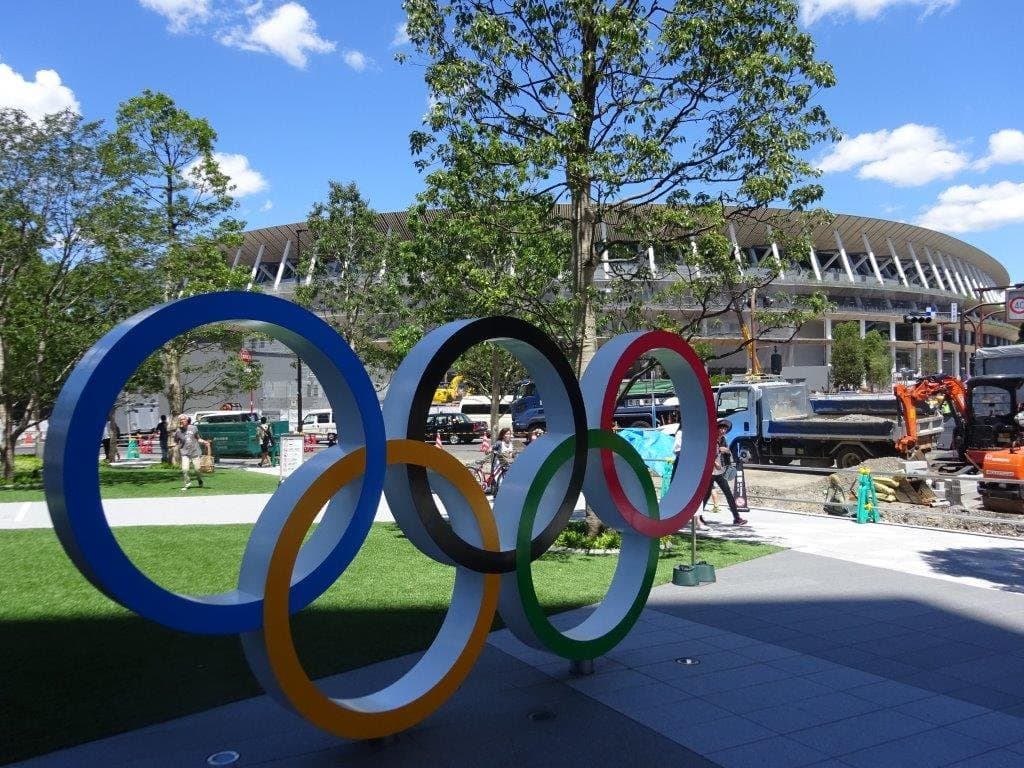
The Japan National Stadium, also known as the New National Stadium, stands as a significant landmark in Tokyo, primarily recognized as the main venue for the 2020 Tokyo Olympics and Paralympics. Its importance lies not only in its role as a major sports arena but also in its distinctive architectural design, which prominently features extensive use of wood, blending modern aesthetics with traditional Japanese elements. It serves as a symbol of contemporary Japanese design and a hub for major sporting and cultural events.
Visitors consistently praise the stadium's modern design and its spacious, well-maintained grounds. Many reviewers highlight the opportunity to see the Olympic venue up close, with some noting the presence of medalists' names inscribed, adding a historical touch. The stadium's exterior and surrounding area are often described as beautiful and spectacular, especially at night. Reviewers also appreciate the public accessibility of certain areas, including a public swimming pool and the main stadium itself, which is sometimes open free of charge, allowing for good views of the Tokyo skyline from the top floor.
For a visit, plan to spend about 1 to 2 hours exploring the accessible areas and taking photos. The best time to visit is during good weather to fully appreciate the outdoor spaces and architectural details. While some parts are free, checking the official website for current access policies and event schedules is advisable, as access can be restricted during events. Consider visiting in the evening to experience the stadium's illuminated atmosphere, which many find more captivating. Bringing a good camera is recommended for capturing the impressive architecture and city views.
The Japan National Stadium is conveniently located in Shinjuku City. It is accessible via public transport, with the nearest station being Kokuritsu-Kyōgijō Station on the Toei Oedo Line, or Sendagaya Station on the Chuo Line. From these stations, the stadium is just a short walk away. Its central location makes it relatively easy to reach from various parts of Tokyo, making it a good choice for weekday events as noted by some visitors.
A common point raised by some visitors attending events is that the pitch can seem a bit far from the seats, which might affect the viewing experience for certain sports. However, others counter that the seating angles are well-designed, offering clear views despite the distance. To mitigate this, if attending an event, consider checking seating charts beforehand to choose seats that offer the best perspective for your preferences.