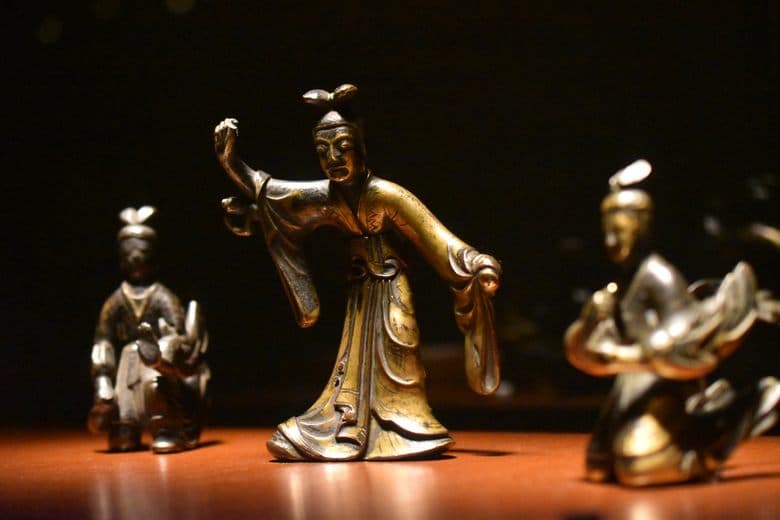
The Gallery of Horyuji Treasures is a distinctive part of the Tokyo National Museum, dedicated to preserving and displaying a collection of ancient artifacts from Hōryū-ji, one of Japan's oldest and most revered Buddhist temples. These treasures, originally bequeathed to the Imperial House, found their permanent home here, housed in a sleek, modernist building designed by renowned architect Yoshio Taniguchi. It stands as a testament to Japan's rich Buddhist heritage and innovative architectural design.
Visitors consistently praise the gallery's unique atmosphere and the quality of its collection. The dimly lit exhibit room on the first floor, with its almost futuristic flair, is frequently highlighted for showcasing a gorgeous collection of 7th-century gilt-bronze statuettes of Buddha and guardian deities. Reviewers often describe the experience as serene and contemplative, a stark contrast to the bustling main museum buildings. The upper floor, displaying calligraphy and lacquerwork, along with a digital exhibit on the mezzanine for more fragile items, also receives positive remarks for its thoughtful presentation.
To make the most of your visit, allocate about 1 to 2 hours specifically for the gallery, in addition to your time at the main Tokyo National Museum. Many suggest visiting in the late morning or early afternoon to avoid potential crowds, though the gallery is generally less busy than other parts of the museum. Bringing a good camera is recommended, as the lighting can be challenging for phone cameras, but check for any photography restrictions. Consider combining your visit with a stroll through the museum's Japanese garden for a complete experience.
The Gallery of Horyuji Treasures shares its location and access with the Tokyo National Museum. It is situated on the left-hand side as you enter the museum complex, beyond a wooded area. The Tokyo National Museum is easily accessible via public transport. The nearest train stations are Ueno Station (JR lines, Ginza Line, Hibiya Line) and Ueno-koen Station (Keisei Line), both within a 10-15 minute walk. From Ueno Station, follow signs for Ueno Park and then for the Tokyo National Museum. Driving is generally not recommended due to limited parking and excellent public transport options.
A common point of feedback is that the gallery can be a bit challenging to find within the large museum complex due to its somewhat secluded location. Visitors recommend consulting a map of the museum grounds upon arrival to easily navigate to the gallery. While the dim lighting enhances the ambiance, some visitors with visual impairments might find it a bit dark, so planning accordingly is advisable.