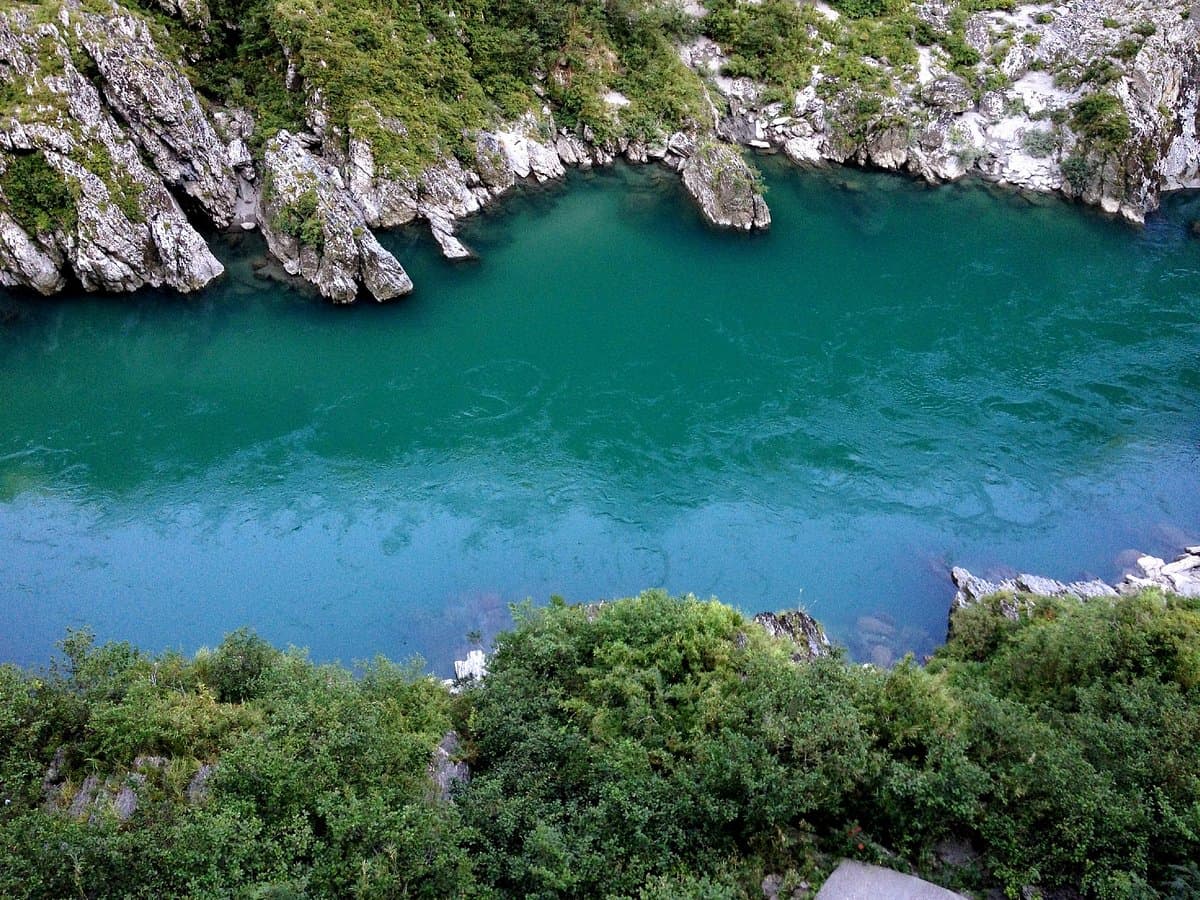
Oboke Koboke is a 200-million-year-old river gorge formed by the Yoshino River cutting through Shikoku's mountains. The name derives from the Japanese concept that the canyon is so narrow and treacherous that even taking large steps (oboke) or small steps (koboke) is dangerous. The area showcases dramatic rock formations, steep mountainsides, and pristine natural landscape largely untouched by development, making it a rare glimpse of Japan's wilderness.
Visitors consistently praise the natural beauty and peaceful atmosphere of the gorge. The primary activity is the motorized sightseeing boat cruise, which takes approximately 25-30 minutes and accommodates about 20-25 people. Reviewers note that the boat ride provides excellent close-up views of the rock formations and river from water level, with the experience being particularly rewarding in spring and summer when vegetation is lush. However, a significant drawback is that all commentary is delivered in Japanese only; while English pamphlets are available at the ticket counter, many non-Japanese speakers report feeling they missed geological and historical context. The boat ride costs approximately ¥1,080 (USD 10). Several visitors mention that views from the parking lot and roadside are also impressive, and some found the boat cruise unnecessary if time is limited. Whitewater rafting is available through local operators like Happy Raft, which offers English-speaking guides and pick-up service from nearby Awa-Ikeda Station; these experiences receive enthusiastic reviews from families and adventure seekers.
Practical advice: Arrive before 2 PM to ensure adequate daylight in the valley, as the narrow gorge becomes shadowed in late afternoon. Wear comfortable walking shoes, as there is an 80-meter descent from road level to the boat boarding area, with some steep sections and steps (though a motorized cart assists those with mobility issues). Life jackets are mandatory and provided. If you cannot understand Japanese, read the English pamphlet before boarding to learn about rock formations and geological features. The boat ride is calm and suitable for children and elderly visitors, though small children may find the descent challenging. Consider combining this visit with the nearby Iya Valley (accessible via Prefectural Route 32) for a more comprehensive gorge experience. A visitor center on the opposite side of the river (15-20 minute walk) offers folklore and mineral exhibitions. Bring cash, as some facilities may not accept cards. The area has limited dining options; a cafe operates behind the tour office, but it is advisable to eat before arriving or bring snacks.
Getting there: Oboke is accessible by train via the JR Awa-Ikeda Station on the Yoshino River Railway line, which offers spectacular views during the journey itself. From Awa-Ikeda Station, local buses or taxis can reach the gorge (approximately 15-20 minutes). However, public transport is infrequent, and visitors without a car report limited flexibility. Driving is recommended: the gorge is located along National Route 32, which winds through the canyon. The drive from Okayama takes approximately 2-3 hours. Parking is available near the boat boarding area, though it can become crowded during peak season (spring and summer). The narrow mountain roads are winding and can be intimidating for inexperienced drivers, particularly in winter or poor weather. If driving, note that the road is shared with a railroad line, creating a somewhat industrial feel despite the natural beauty.
Common complaints and mitigation: The lack of English commentary is the most frequent complaint; mitigate this by reading the provided English pamphlet before boarding and researching rock formations online beforehand. Some visitors feel the boat cruise is overrated or not worth the time; this is often because they expected more dramatic whitewater rafting rather than a leisurely cruise. If you seek adventure, book a rafting tour instead. Weather can affect the experience: rain, snow, or strong wind may cancel boat service or reduce visibility. Check weather forecasts and call ahead during winter months. Peak season (spring and summer) brings long queues; visit on weekdays or arrive early to minimize wait times. The industrial infrastructure (power lines, railroad, highway) visible from some angles detracts from the pristine natural feel for some visitors; focus on water-level views from the boat or the visitor center area to minimize this visual impact.