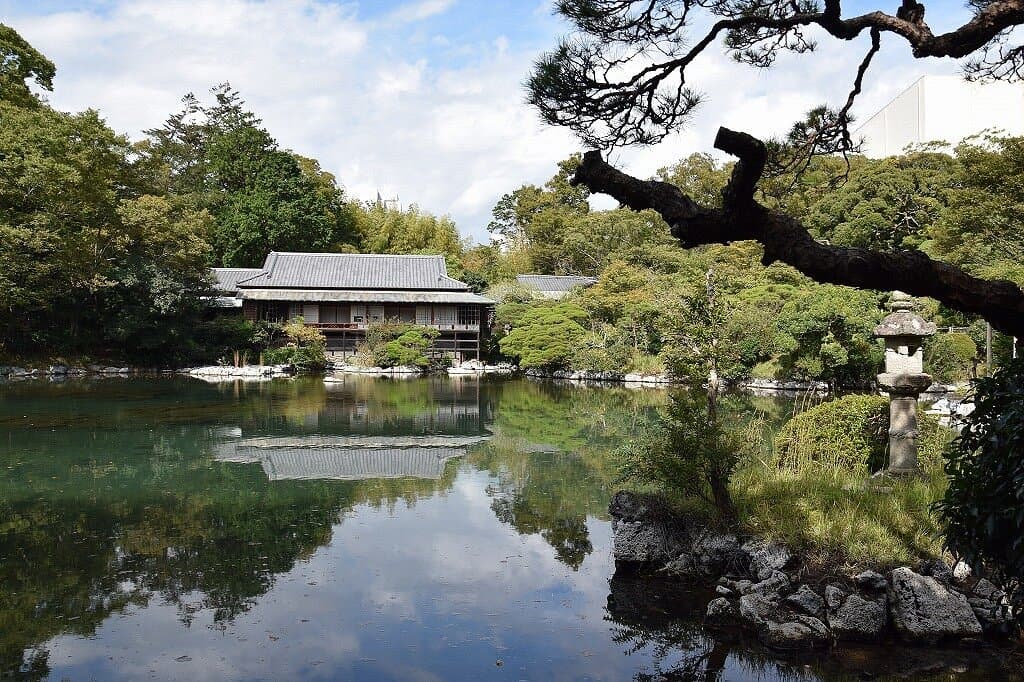
Rakujuen Park is a historical garden and former imperial villa, originally the property of Prince Komatsu Akihito. It stands out as a multifaceted attraction in Mishima, combining beautifully maintained gardens, a small zoo, and a museum within the old imperial residence. Its significance lies in preserving a piece of imperial history alongside natural beauty, offering a tranquil escape and educational experience.
Visitors consistently praise the park's convenient location directly across from Mishima Station, making it an easy first or last stop. Many highlight the well-maintained grounds, diverse plant life (often labeled in both Japanese and English), and the peaceful ambiance, especially compared to more crowded attractions in larger cities. The park's appeal to families is frequently mentioned, with attractions like a retro merry-go-round, a 'bean train,' and a small zoo featuring capybaras, Leicester pandas, and Yonaguni horses. The Chrysanthemum festival in autumn is a particular draw, with many reviewers recommending a visit during this season for the vibrant displays and pleasant weather.
For a fulfilling visit, allocate at least 1.5 to 2 hours to explore the gardens, museum, and children's areas. Reviewers suggest visiting during the autumn foliage season for the most picturesque views and to avoid the intense summer heat and mosquitoes. Bringing insect repellent is advisable if visiting in warmer months. While the pond's water levels can be low, revealing interesting volcanic rock formations, some visitors find this less appealing. Consider taking the free guided tour of the villa, though it's often only in Japanese. Coin lockers are available at a lower price than those at the station, which can be useful for luggage.
The park's accessibility is a major advantage, being just a 2-minute walk from the South Exit of JR Mishima Station. This makes it extremely convenient for those arriving by train. No specific driving or parking information is consistently mentioned in reviews, suggesting public transport is the preferred method of arrival.
A common complaint among some visitors concerns the small zoo, with a few reviewers noting that the animal enclosures appear haphazard or that some animals seem underfed. While this sentiment is not universal, those expecting a large, modern zoo might be disappointed. To mitigate this, adjust expectations and focus more on the park's botanical and historical aspects rather than the zoo as a primary draw. The park's main entrance near the station can be busy, but reviewers note that the interior quickly becomes quiet and serene.