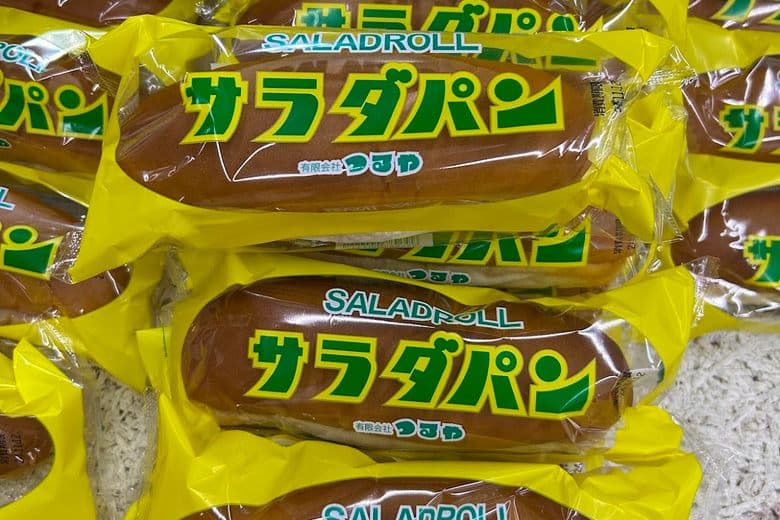
Kinomoto Tsuruya Bakery holds a special place in Japanese culinary history as one of the few establishments still producing 'salad bread' (sarada pan). This unique sandwich, consisting of a soft white bun filled with Kewpie mayonnaise and pickled radish, originated in the post-World War II era as an initiative to enhance the caloric value of school lunches. Its enduring presence makes the bakery a fascinating stop for those interested in regional food traditions and historical adaptations.
Visitors consistently praise the distinctive taste of the salad bread, often describing it as surprisingly delicious despite its simple ingredients. Many are drawn by the novelty and historical significance, making a special trip to Kinomoto just to try it. Reviewers often highlight the soft texture of the bun and the savory-tangy combination of the mayonnaise and pickled radish. While the salad bread is the main draw, the bakery's 'sandwich' (sandouitchi), featuring fish-based ham and mayonnaise on round white bread, is also a local favorite and receives positive mentions for its comforting simplicity.
To fully enjoy the experience, plan to spend about 15-30 minutes at the bakery, allowing time to purchase your items and perhaps enjoy them nearby. It's advisable to visit earlier in the day, as popular items like the salad bread can sell out. There are no specific items to skip, as both the salad bread and the fish-ham sandwich are well-regarded. Bringing cash is recommended, as smaller, traditional establishments in Japan may not always accept credit cards.
Kinomoto Tsuruya Bakery is easily accessible by public transport. Kinomoto is a stop on the local train line from JR Maibara station. JR Maibara station itself is a major hub on the shinkansen (bullet train) route between Tokyo and Kyoto, making it convenient for travelers coming from either direction. Once at Kinomoto station, the bakery is typically within walking distance, allowing visitors to explore the tranquil town.
Common complaints are rare, but some visitors might find the flavors of the salad bread to be very subtle or unexpected if they are accustomed to more complex Western sandwiches. To mitigate this, approach the experience with an open mind, appreciating it as a historical and regional specialty rather than a conventional sandwich. The simplicity is part of its charm and historical context.