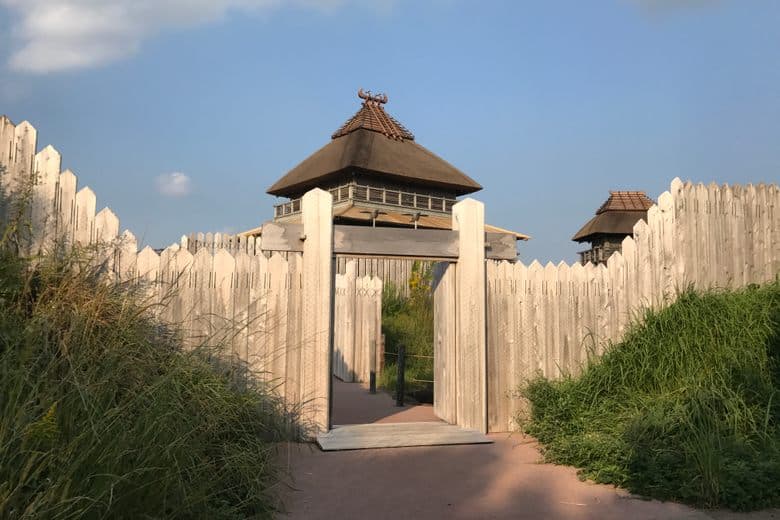
Yoshinogari Historical Park is the largest and most significant archaeological site from Japan's Yayoi period (300 B.C. to 250 A.D.). It offers an unparalleled opportunity to understand the transition from hunter-gatherer societies to settled agricultural communities in ancient Japan. The park meticulously reconstructs a vast ancient settlement, complete with pit dwellings, raised granaries, and impressive fortifications, providing a vivid picture of daily life and societal structures from over two millennia ago.
Visitors consistently praise the park's scale and the quality of its reconstructions, noting how well it brings history to life. Many reviewers highlight the engaging exhibits and the opportunity to walk through the recreated villages, which helps visualize the ancient lifestyle. The museum, though small, is often mentioned for its well-preserved artifacts, including pottery, tools, and burial pots, which provide valuable context. Families with children particularly appreciate the interactive elements and the open spaces for exploration.
To make the most of your visit, plan for at least 2-3 hours, though some visitors recommend half a day to fully explore the extensive grounds. Comfortable walking shoes are essential due to the park's size. Bringing water, especially during warmer months, is advisable as the park is largely outdoors. Reviewers suggest visiting in the morning to avoid crowds and the midday heat. Consider checking the park's schedule for special events, such as Yayoi-period recreations, which offer a deeper immersive experience.
The park is accessible by train. The closest stations are Yoshinogari Kōen Station or Kanzaki Station. From Yoshinogari Kōen Station, the park entrance is about a 15-minute walk. If arriving at Kanzaki Station, visitors can admire its Yayoi-period granary-inspired architecture and the Himiko statue before heading to the park. Driving is also an option, with parking available on-site. Public transport is generally reliable and convenient for reaching the park.
A common complaint among some visitors is the sheer size of the park, which can be tiring for those with limited mobility or young children. To mitigate this, consider renting a bicycle at the park entrance or utilizing the park's shuttle bus service, which runs between key areas. Another point raised is the limited availability of English explanations in some areas, though the visual nature of the reconstructions often compensates for this.