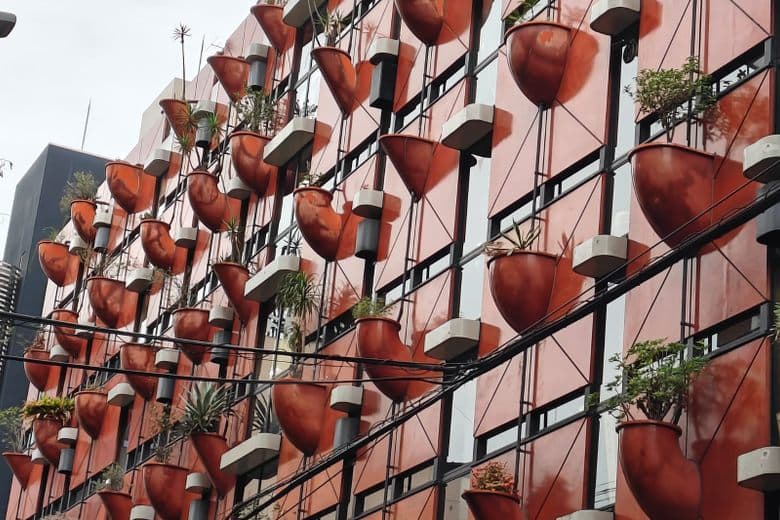
The Organic Building, conceived by Gaetano Pesce and opened in 1993, is a distinctive architectural landmark in Osaka. It's notable for its dark fiberglass exterior, from which over eighty varieties of plants protrude, each nestled within a 'trumpet' shaped planter equipped with an irrigation system. This design was revolutionary for its time, creating a living facade that integrates nature directly into the urban fabric and serves as an office for a food processing company specializing in seaweed.
Visitors consistently find the building to be a striking visual anomaly, a green oasis in a concrete jungle. Many appreciate the innovative approach to urban greenery and the sheer variety of plant life visible on the facade. It's often described as a great spot for unique photography, particularly for those interested in modern architecture or sustainable design. The building's accessibility, allowing close-up views, is also frequently praised.
To fully appreciate the Organic Building, a visit of about 15-30 minutes is sufficient, primarily for observation and photography. There's no internal access for tourists, so the experience is entirely external. It's best viewed during daylight hours to fully appreciate the plant life and architectural details. Consider combining your visit with other attractions in the Shinsaibashi or Amerikamura areas, as the building is a quick stop rather than a standalone destination.
The Organic Building is conveniently located in the Shinsaibashi district. The nearest subway station is Shinsaibashi Station, served by the Midosuji Line and Nagahori Tsurumi-ryokuchi Line. From the station, the building is just a short walk, typically less than 5-10 minutes. Look for the distinctive green facade among the surrounding commercial buildings. As it's in a busy urban area, public transport is highly recommended; parking options are limited and expensive.
There are no significant complaints about the Organic Building itself, as it is simply an exterior architectural sight. The only potential 'complaint' might be if visitors expect an interactive experience or interior access, which is not available. Manage expectations by understanding it's a visual attraction best enjoyed for its unique design and photo opportunities.
