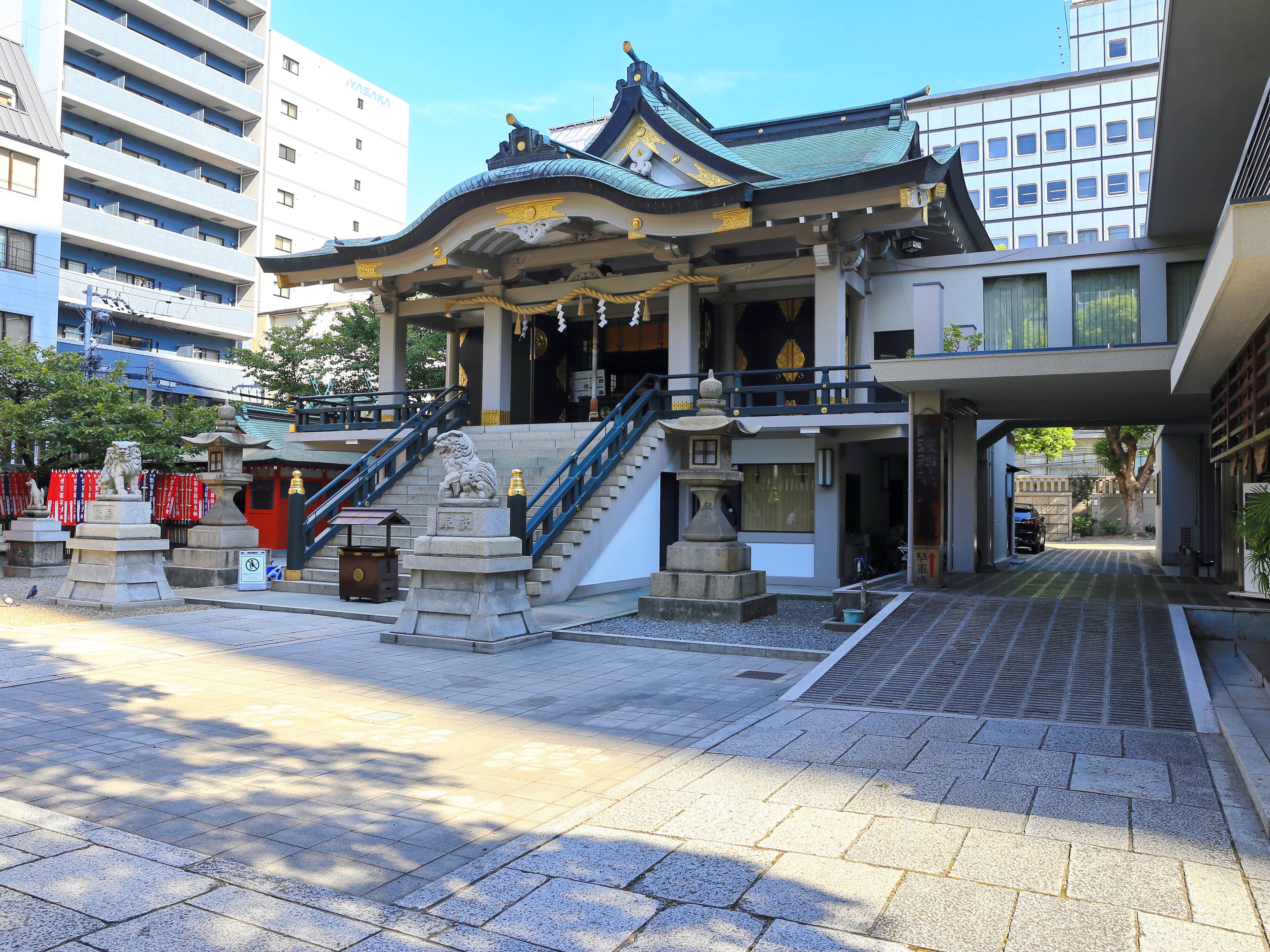
Namba Jinja Shrine is one of Osaka's oldest shrines, offering a serene contrast to the surrounding urban environment. Despite its central location amidst office buildings and busy roads, it provides a quiet space for reflection and a glimpse into traditional Japanese culture. The shrine is particularly notable for its unique main hall, which is shaped like a large stone lion with an open mouth, a feature that many visitors find distinctive and worthy of a photograph.
Visitors consistently praise the shrine's peaceful ambiance, often describing it as a "pure land" or "healing spot" within the city. Many appreciate the ancient trees that shade the grounds, contributing to a solemn and tranquil atmosphere. The shrine's compact size is frequently mentioned; while some find it small, others see this as an advantage, allowing for a quick yet meaningful visit. The lion-shaped building is a major draw, with several reviewers highlighting it as the most interesting aspect. Some visitors also note the shrine's popularity among locals, suggesting it's a place for genuine worship rather than just a tourist attraction.
For a visit, plan to spend approximately 30 minutes to an hour. The best time to visit is during daylight hours, especially on a weekday, to experience its tranquility without large crowds. There's no specific attire required, but respectful behavior is always appreciated in religious sites. Reviewers suggest that it's not a destination to go out of your way for, but rather an excellent addition if your itinerary already brings you to the Namba area or Midosuji Avenue. If you happen to be staying nearby, it makes for a pleasant morning or afternoon stroll.
The shrine is conveniently located on Midosuji Avenue, making it easily accessible by public transport. It is situated in Chuo Ward, Osaka, at 4 Chome-1-3 Bakuromachi. Visitors often mention its proximity to hotels and busy roads, indicating good connectivity. While specific train or bus lines aren't detailed in reviews, its central location implies numerous options. Walking from nearby stations in the Namba area is feasible and often recommended by those who stumbled upon it.
A common complaint is the shrine's small size, with some visitors feeling there isn't much to see beyond the lion statue. To mitigate this, adjust your expectations and view it as a brief cultural interlude rather than a major sightseeing destination. Focus on the unique architecture and the peaceful atmosphere it offers. If you're looking for extensive grounds or multiple grand structures, this shrine might not meet those expectations, but for a moment of quiet contemplation, it serves its purpose well.
