Imashirozuka Kofun is the largest ancient kofun tomb in the Yodo River basin and dates to the 6th century. It is believed to be the tomb of Emperor Keitai, though the Imperial Household Agency declined to grant it official protection, assuming the emperor was buried elsewhere. This administrative decision paradoxically preserved the site's accessibility: unlike many protected imperial tombs, visitors can walk around the mound and climb its slopes. The keyhole-shaped mound, characteristic of elite kofun burials, partially collapsed due to an earthquake in 1596 (not, as once believed, from Oda Nobunaga's 16th-century castle construction on the site).
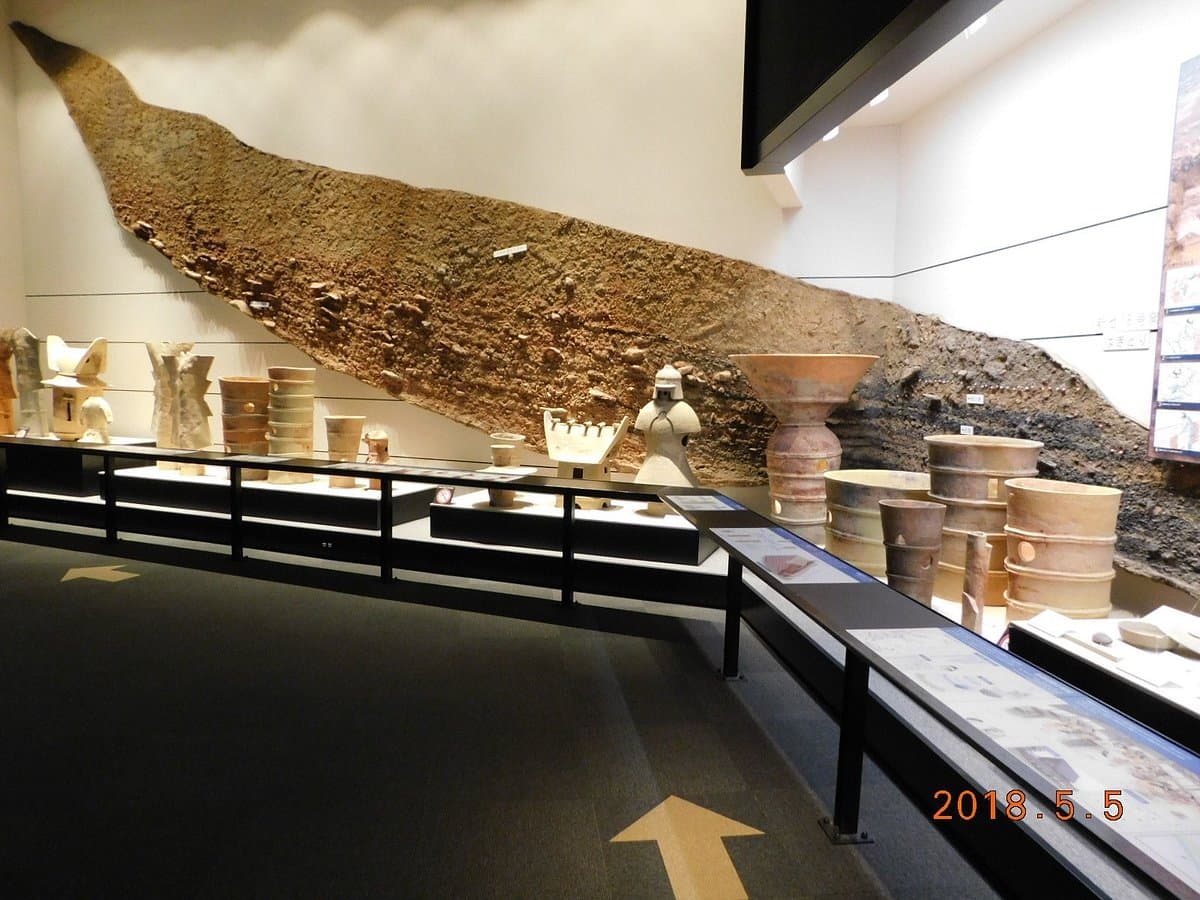
What makes Imashirozuka Kofun exceptional is its reconstruction of a haniwa ritual precinct. Haniwa are terracotta figures—cylindrical, anthropomorphic, zoomorphic, or architectural—that were placed on and around kofun mounds from the 3rd to 6th centuries. They likely served spiritual protective or commemorative functions. Most kofun sites have been excavated and their haniwa removed to museums; Imashirozuka Kofun uniquely features an on-site reconstruction of these figures arranged as they would have been in antiquity, creating an effect comparable to China's famous terracotta army of Emperor Qin Shi Huang. This makes the site particularly valuable for understanding ancient Japanese funerary practices without requiring a museum visit.
Visitors should plan 1.5 to 2 hours for a thorough visit. The site is now a public park with walking paths around the mound. Wear comfortable walking shoes, as the terrain is uneven and climbing the mound requires moderate physical effort. The best time to visit is early morning or late afternoon to avoid crowds and heat, particularly in summer months. The site is free to enter and has no formal opening hours, making it accessible year-round, though weather can affect path conditions. Bring water and sun protection, as there is minimal shade on the mound itself.
Getting there: Imashirozuka Kofun is located in Takatsuki, approximately 30 kilometers north of central Osaka. The nearest train station is Takatsuki Station on the JR Kyoto Line or Hankyu Takatsuki Station on the Hankyu Takarazuka Line. From either station, the site is roughly a 15-20 minute walk, or visitors can take a local bus. Driving is an option, though parking is limited; check ahead for availability. The site is not heavily signposted, so using a GPS or offline map application (such as Google Maps or Tabelog) is strongly recommended to locate the entrance. Some visitors report difficulty finding the site on first attempt, so arriving with clear directions is essential.
Common challenges include the site's relative obscurity compared to major Osaka attractions, which means fewer English-language signs and limited visitor facilities. The mound's partial collapse and uneven terrain may be challenging for visitors with mobility issues. Additionally, the site's historical significance is primarily archaeological; there are no reconstructed buildings, museums, or interactive exhibits on-site, so visitors should have at least a basic interest in ancient Japanese history to find the experience rewarding. The haniwa reconstruction, while unique, consists of static figures rather than a fully immersive display, so expectations should be calibrated accordingly.