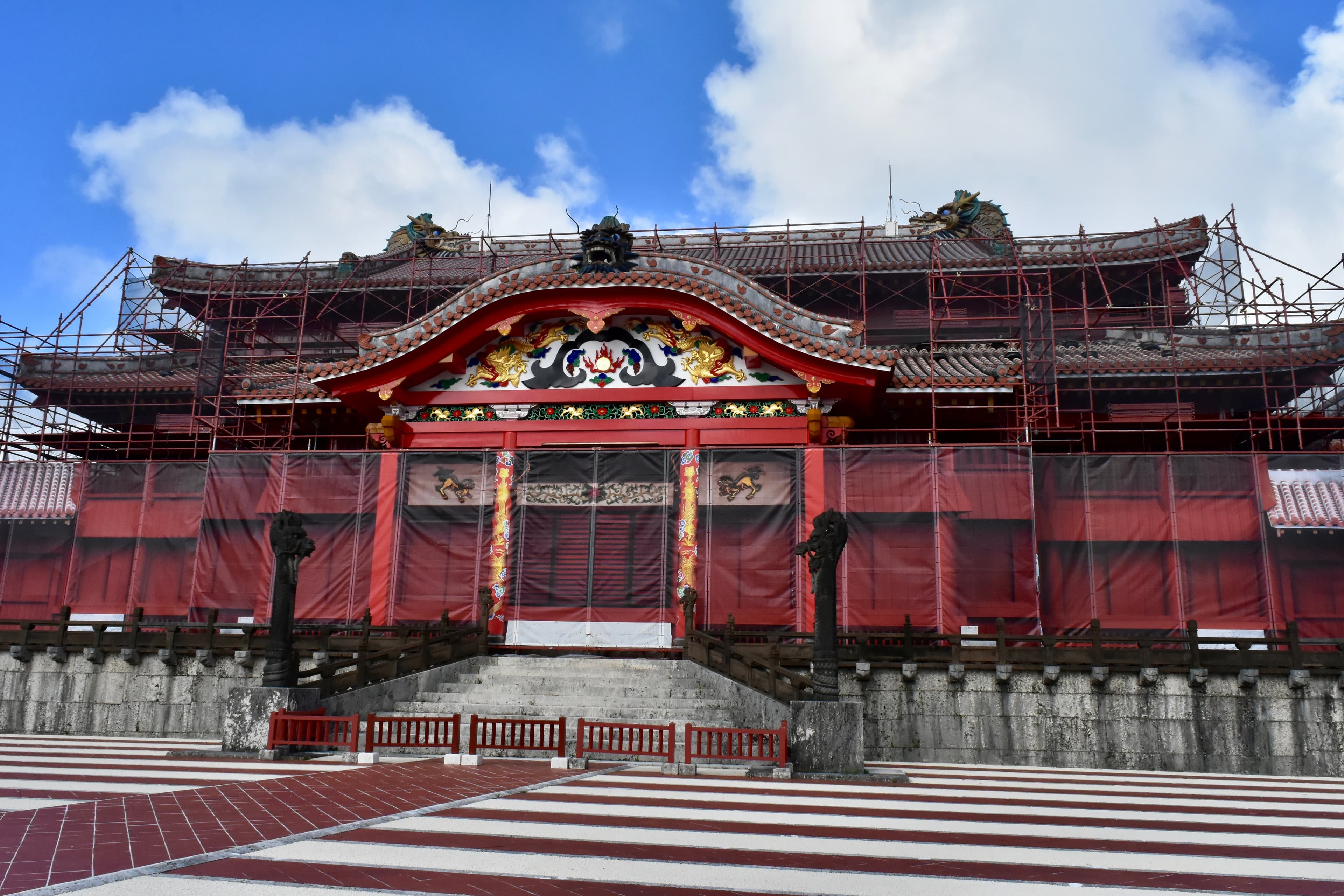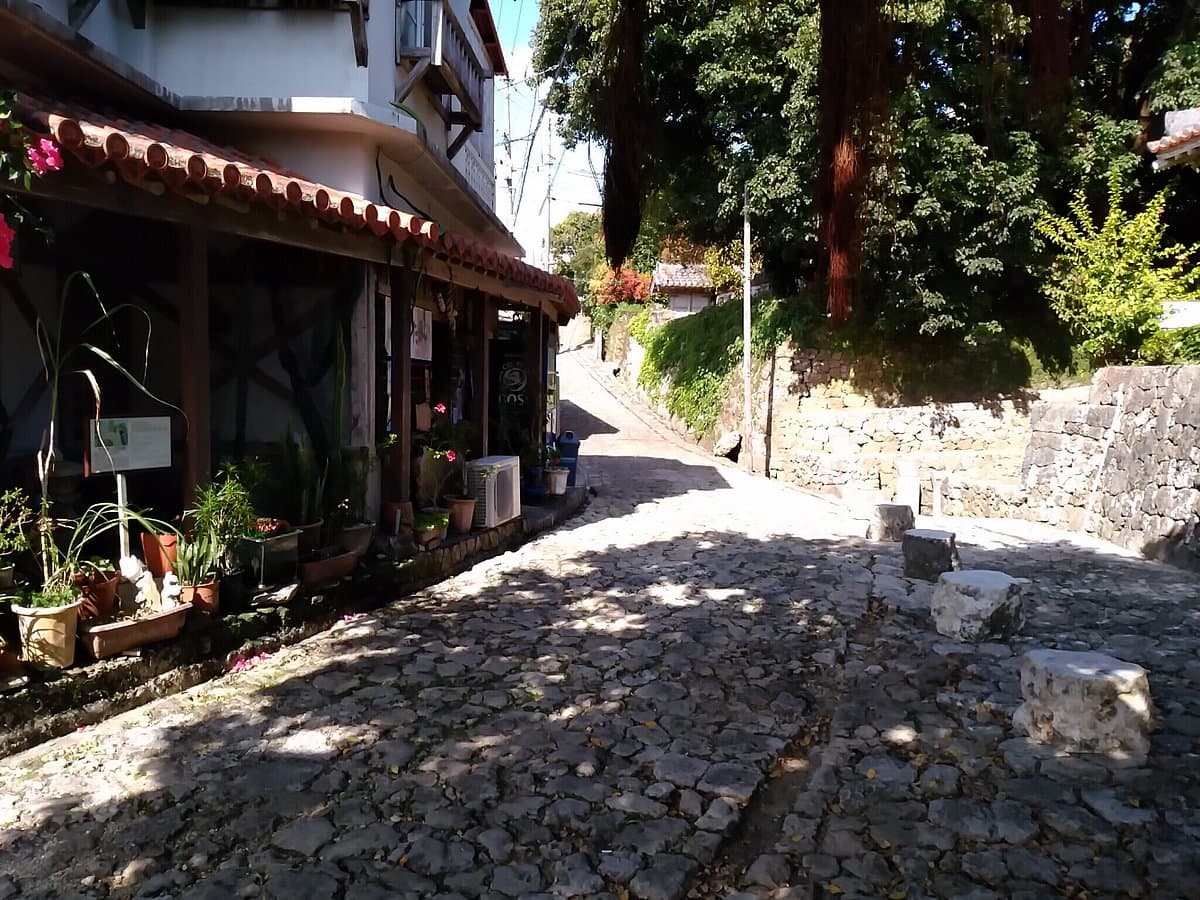
Shrikinjocho Stone-Path Road is a centuries-old cobblestone pathway that winds through a residential neighborhood in Shuri, Naha. Built during the Ryukyu Kingdom era, it is one of the few structures in the area that survived the 1945 Battle of Okinawa. The path is listed among Japan's 100 traditional paths and serves as a functional route for local residents while functioning as a historical attraction. The road's significance lies not in dramatic architecture but in its ability to transport visitors back to pre-war Okinawan daily life, with original stone construction, traditional houses with characteristic Shisa dog roof ornaments, and several sacred worship sites still used by locals.
Visitors consistently praise the immersive historical atmosphere and the sense of stepping back in time, particularly when walking downhill and observing locals going about their daily routines. The path features several points of interest: traditional tea rooms and cafes where visitors can rest, a small free museum with a rare sake bottle collection near the bottom, and a turnoff leading to the Akagi Tree, a 300-year-old sacred tree considered spiritually significant. Many reviewers note that the quiet, residential nature of the area—with minimal tourist infrastructure—enhances the authentic experience. However, several visitors warn that the steep terrain, uneven stone surfaces, and lack of clear directional signage can be challenging. The path is not wheelchair or stroller-friendly, and the physical difficulty is frequently underestimated by visitors arriving exhausted from Shuri Castle.
Practical preparation is critical for a positive experience. Wear sturdy, closed-toe hiking shoes with good grip—flip-flops, sandals, and high heels are explicitly warned against by multiple reviewers. Bring a hat, sunscreen, and at least 1-2 liters of water, as the Okinawan humidity and summer heat can be intense. Mosquito repellent is recommended if you plan to explore side paths or visit the Akagi Tree. The path becomes slippery when wet, so avoid visiting immediately after rain. Most visitors recommend walking downhill from Shuri Castle rather than uphill, as the descent allows more time to observe surroundings and photograph details without excessive exertion. If you walk the full length downhill, you will need to either take a taxi back to Naha (approximately 4 km), catch a bus from the bottom, or walk back uphill—plan accordingly. The walk typically takes 30-60 minutes depending on pace and how many side paths you explore. Early morning or late afternoon visits offer cooler temperatures and fewer crowds. Several reviewers mention that visiting on a different day than Shuri Castle and other major attractions prevents exhaustion from diminishing the experience.
Access and transportation: The stone path is located approximately 1 km south of Shuri Castle. From Shuri Castle, follow signs pointing toward the stone path road; the castle security guard can provide directions if signage is unclear. If driving, public parking is available near the bottom entrance (address: Okinawa-ken, Naha-shi, Shurikinjōchō, 2 Chome, 首里金城町2丁目84−3). From Naha Monorail's Shuri Station, it is roughly a 15-20 minute walk to the castle, then an additional 10-15 minutes to the stone path entrance. Alternatively, take a taxi directly to the stone path entrance. Several visitors report that Google Maps does not reliably show the path entrance, so asking locals or using the castle as a reference point is more reliable. If you walk downhill to the bottom, you can catch a bus back to Shuri Station or continue walking into Naha City (approximately 4 km).
Common challenges and mitigation: Visitors frequently report difficulty finding the path entrance despite proximity to Shuri Castle—ask staff at the castle for specific directions rather than relying solely on GPS. The steep, uneven stone surface causes many visitors to underestimate physical difficulty, particularly those already fatigued from castle exploration; plan this activity for a separate day or visit the stone path before the castle. Rain makes the path significantly more slippery and hazardous; check weather forecasts and avoid visits during or immediately after rainfall. Some visitors report encountering wedding photography sessions that obstruct the atmosphere and pathways—this is unpredictable but worth noting. Finally, the lack of English signage along the path means you may not immediately recognize when you have reached the end; bring a map or take screenshots of the route beforehand.