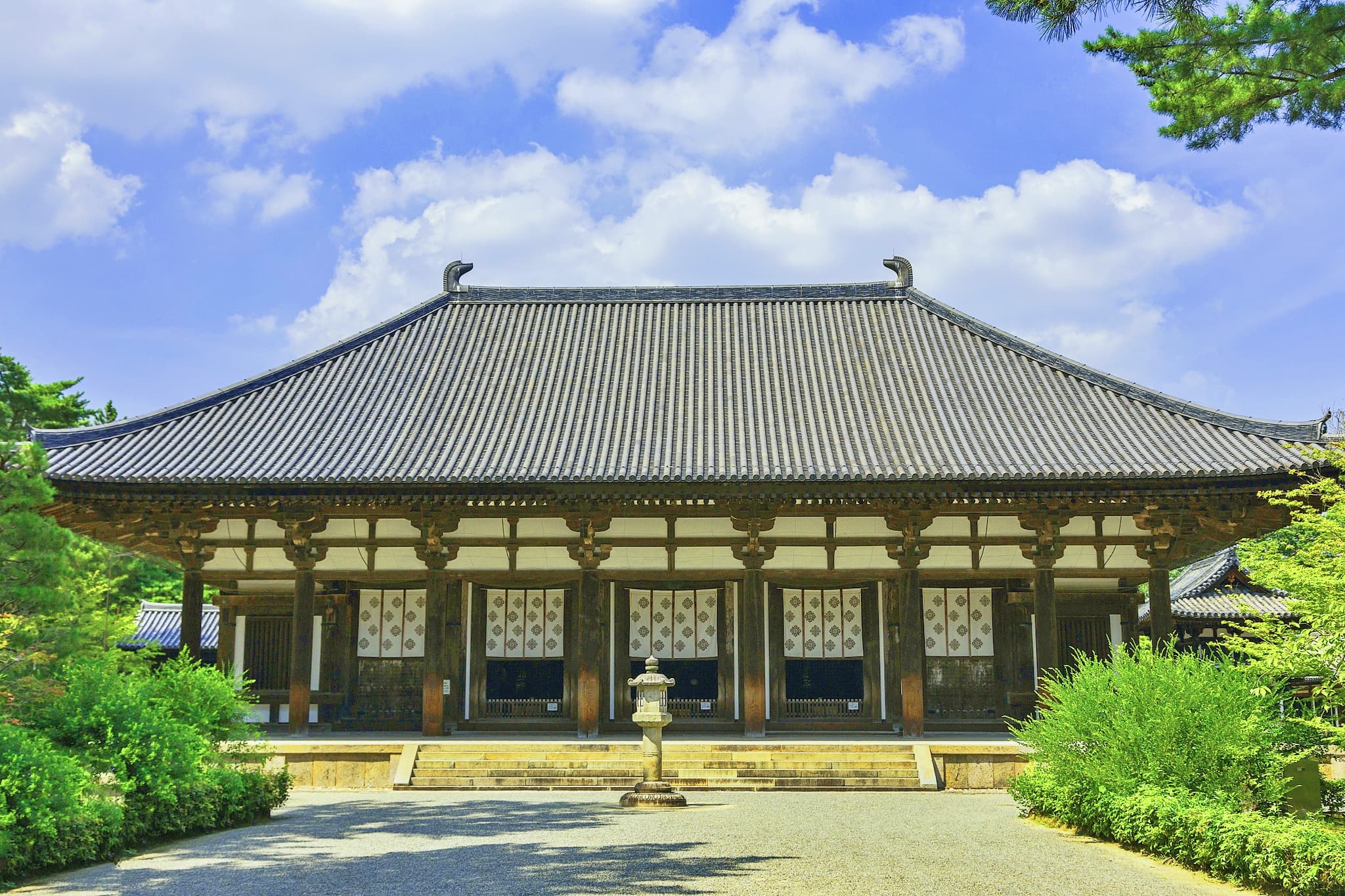
Tōshōdai-ji is a significant Buddhist temple in Nara, founded in 759 AD by the Chinese monk Ganjin (Jianzhen), who played a pivotal role in introducing and establishing Buddhism in Japan. It serves as the head temple of the Ritsu sect and is renowned for its remarkably preserved Nara-period wooden architecture, particularly its Kondo (Golden Hall), which is considered a masterpiece of Tang Dynasty influence. The temple complex offers a profound glimpse into Japan's early Buddhist history and architectural heritage.
Visitors frequently highlight the temple's peaceful and uncrowded atmosphere, a stark contrast to the bustling Todai-ji Temple and Nara Park. Many appreciate the opportunity to explore the beautiful gardens and ancient buildings in tranquility, often noting the absence of deer that are prevalent in other parts of Nara. The impressive scale of the wooden structures and the ancient Buddha statues, including the Rushana Buddha and Thousand-Armed Kannon, are consistently mentioned as highlights, even if access to the interiors is sometimes restricted to viewing through wire mesh. Reviewers often recommend combining a visit here with the nearby Yakushi-ji Temple, as they are within walking distance and offer complementary historical insights.
To make the most of your visit, allocate about 1 to 2 hours to explore the grounds thoroughly. Arriving in the morning or late afternoon is often suggested for the most serene experience, as the temple tends to be less busy. While the main hall's interior access might be limited, the exterior architecture and surrounding gardens are equally captivating. Consider bringing comfortable walking shoes, as the grounds are spacious. Souvenirs sold at the temple are often noted as being unique and sometimes more affordable than those found elsewhere.
Tōshōdai-ji is located a bit outside the central Nara Park area, but it is easily accessible by public transport. Many visitors recommend taking a local bus from Kintetsu-Nara Station or JR Nara Station. The circle line bus is a convenient option, and bus stops are usually well-marked. For those coming by train, it's a short walk from Nishinokyo Station on the Kintetsu Kashihara Line. Reviewers mention that platform staff at Japanese train stations are very helpful if you need directions. While a bit of a walk from some stations, Google Maps is generally reliable for navigation. Taxis are also an option, especially if you are short on time.
A common observation is that while the temple is historically significant, some visitors find it less grand or visually overwhelming than Todai-ji. However, this perceived smaller scale often contributes to its peaceful charm. The inability to enter some buildings and only view statues through mesh can be a minor disappointment for some, but the overall historical context and architectural beauty are generally considered to outweigh this. There are very few complaints about crowds, making it an ideal spot for those seeking quiet contemplation.