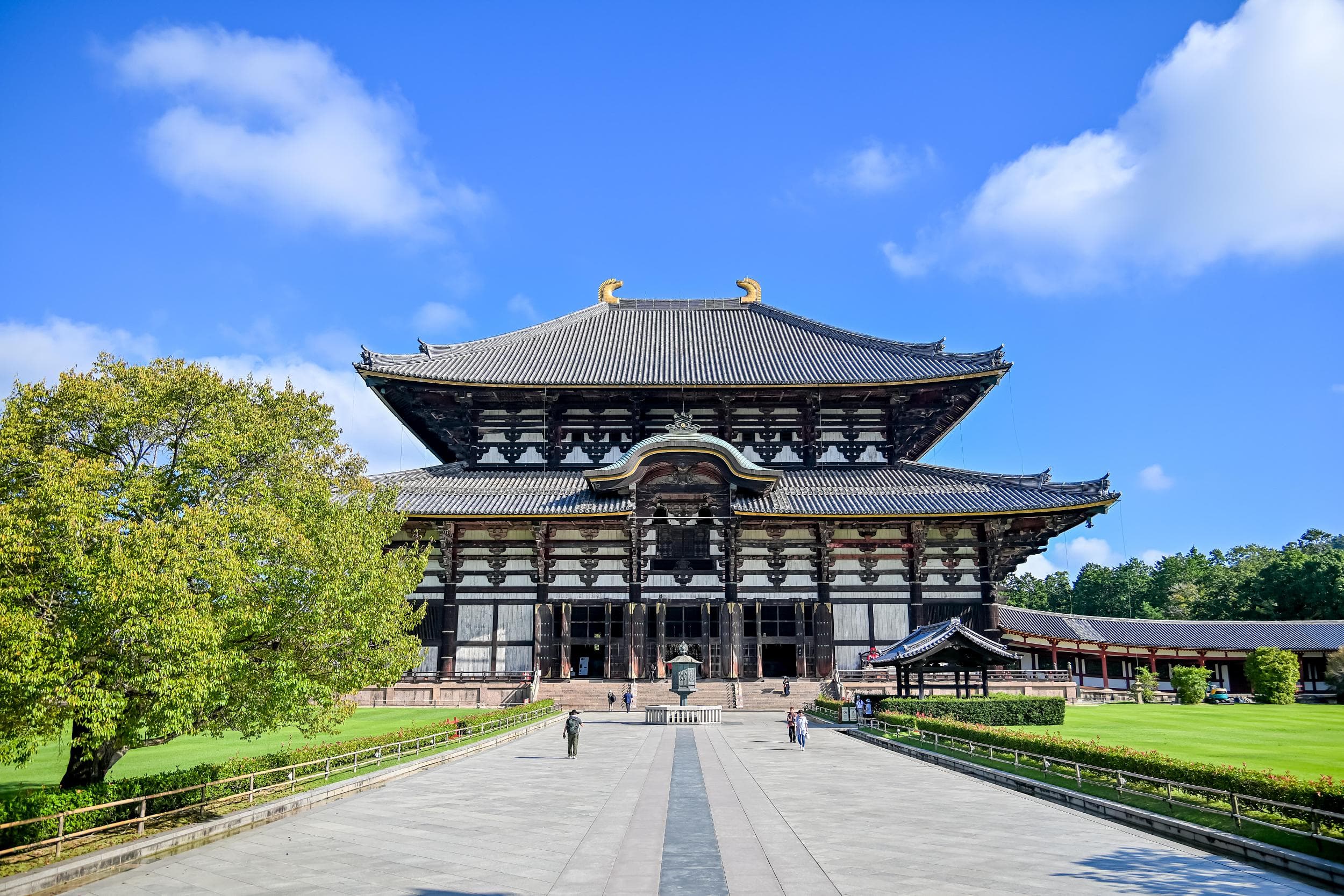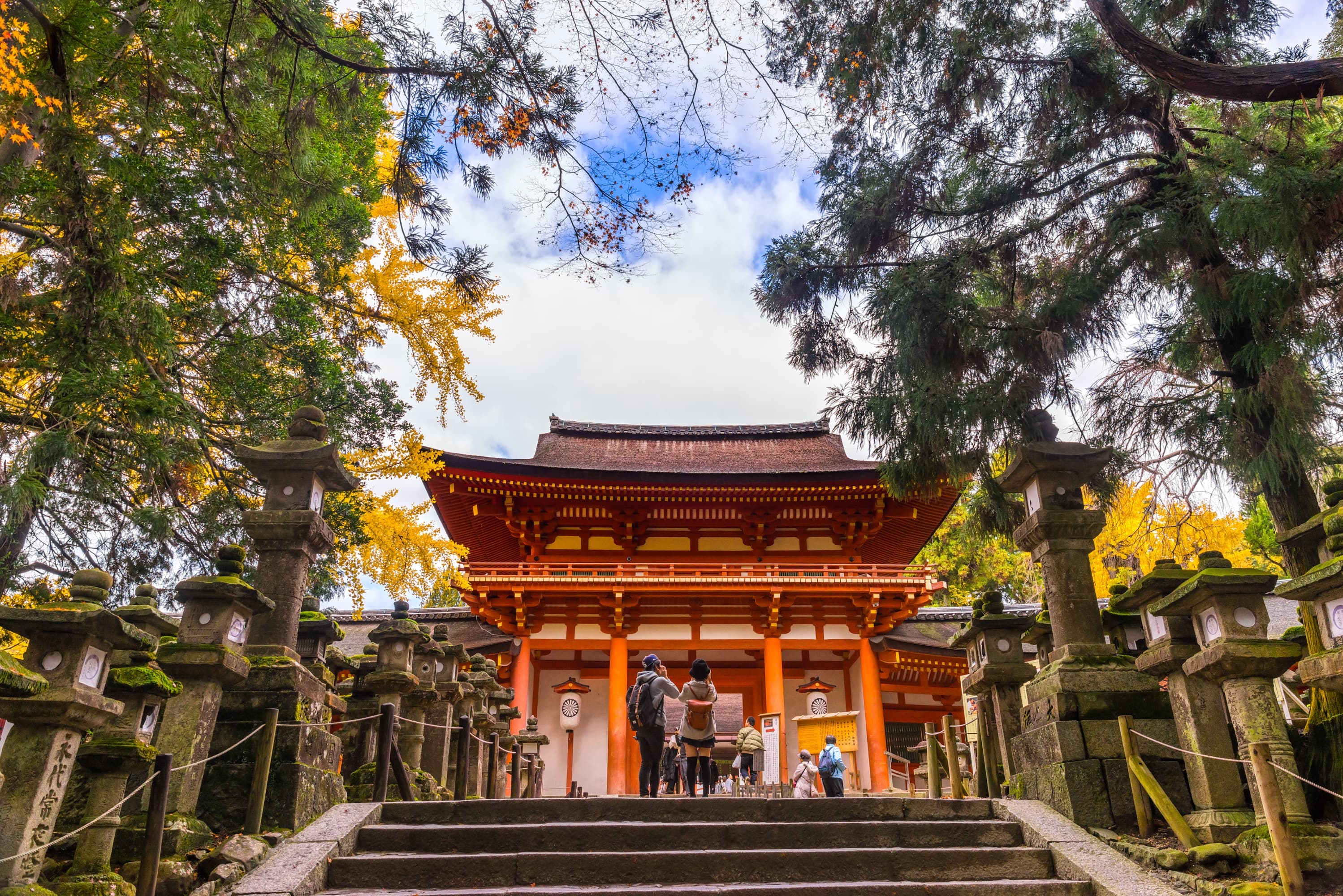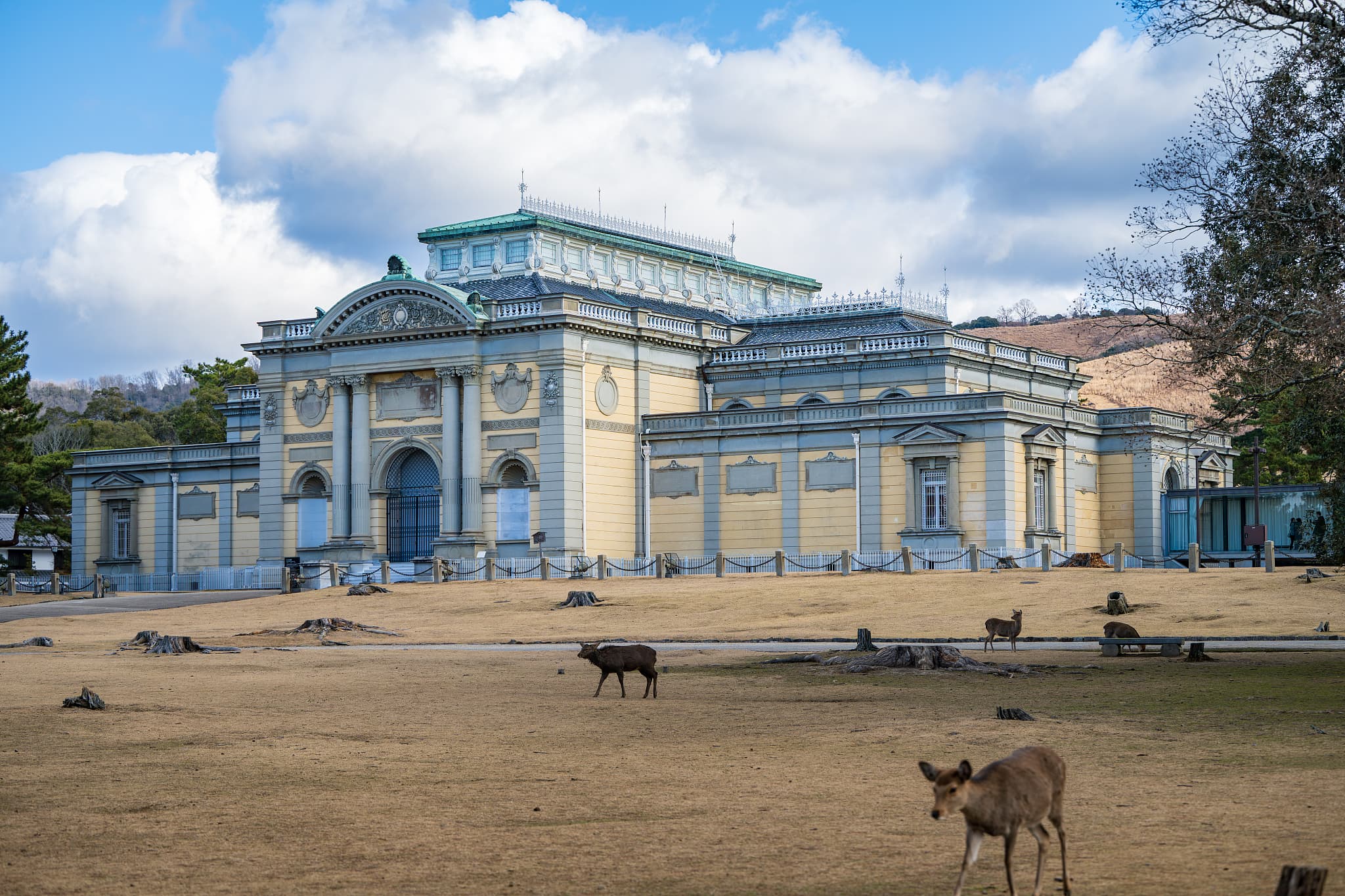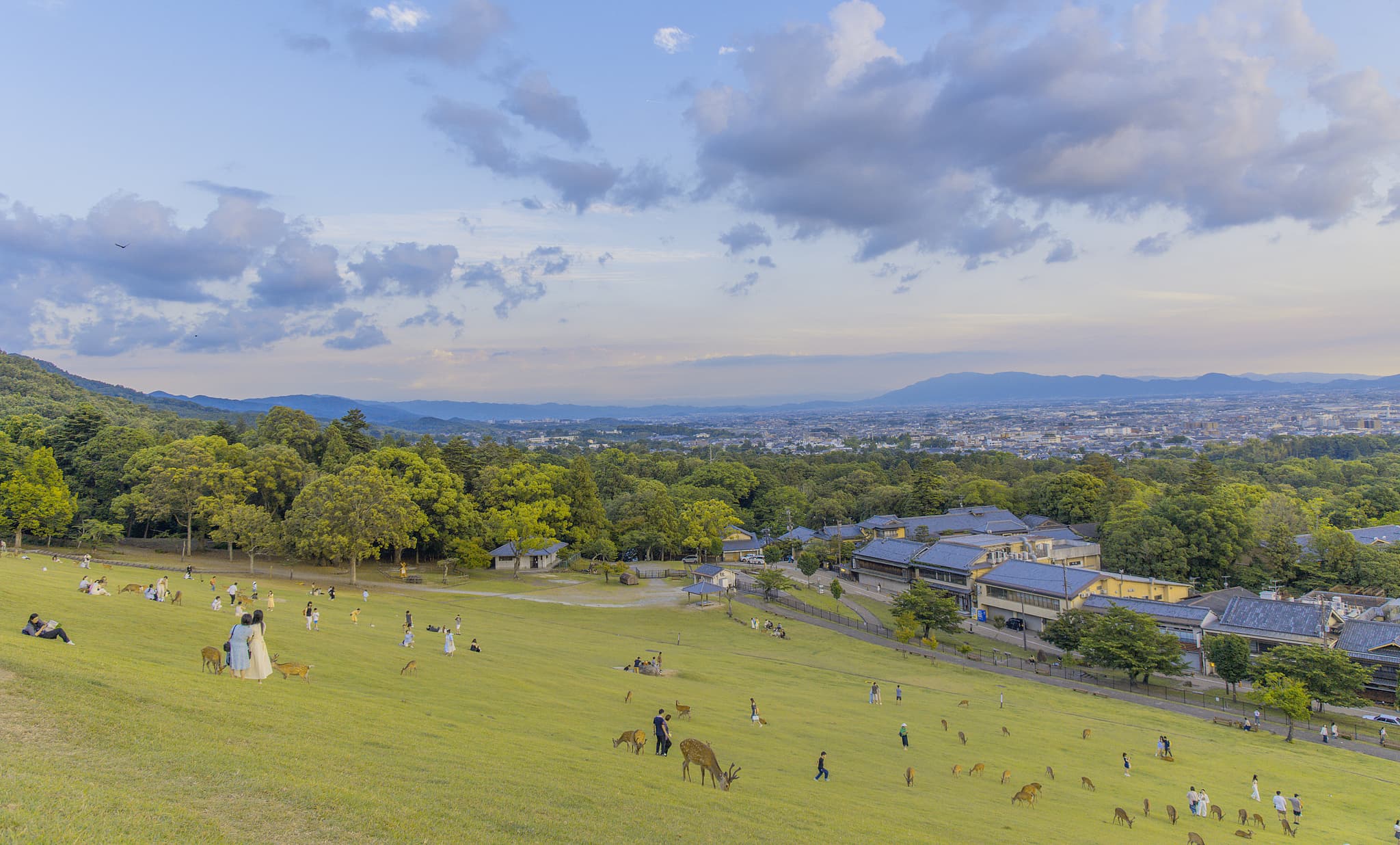
Mount Wakakusa, often described as a large grassy hill rather than a towering peak, is a prominent natural landmark in Nara, situated conveniently between Todaiji Temple and Kasuga Taisha Shrine. Rising to 342 meters, its gentle slopes are divided into three levels, offering progressively more expansive views of the Nara Basin. It's particularly renowned for the annual "Wakakusa Burning Mountain" festival in January, a spectacular event featuring fireworks and the burning of the mountain's dry grass.
Visitors consistently praise the stunning panoramic views from the upper levels, especially at sunset, which many describe as a romantic and unforgettable experience. The presence of numerous deer, often less aggressive than those in Nara Park, is another major draw, allowing for peaceful interactions and photo opportunities. Reviewers frequently highlight the tranquil atmosphere and the sense of being away from the main tourist hustle, making it an ideal spot for relaxation and enjoying nature. However, some visitors note that the mountain itself, particularly the lower levels, might appear less dramatic or simply like a large lawn, especially outside of peak seasons or without the context of the views.
For a comfortable visit, wear comfortable walking shoes, as the ascent, though not overly strenuous, involves walking uphill. Many suggest bringing deer crackers to feed the deer, but advise caution as they can still be persistent. Plan to spend 1 to 3 hours, allowing ample time to reach the second or third level and soak in the views. The best time to visit is in the late afternoon to catch the sunset, but be prepared for cooler temperatures and stronger winds after dusk, especially in autumn and winter; a light jacket is recommended. It's crucial to note the mountain's limited opening seasons (typically Spring Festival to autumn, with specific dates like March 21st to June 15th and September 10th to November 25th mentioned by reviewers), as it is closed for significant portions of the year. Entry tickets must be purchased before 5 PM, as access is restricted afterwards.
Mount Wakakusa is easily accessible on foot from major Nara attractions. From Kasuga Taisha Shrine, reviewers suggest turning right at a fork, then left, and walking through an alley to reach the ticket office. It's also a pleasant walk through Nara Park from Kintetsu Nara Station, taking about 10-20 minutes. For those preferring not to walk the entire way up, a taxi stand near Kintetsu Nara Station offers direct rides to the mountain, with a taxi ride to the top taking approximately 20 minutes. Some visitors recommend taking a taxi up and walking down. Public transport options like local buses also serve the area around Nara Park, from which the mountain is a short walk.
A common complaint among some visitors is that the mountain, particularly the lower sections, might seem underwhelming or just a large grassy area if one expects dramatic peaks or dense forests. To mitigate this, ensure you climb to at least the second level for the acclaimed panoramic views. Another point of contention is the limited opening hours and seasons; always check the current schedule before planning your visit to avoid disappointment. Finally, while deer are a highlight, some visitors find them less numerous than in Nara Park, or occasionally too persistent; managing expectations and being prepared with crackers (or choosing not to feed them) can enhance the experience.