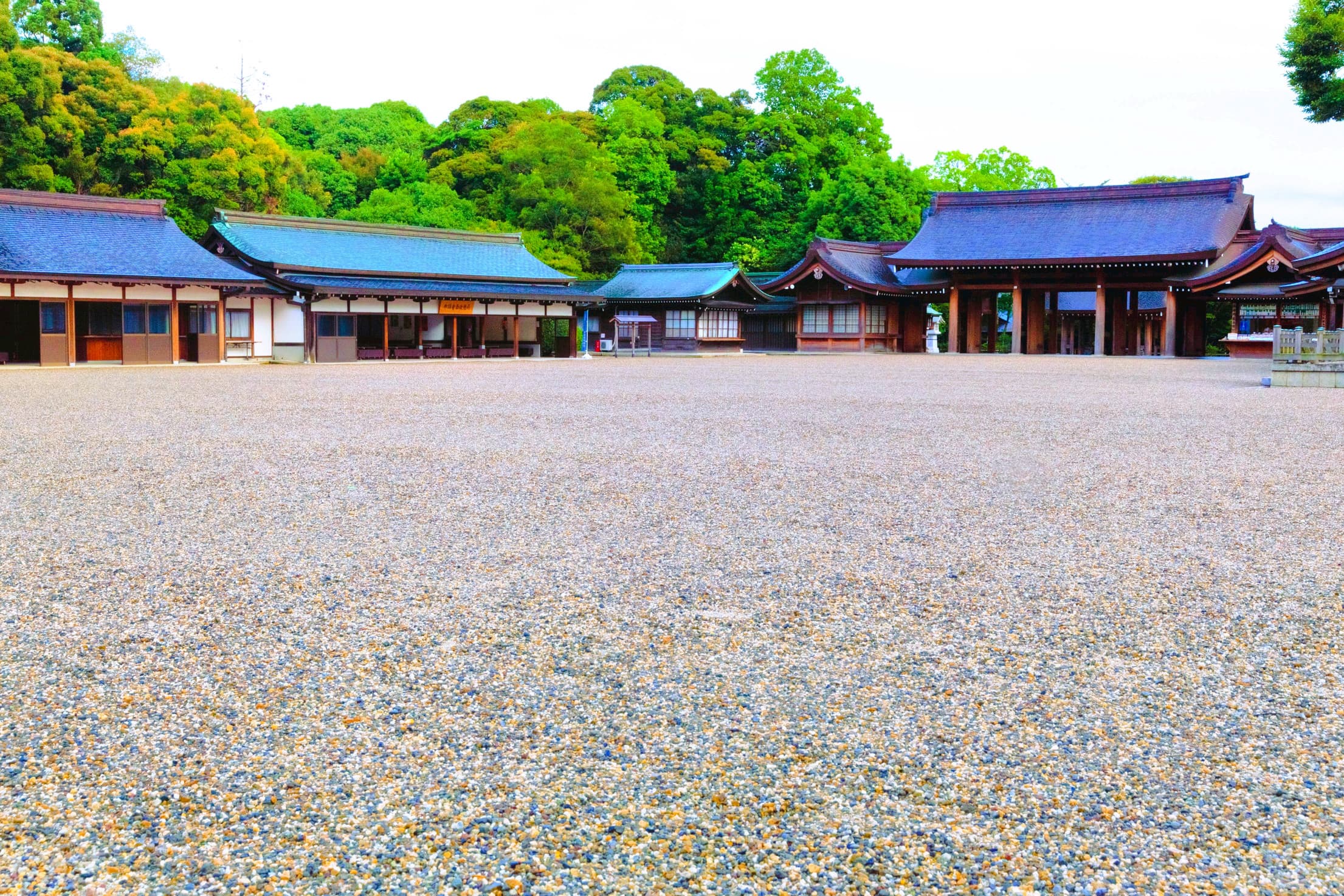
Kashihara Jingu is a Shinto shrine of immense historical and cultural significance in Japan, founded in 1890 by Emperor Meiji. It is dedicated to Emperor Jimmu, the legendary first emperor of Japan, who is said to have established his court in Yamato (present-day Kashihara) around 660 BC. The shrine's establishment marked a pivotal moment in modern Japanese history, emphasizing the imperial lineage and national identity. Its main hall and other structures were relocated from the Kyoto Imperial Palace, adding to its architectural and historical value.
Visitors frequently highlight the shrine's expansive and meticulously maintained grounds, often describing them as 'majestic' and 'dignified.' The large torii gates and the long, gravel-covered approach (sando) are noted for creating a solemn and refreshing atmosphere. Many appreciate the lush greenery and the sense of peace and serenity, especially during weekdays when it is less crowded. The opportunity to witness priests performing their duties and the overall quietude are often cited as highlights. Some reviewers mention the presence of a large pond and parks within the grounds, contributing to a beautiful Japanese landscape.
For a fulfilling visit, allocate 1-2 hours to explore the grounds thoroughly. Reviewers suggest visiting during the New Year holidays for a lively experience with many stalls, though it will be very crowded. For a more peaceful visit, weekdays are recommended. Bring comfortable shoes, as the site is quite large and involves a fair amount of walking, particularly along the gravel path. While there are some eating shops, visitors note that the focus is on the spiritual experience. Consider combining your visit with other nearby historical sites in the Asuka region if you are interested in ancient Japanese history.
Kashihara Jingu is conveniently accessible by public transport. Many visitors mention taking the Kintetsu line to Kashihara-Jingu-mae Station. From there, the shrine is a short walk, estimated by some as about ten minutes. While there is ample parking available, it can get very crowded, especially during peak times like the New Year, making public transport a less stressful option. The approach from the station is well-marked and straightforward.
A common observation, particularly during New Year's, is the significant crowd, which can detract from the serene experience. To mitigate this, visiting on a weekday or during off-peak seasons is highly recommended. Some visitors have noted that certain areas or events might only be open to the public on special days, which can be a minor disappointment if not anticipated. While some reviewers mention street vendors during holidays, others have expressed a preference for fewer commercial establishments within the sacred grounds.