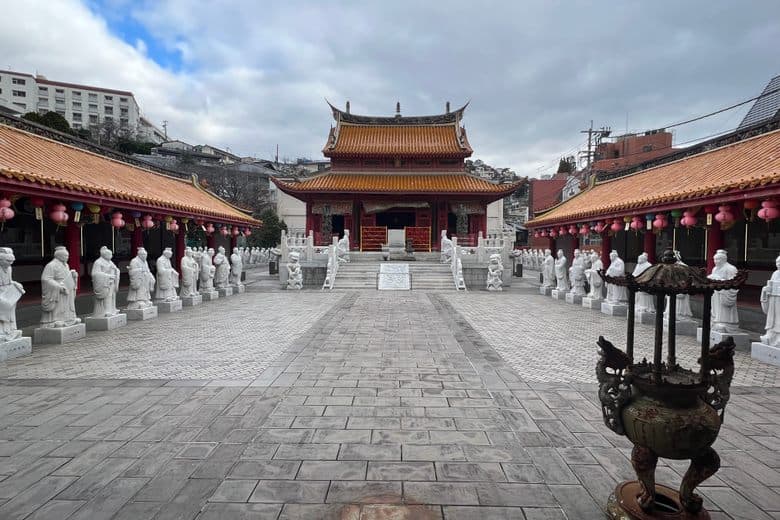
The Confucius Shrine (Kōshi-byō) in Nagasaki is a significant cultural landmark, representing the deep historical ties between Nagasaki and China. Built in 1893 by Chinese settlers, it is one of the few Confucius shrines in Japan and stands out with its ornate 19th-century Chinese architectural style, featuring vibrant red and orange hues that contrast with more traditional Japanese religious structures. This shrine is unique as it remains property of the Chinese Embassy to Japan, highlighting its enduring connection to China.
Visitors consistently praise the shrine's distinctive architecture and the peaceful atmosphere it offers. Many find the bright colors and intricate details of the buildings to be a refreshing change from typical Japanese temples. The on-site museum, which houses a collection of ancient Chinese treasures, is frequently mentioned as a highlight, providing valuable context to the historical relationship between Nagasaki and China. Reviewers often recommend taking time to appreciate both the shrine's exterior and the exhibits within the museum.
To make the most of your visit, allocate approximately 1 to 2 hours to explore both the shrine grounds and the museum. The best time to visit is during the morning or late afternoon to avoid larger crowds and enjoy the tranquility. Consider visiting during Chinese New Year or the Nagasaki Lantern Festival, as the shrine hosts lively events with strong Chinese influences, including dragon dances. The entrance fee covers both the shrine and the museum, offering good value for the cultural experience.
The Confucius Shrine is easily accessible by public transport. Take the green line tram from Nagasaki Station or Shinchi Chinatown towards Ishibashi. Alight at either Oura Tenshudo (Oura Cathedral) or Ishibashi tram stops. From there, head right (away from Oura Cathedral) for a short walk to the shrine. This convenient tram access makes it an ideal stop when exploring the Oura district.
While generally well-received, some visitors note that the shrine can feel relatively small compared to other attractions, and the information provided might be primarily in Japanese with limited English translations. To mitigate this, consider researching the shrine's history beforehand or using a translation app for a deeper understanding of the exhibits.