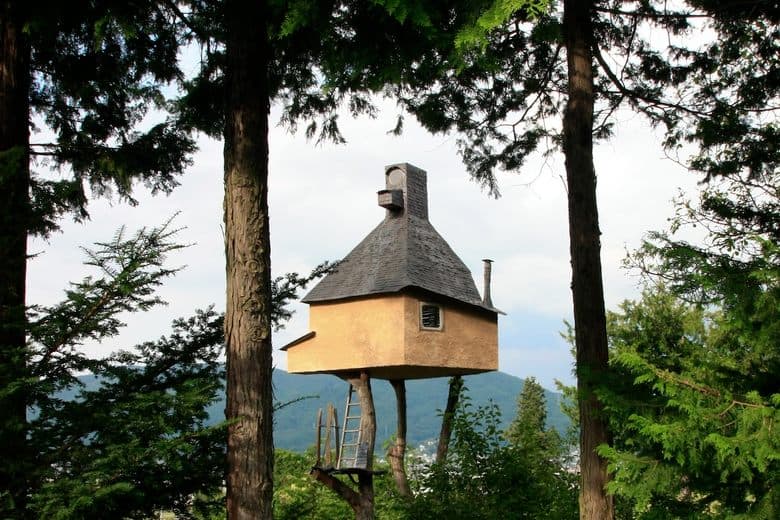
The Fujimori Tea Houses are an extraordinary architectural ensemble located in Chino, Nagano Prefecture, showcasing the distinctive work of Japanese architect Terunobu Fujimori. These structures, including the famous Takasugi-an ('High Cabin') perched on chestnut trees and the 'Flying Mud Boat' suspended by cables, are celebrated for their whimsical, almost folkloric appearance and their use of natural, unconventional materials. They represent a significant departure from traditional Japanese architecture, blending art, nature, and functionality in a truly unique way.
Visitors consistently praise the imaginative and surreal quality of the teahouses, often describing them as something out of a fairy tale. The ingenuity of Fujimori's designs, particularly the way the structures integrate with their natural surroundings, is a frequent point of admiration. However, a recurring theme in visitor feedback is the limited access; the teahouses are on private property, and direct entry is generally not permitted. This means most visitors experience them only from a distance, which can be a point of disappointment for those expecting an immersive experience.
Given the limited access, visitors should plan to spend a relatively short amount of time here, perhaps 30-60 minutes, primarily for viewing and photography from designated vantage points. It's advisable to bring a good camera with a zoom lens to capture the intricate details of the teahouses from afar. The best time to visit would likely be during daylight hours, especially on a clear day, to fully appreciate the unique forms against the natural backdrop. Since direct entry is not possible for most, there are no specific items to bring for an interior visit, but comfortable walking shoes are always recommended for exploring the surrounding area.
The Fujimori Tea Houses are located near the Jinchokan Moriya Historical Museum in Chino, Nagano. While specific public transport details are not widely available in reviews for direct access to the teahouses themselves, visitors typically reach the general area by car. Chino is accessible by train, and from there, a local taxi or bus service would be required to get closer to the museum and teahouses. Driving offers the most flexibility, and parking is usually available at or near the Jinchokan Moriya Historical Museum, from where the teahouses can be viewed. It's important to note that the exact viewing spots might require a short walk.
The primary complaint from visitors is the inability to enter the teahouses. To mitigate this, manage expectations by understanding that this is primarily an external viewing experience. Some guided tours in the area might offer special access or closer views, so researching local tour operators beforehand could be beneficial for those seeking a more in-depth encounter.