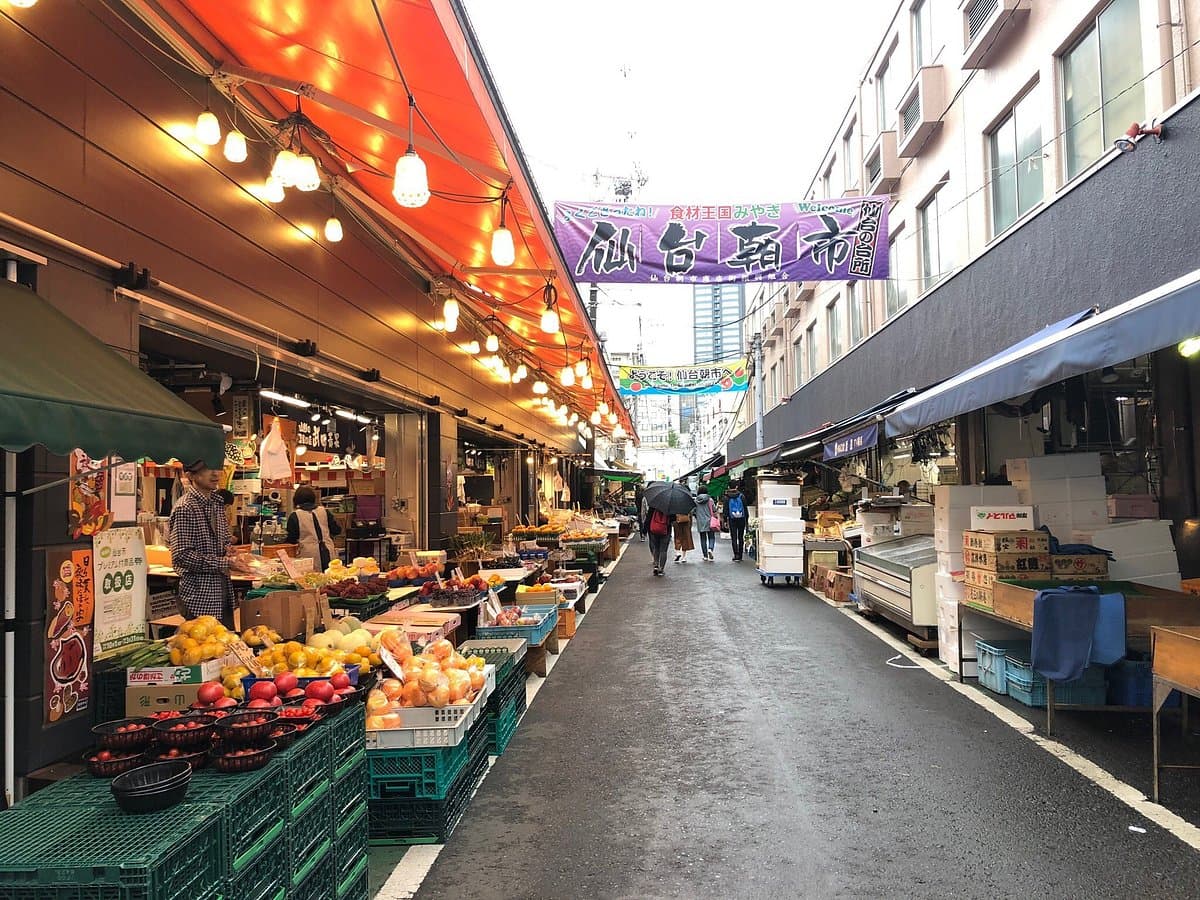
Sendai Asaichi, often affectionately known as "Sendai's Kitchen," is a vibrant local market with a history dating back to the post-war era. It serves as a central hub for residents to purchase fresh vegetables, fruits, seafood, and various local delicacies. While not as grand as some larger Japanese markets, it offers an authentic glimpse into the daily life and culinary culture of Sendai.
Visitors consistently praise the market for its fresh and affordable produce, with many noting that prices are often lower than in supermarkets. Reviewers highlight the variety of items available, from seasonal fruits and vegetables to fresh fish and prepared foods like onigiri and zunda mochi. The market's lively atmosphere, especially during festivals like Tanabata, is also frequently mentioned as a positive aspect, providing an engaging cultural experience. Several visitors appreciate the opportunity to shop alongside locals and observe their daily routines.
For those planning a visit, it's recommended to go in the morning, as some food stalls and restaurants open later. While the market itself opens around 8 AM, many eateries might not be ready until 9 AM or even later for basement food courts. If you're looking to buy ingredients, bring a reusable bag. If you purchase ready-to-eat items, be mindful of local customs: avoid eating and walking simultaneously; instead, find a designated spot or stand to enjoy your food. While English might not be widely spoken, pointing and using simple gestures for payment generally works well.
The market is conveniently located just a 5-minute walk from JR Sendai Station, specifically behind Parco 2. Several reviewers mention its close proximity to the station, making it easily accessible for those arriving by train. For those driving, a multi-storey car park is available in the Shin-Sendai Ekimae Building, with one reviewer noting a cost of 1300 yen for 12 hours. Its central location makes it an easy addition to an itinerary if you're already in the station area.
A common complaint among some visitors is the market's relatively small size compared to markets in larger Japanese cities, leading to a perception that there isn't "much to see" if you're not specifically shopping for ingredients. To mitigate this, adjust your expectations; view it as a local community market rather than a major tourist attraction. It's best enjoyed as a brief cultural immersion or a place to grab a fresh snack, rather than a destination for extended exploration.