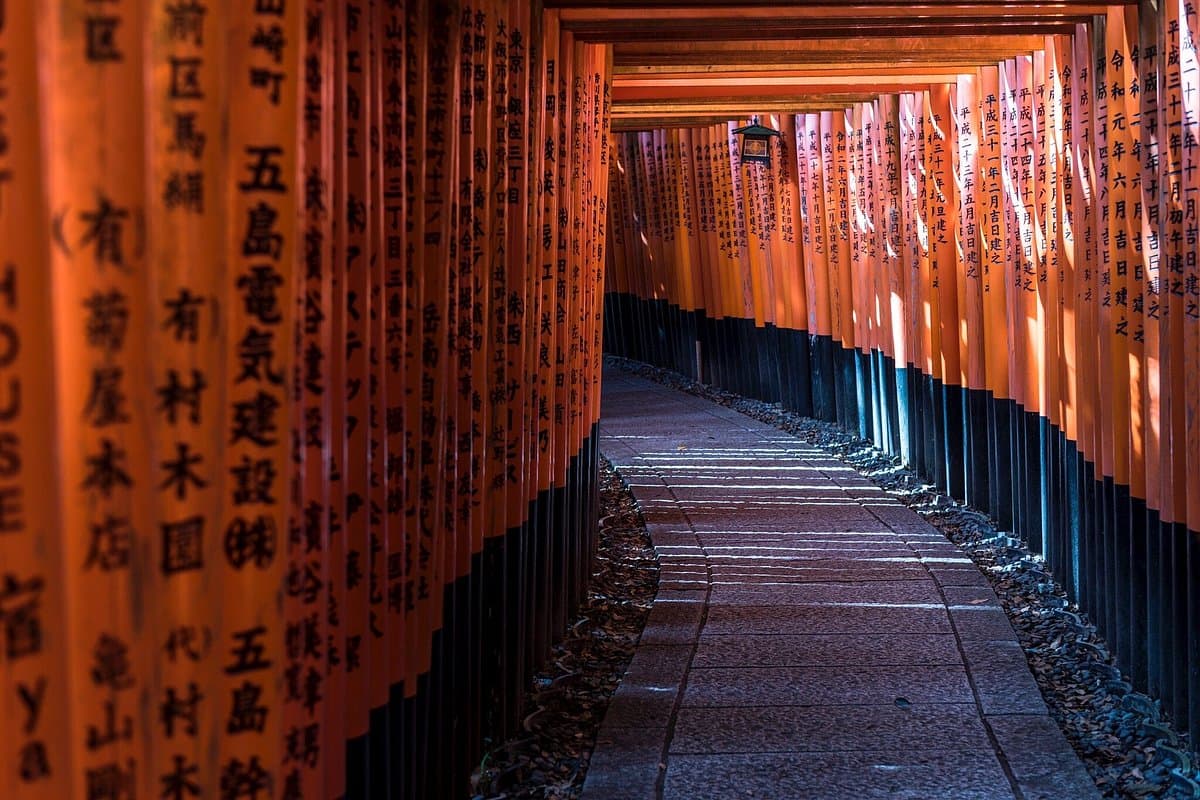
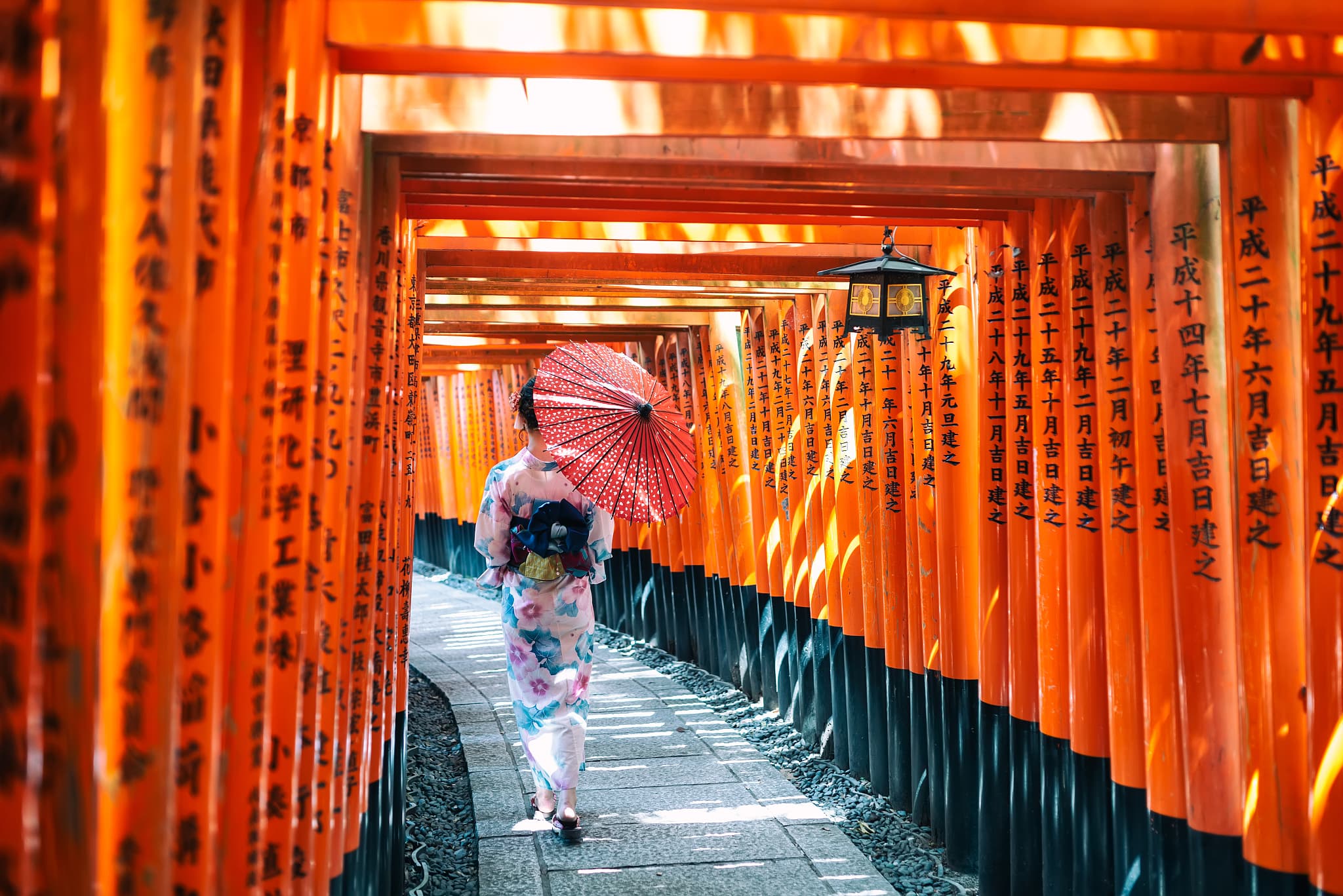
The Senbon Torii, meaning 'Thousand Torii Gates,' is the most famous feature of Fushimi Inari Taisha, a Shinto shrine dedicated to Inari, the god of rice and sake. These iconic vermilion gates form a network of trails leading up Mount Inari, creating a visually stunning and spiritually evocative pathway. Each gate is a donation from an individual or company, symbolizing prayers for good fortune and prosperity, a tradition that dates back to the Edo period.
Visitors consistently praise the unique beauty and spiritual ambiance of the Senbon Torii. Many describe the experience of walking through the gates as 'dreamlike' or 'stepping back in time,' with the interplay of bright new gates and faded older ones creating a captivating visual. The site is highly photogenic, and many come specifically to capture its distinctive imagery. Reviewers often note that while the initial sections can be crowded, the crowds thin out significantly as one ascends the mountain, allowing for a more serene experience and better photo opportunities. The path is also recognized for its appearance in films like 'Memoirs of a Geisha.'
To make the most of your visit, aim to arrive early in the morning, ideally before 9 AM, to avoid the largest crowds and enjoy a more peaceful walk. While the entire ascent to the summit of Mount Inari can take over two hours and is physically demanding, many visitors find it rewarding. However, it is perfectly acceptable to turn back halfway if you are short on time or prefer a less strenuous experience. Reviewers suggest bringing comfortable walking shoes and water, especially if you plan to hike to the top. There is no entry fee, making it an accessible attraction for all budgets.
The Senbon Torii is conveniently located and easily accessible by public transport. It is very close to JR Inari Station, which is just two stops from Kyoto Station on the JR Nara Line. Another nearby option is Fushimi-Inari Station on the Keihan Main Line. Both stations are within a short walking distance of the shrine entrance. Driving is generally not recommended due to limited parking and the excellent public transport links.
A common complaint is the sheer number of tourists, especially at the lower sections of the gates. To mitigate this, as mentioned, arriving early is key. Additionally, many visitors find that continuing further up the mountain path significantly reduces the crowd density, allowing for a more intimate experience with the gates and the surrounding nature. Be prepared for a moderate amount of walking and elevation gain if you intend to explore beyond the initial popular sections.