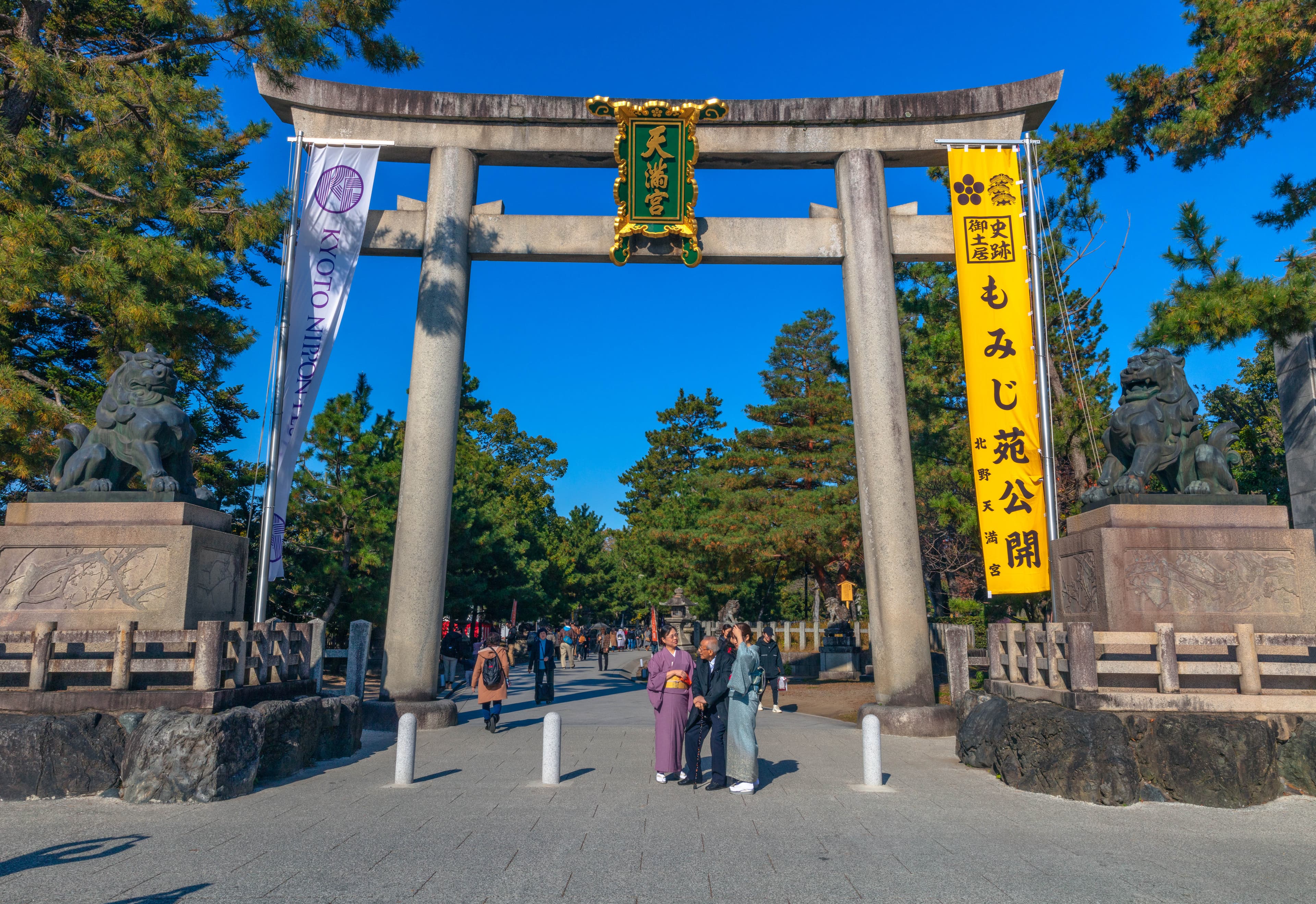
Kitano Tenmangu Shrine is one of Japan's most important Tenmangu shrines, dedicated to Sugawara no Michizane, a revered scholar and politician of the Heian period. It serves as a spiritual center for academic success and artistic achievement, attracting students and devotees from across the country. The shrine is also celebrated for its historical significance and its beautiful gardens, which transform with the seasons.
Visitors frequently praise the shrine's serene atmosphere and its seasonal beauty. The plum blossoms in early spring (around late January to March) and the vibrant autumn foliage (typically late November to early December) are consistently highlighted as particularly stunning, with many recommending a visit during these times. The paid maple garden, in particular, receives high acclaim for its layered red leaves and picturesque stream. Another major draw is the monthly flea market, held on the 25th of every month. Reviewers describe it as a massive, bustling event offering everything from antiques and artisan crafts to used kimonos and diverse street food. Many find it superior to other Kyoto markets, noting the authentic local atmosphere and reasonable prices.
For a fulfilling visit, allocate at least 2-3 hours to explore the shrine grounds, including the main hall and the gardens. If visiting during the flea market, plan for significantly more time, potentially half a day, as there is a vast array of stalls and food to experience. Reviewers suggest arriving early for the market, even around 7:30 AM, to beat the crowds and find the best selections. While the main shrine grounds are free, the maple garden often requires a separate admission fee, which visitors generally find worthwhile. Stroking the copper bull statues is a popular tradition believed to bring wisdom.
Kitano Tenmangu Shrine is accessible by public transport. Several bus lines serve the area; look for buses stopping at Kitano Tenmangu-mae. From Kyoto Station, you can take bus #50 or #101 directly to the shrine. The journey typically takes about 30-40 minutes. For those driving, parking is available, though it can be crowded, especially during peak seasons or market days. The shrine is located in a residential area, and walking from major train stations is generally not recommended due to the distance.
Some visitors note that the market can be very crowded, especially later in the day, and some antique items might be overpriced. To mitigate this, arrive early for the market. While the shrine is beautiful year-round, those seeking specific seasonal displays should check the best times for plum blossoms or autumn leaves. Some ancient buildings may be undergoing maintenance, so it's advisable to check for any ongoing renovations before your visit if specific structures are a priority.