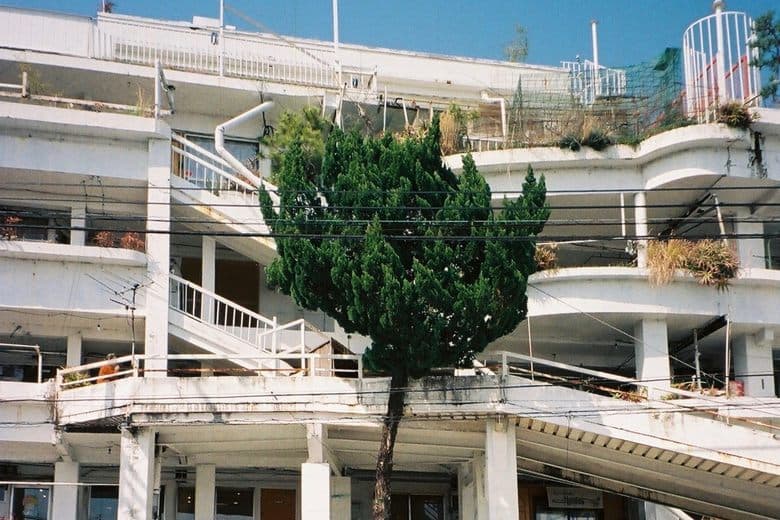
Sawada Mansion stands as a testament to unconventional architecture and community living in Kochi. Conceived by self-taught architect Kano Sawada, this sprawling, five-story complex was built without blueprints, evolving organically to house approximately 100 residents. It's a living, breathing structure that defies traditional Japanese apartment design, fostering a strong sense of community and creativity.
Visitors consistently praise the mansion's unique charm and the welcoming atmosphere. Many are fascinated by the intricate details, such as the fishpond on the fourth floor, the extensive rooftop vegetable garden, and even a self-built crane. Reviewers often highlight the sense of discovery as they wander through its labyrinthine corridors and staircases, encountering unexpected features at every turn. The presence of cafes, a gallery, and independent boutiques within the complex adds to its appeal, allowing for a more immersive experience beyond just observation.
To make the most of your visit, allocate at least 1-2 hours to explore the various levels and hidden nooks. It's advisable to wear comfortable shoes as there are many stairs and uneven surfaces. While exploring, remember that this is a residential building, so visitors should be respectful of the residents' privacy and maintain a quiet demeanor. Some visitors recommend trying the local cafes within the mansion for a unique culinary experience. For those seeking a deeper immersion, it's even possible to spend a night in the building for around ¥3,500, offering an unparalleled insight into its daily life.
The Sawada Mansion is located in Kochi-shi, Kochi-ken. While specific public transport details are not widely available in reviews, Kochi City is generally well-served by local buses and trams. It's recommended to check local transport maps or use a navigation app to find the most direct route from your accommodation. Driving might be an option, but parking availability directly at the mansion is not guaranteed and could be limited due to its residential nature. Walking from a nearby tram or bus stop would likely be the most convenient approach.
A common point to be aware of is that the building's DIY nature means it doesn't conform to standard building codes, leading to its classification as an 'illegal structure' by the city in the past. While community support has safeguarded it from demolition, visitors should be mindful of its unique status and appreciate it as a grassroots project rather than a meticulously planned landmark. Some areas might feel less polished than conventional attractions, which is part of its charm but might surprise those expecting a typical tourist site.