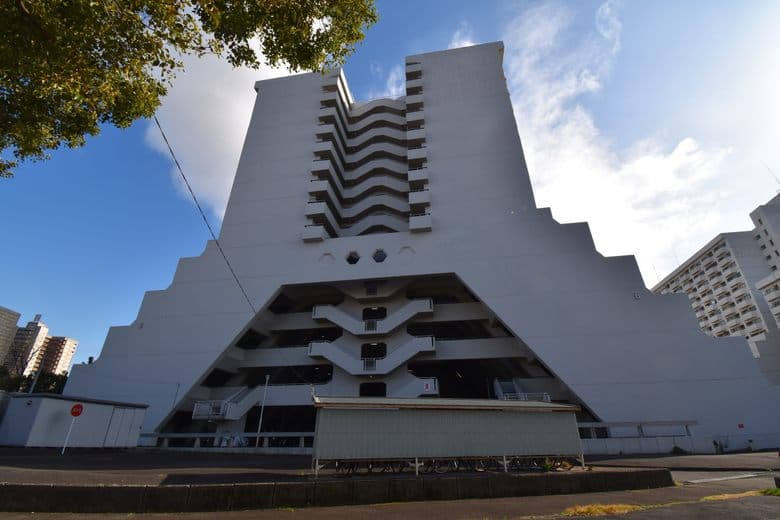
The Kawaramachi Housing Complex is a significant example of Metabolist architecture, a post-war Japanese architectural movement that envisioned cities as organic, ever-evolving structures. Designed by Yukio Ōtani in 1972, its distinctive inverted Y-shaped buildings were an innovative solution to maximize sunlight on lower floors, a common challenge in dense urban environments. This complex, once home to over 20,000 people and featuring its own school, shopping arcade, and post office, represents a bold vision for communal living and urban planning.
Visitors interested in urban design and architectural history will find the scale and unique forms of the buildings compelling. The complex's retro-futuristic aesthetic, often compared to science fiction settings, provides a unique visual experience. However, it is important to remember that this is an active residential area, and visitors should maintain respect for the privacy of its residents. There are no specific tourist facilities or guided tours available, so the experience is primarily one of observation and appreciation of the architecture from public spaces.
For those planning a visit, it is recommended to allocate about 30-60 minutes to walk around the complex and observe its various structures. Since it is an outdoor site, comfortable walking shoes are advisable. There are no entry fees or specific opening hours, as it is a residential district. The best time to visit would be during daylight hours for optimal viewing of the architectural details. As there are no dedicated tourist amenities, it's wise to bring your own water or snacks if needed.
The Kawaramachi Housing Complex is approximately a 20-minute walk from Kawasaki Station. Upon exiting the station, visitors can use navigation apps to guide them through the urban landscape to the complex. Public transportation in Kawasaki is efficient, making the station easily accessible from central Tokyo via train lines such as the JR Tokaido Line or Keihin-Tohoku Line. There is no specific parking information available, indicating that public transport or walking is the most practical way to reach the site.
A common point to be aware of is that this is not a museum or a designated tourist attraction, but a living residential area. Therefore, visitors should be mindful of noise levels, avoid lingering directly outside residential units, and refrain from taking intrusive photographs of residents. Respecting the local environment ensures a pleasant experience for both visitors and the community.