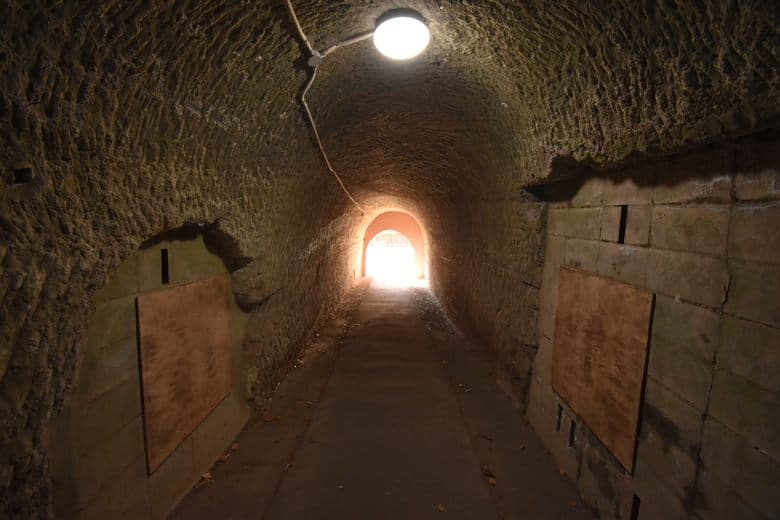
The Hao-Hao Tunnel, or the Red Tunnel Gate, is a fascinating historical artifact located near Kita-Kamakura Station. This hand-dug tunnel, dating back to the 1930s-1940s, was originally commissioned by a villa owner as a shortcut for his daughter to reach the train station. Its distinctive crimson archway, painted in an exotic Chinese style, makes it stand out amidst the quaint neighborhood, offering a unique visual contrast and a tangible link to a bygone era.
Visitors often describe the tunnel as having a somewhat surreal, 'Spirited Away'-like quality, particularly due to its Chinese aesthetic and the wild vegetation on the far side. Reviewers note the rough, chisel-marked interior, which highlights its hand-dug origins. While not a major tourist attraction, its historical context and unusual appearance are consistently praised by those who seek out less conventional sights. The blocked-off side passages, remnants of wartime embrasures, add another layer of intrigue, hinting at hidden stories within its walls.
To fully appreciate the tunnel, a brief visit of 10-15 minutes is sufficient. It's best experienced during daylight hours to clearly see the details of the archway and the tunnel's interior. There are no specific items to bring, but a camera is recommended for capturing its unique appearance. Since it's a quick stop, it can be easily combined with other activities in the Kita-Kamakura area.
The Hao-Hao Tunnel is conveniently located just a few minutes' walk from Kita-Kamakura Station, which is served by the Yokosuka Line. Upon exiting the station, visitors can easily find the tunnel, making public transport the most straightforward way to access it. There is no dedicated parking, so driving is not recommended. Its proximity to the station makes it an accessible and easy detour for those arriving by train.
Common complaints are rare, as visitors typically approach this site with an understanding that it is a minor, historical curiosity rather than a grand attraction. Some might find it less impressive than anticipated if expecting a large-scale landmark. To mitigate this, manage expectations and view it as a small, unique piece of local history and architecture rather than a primary destination.