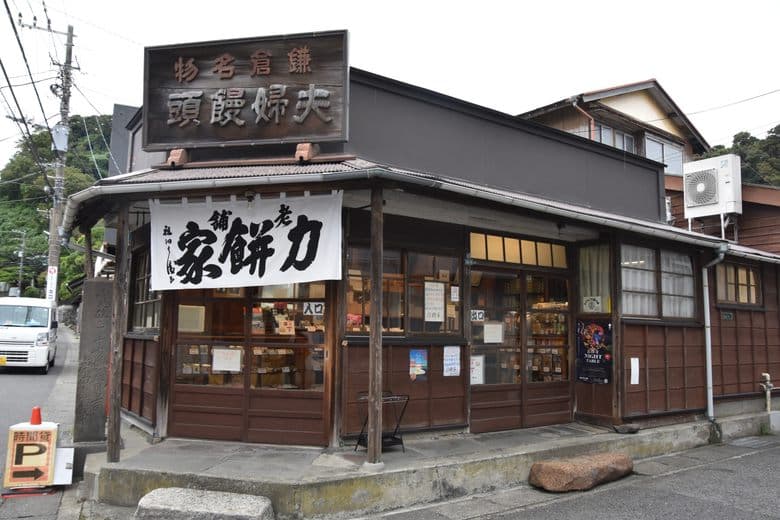
Chikaramochiya is a venerable sweet shop in Kamakura, with a history stretching back to 1690. It is celebrated for its 'chikaramochi' (strength mochi), a traditional rice cake believed to impart strength, and other unique local confections. This establishment offers a tangible connection to Kamakura's culinary heritage, particularly through its association with the local folk hero Kamakura Gongorō Kagemasa.
Visitors consistently praise the freshness and traditional taste of the mochi. The Gongorō-chikaramochi, made according to an original recipe, is a highlight, though its short shelf life (one day) means it's best enjoyed immediately. For those wishing to take sweets home, the gyūhi-based mochi offers a longer shelf life of up to three days. Reviewers often recommend trying the seasonal kusa-mochi (mugwort flavored) available from February to April, and the distinctive fukumen-manjū, a Castella-style cake shaped like ritual masks.
When visiting, plan to spend about 15-30 minutes to select your sweets and perhaps enjoy them nearby. It's advisable to visit earlier in the day for the freshest selection, especially for the one-day shelf-life mochi. Consider purchasing a box of ten (750 yen) or sixteen (1,300 yen) chikaramochi, as they are not sold individually. While the shop is small, it's a pleasant stop for a traditional Japanese snack. Cash is generally preferred, though some shops in Japan may accept cards.
Chikaramochiya is conveniently located on the street leading to Goryo Shrine in Kamakura. It is easily accessible by public transport. The nearest train station is Hase Station on the Enoden Line, which is a short walk away. From Kamakura Station, take the Enoden Line towards Fujisawa and alight at Hase. The shop is situated within walking distance from the station, making it a convenient stop for those exploring the temple and shrine area on foot.
A common point to note is the limited shelf life of some products, particularly the original Gongorō-chikaramochi. To mitigate disappointment, be aware that these are intended for immediate consumption. If you plan to travel further or want to bring souvenirs, opt for the gyūhi variety or other sweets with a longer expiry date. The shop can get busy, so patience may be required during peak tourist times.