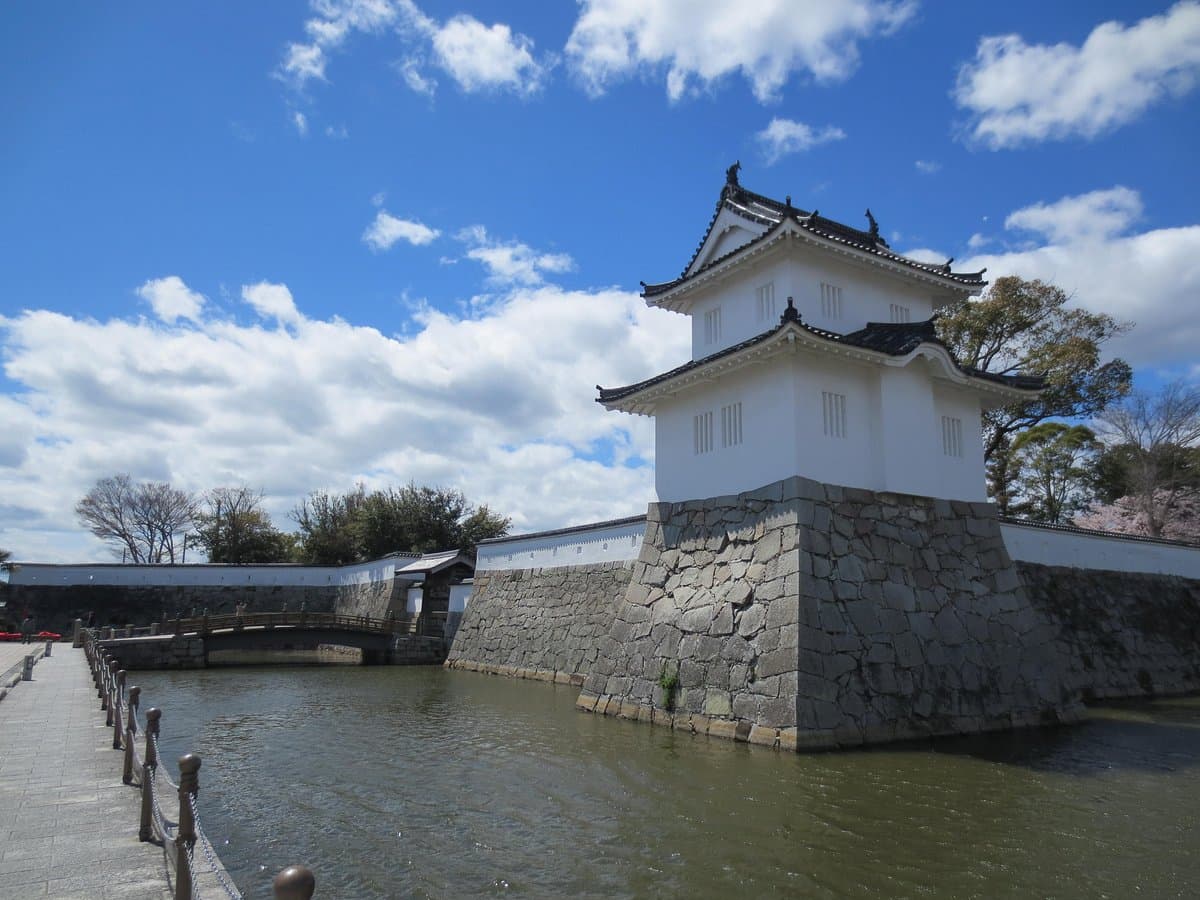
Ako Castle ruins represent one of Japan's most historically significant sites, though visitors should understand what 'ruins' truly means here. Built in 1615 by the Asano clan, the castle became famous as the seat of power for the domain whose lord, Asano Naganao, was involved in the legendary 47 Ronin incident of 1701—a pivotal moment in samurai history. The castle was never fully developed with a traditional keep; instead, it functioned as a fortified palace and administrative center. Today, the site is maintained as a free historical park with reconstructed gates, original stone walls, moats, and the base of the former palace, but no tower or major structures remain standing.
Visitors consistently praise the site's peaceful atmosphere and historical significance, particularly those familiar with the 47 Ronin story. Several reviewers note that the ruins provide a tangible connection to this famous vendetta narrative, making it a meaningful pilgrimage destination when combined with other related sites like Sengakuji Temple in Tokyo. The reconstructed Otemon Gate and surrounding walls are described as beautiful and photogenic. However, many visitors emphasize that this is not a dramatic castle experience—expect open grounds, marked building foundations, and interpretive layouts rather than impressive architecture. The site is notably less crowded than major castles, making it ideal for a leisurely walk. Spring visits are particularly recommended, as the park is planted with numerous cherry trees that attract flower-viewing crowds during bloom season.
Plan to spend 45 minutes to 1.5 hours exploring the grounds, depending on your interest in the 47 Ronin history. Bring comfortable walking shoes, as you'll be traversing open parkland and gravel paths. The site is free to enter and open year-round. Arrive early in the morning or on weekdays to avoid crowds, especially during cherry blossom season (late March to early April). The adjacent Ako City History Museum offers additional context about the Asano clan and the region's salt-trading heritage, and many visitors combine a visit here with a walk along nearby Castle Street, which features local shops and restaurants. No special equipment or preparation is needed; this is an easy, accessible walk suitable for all fitness levels.
Getting there is straightforward via public transport. Take the JR Kobe Line (also called the Ako Line) to Banshu-Ako Station, which is the main station serving the area. From the station, the castle ruins are approximately a 10-15 minute walk—head toward the town center and follow signs for the castle or the Ako City History Museum. If driving, there is free parking available in front of the Ako City History Museum, which is directly adjacent to the castle grounds. This parking lot is convenient for accessing the Otemon Gate entrance. The site is well-signposted from the station and parking areas, making navigation easy even for first-time visitors.
The main limitation visitors encounter is the lack of visible structures—this is not a castle you can walk through or climb. Some reviewers note that without prior knowledge of the 47 Ronin story, the site may feel underwhelming, as there are no major artifacts, statues, or indoor exhibits within the castle grounds itself. To mitigate this, read about the Asano clan and the 47 Ronin incident before visiting, or visit the adjacent history museum first to build context. Additionally, some visitors mention that access to certain areas within the ruins is restricted due to historical preservation, so stay on marked paths. The site can feel sparse outside of cherry blossom season, so consider timing your visit accordingly if you want a more vibrant atmosphere.