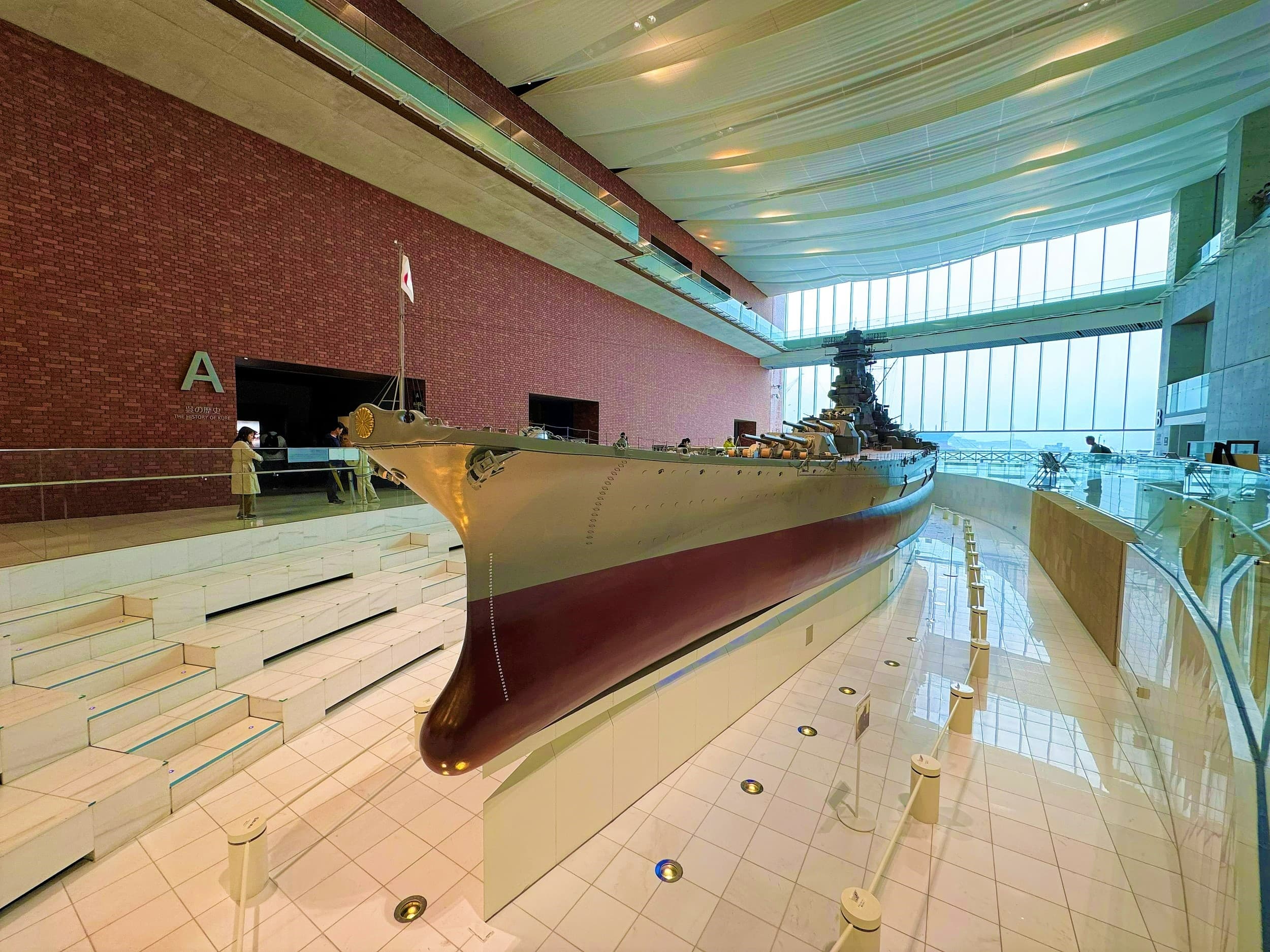
The Yamato Museum, officially known as the Kure Maritime Museum, is a pivotal institution dedicated to preserving and presenting the maritime history of Kure, a city renowned for its shipbuilding and naval heritage. Its centerpiece is a meticulously crafted 1:10 scale model of the legendary battleship Yamato, which was constructed in Kure. The museum effectively chronicles the city's transformation into a significant naval port and shipbuilding hub after the Meiji Restoration, offering insights into Japan's technological prowess and its role in naval warfare.
Visitors frequently highlight the overwhelming size and detail of the Yamato model, often describing it as a 'must-see' for warship enthusiasts. Beyond the main attraction, the museum houses a diverse collection of exhibits, including a real Zero fighter plane, Kaiten human torpedoes, midget submarines, and various naval guns and propellers. Many reviewers appreciate the museum's ability to present complex historical narratives, from the intricacies of shipbuilding technology to the human stories of wartime, often finding it both educational and emotionally impactful. The interactive exhibits on the third floor are particularly popular with families, providing engaging learning opportunities for children.
To make the most of your visit, allocate at least 2-3 hours, though some visitors recommend up to half a day, especially if you delve into all the exhibits. Arriving early in the day is advisable, as the museum can become crowded, and the parking lot tends to fill up quickly. While much of the information is in Japanese, English audio guides are available and highly recommended to enhance the experience. Reviewers suggest doing some preliminary research on Japan's naval history or the Yamato battleship to fully appreciate the context of the exhibits. Don't miss the opportunity to visit the nearby JMSDF Kure Museum (Tetsu-no-Kujira-Kan), which features a real submarine, as many visitors combine these two attractions.
The Yamato Museum is conveniently located within walking distance of Kure Station, typically a 10-15 minute stroll. Many visitors utilize their JR Pass to take the local train from Hiroshima Station to Kure, a journey that takes approximately 40 minutes. For those driving, parking is available, but as noted, it can fill up quickly during peak times. The museum is well-signposted from the station, making it easy to find for first-time visitors.
A common complaint among international visitors is the limited English explanations for some exhibits, particularly in special exhibitions. While audio guides help, some feel a deeper level of English translation would enhance understanding. To mitigate this, consider downloading a translation app or conducting prior research to familiarize yourself with the historical context. Additionally, some visitors note that the museum focuses heavily on the Yamato, and those expecting broader coverage of naval history might find it slightly less comprehensive in other areas.