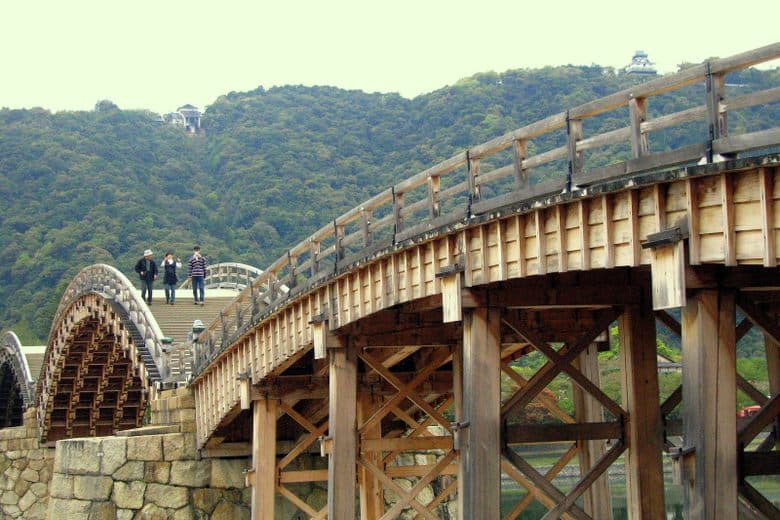
The Kintai Bridge, located in Iwakuni, Yamaguchi Prefecture, is one of Japan's most famous and historically significant wooden arch bridges. Originally constructed in 1673, its distinctive five-arch design spans the Nishiki River, offering a testament to traditional Japanese engineering and aesthetics. The bridge's elegance, which inspired its name 'Kintai' (gold brocade sash), has made it a designated National Treasure and a central feature of the scenic Kikko Park, leading to the historic Iwakuni Castle.
Visitors frequently commend the bridge's architectural beauty and the serene atmosphere of its surroundings. Many reviewers highlight the bridge's charm during different seasons, with cherry blossom season in spring and the vibrant autumn foliage being particularly popular for photography. The walk across the bridge itself is often described as a pleasant experience, offering picturesque views of the river and the castle. Reviewers also appreciate the well-maintained Kikko Park on the other side, which features samurai family-owned houses and provides access to the cable car for Iwakuni Castle.
For the best experience, visitors recommend allocating 2-3 hours to fully explore the bridge, Kikko Park, and potentially take the cable car up to Iwakuni Castle. Early mornings are often suggested to avoid crowds, especially during peak seasons like cherry blossom. Bringing comfortable walking shoes is advisable, as there is a fair amount of walking involved. While the bridge itself is a paid crossing, the surrounding park offers many free areas to enjoy. Consider purchasing a combined ticket if you plan to visit the castle and use the cable car, as this often offers better value.
To reach the Kintai Bridge, take a city bus from Iwakuni's JR Station. The bus ride typically takes about 20 minutes, and visitors should alight at the "Kintai Bridge/Kikko Park" stop. The bridge is then just a short walk from the bus stop. For those driving, parking is available near Kikko Park, though it can fill up quickly during busy periods.
A common point of discussion among visitors is the toll for crossing the bridge. While some find the fee reasonable for the maintenance of such a historical structure, others feel it's a minor inconvenience. To mitigate this, consider the combined ticket options if you plan to visit other attractions in the area, as it often includes the bridge toll and offers better overall value. The bridge can also get very crowded during peak seasons, so visiting early in the morning or later in the afternoon can enhance the experience.