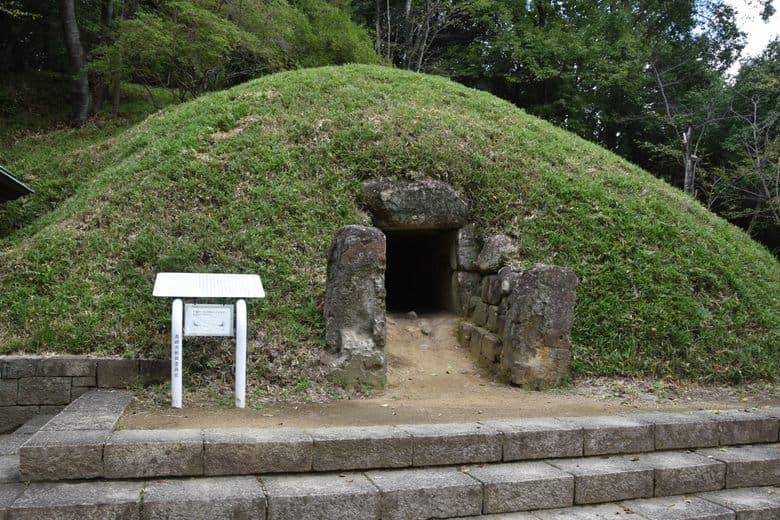
The Yamanoue Stele and Tumulus are a significant archaeological site in Takasaki, Gunma Prefecture, renowned for housing the oldest surviving stele in Japan. Erected in 681 AD, the stele bears a unique inscription in Chinese characters with Japanese grammar, a personal dedication from a monk to his late mother. Adjacent to it is the Yamanoue tumulus, an ancient burial mound (kofun) that provides rare insights into early Japanese funerary customs, including the specific identity of one of its interred individuals, a detail often lost in other kofun sites.
Visitors consistently praise the historical significance and the peaceful, rural setting of the site. The opportunity to witness such an ancient artifact firsthand is a major draw. However, some reviewers note the site's remote location and the physical effort required to reach it. The chamber tomb within the tumulus is accessible, offering a unique experience, though visitors are advised to be aware of potential insects like camel crickets, especially during summer, and to watch out for wasps and wild boars in the surrounding mountainous area.
To make the most of your visit, allocate about 1-2 hours to explore the stele, tumulus, and read the informational plaques. Wear comfortable shoes suitable for walking and climbing steps, as the site involves a mile-long walk and a steep ascent. Bringing insect repellent is advisable, particularly in warmer months. The best time to visit is during cooler, drier weather to avoid both the heat and potential insect activity. There is no entry fee, making it an accessible historical experience.
The nearest train station is Yamana, which is a convenient stop if you are traveling from Takasaki Station to the Tomioka Silk Mill. From Yamana Station, the site is approximately a mile's walk, which includes a steep set of steps. For those visiting the Three Stelae of Kōzuke, a free minibus service operates almost hourly from 9 AM to 5 PM, connecting each of the stelae, including Yamanoue. This can be a practical option for navigating between the historical sites without a car.
A common complaint is the lack of extensive facilities or amenities at the site itself, given its rural location. To mitigate this, ensure you bring any necessary refreshments or snacks, as there are limited options nearby. Also, be prepared for the walk and climb, as the terrain can be challenging for some visitors.