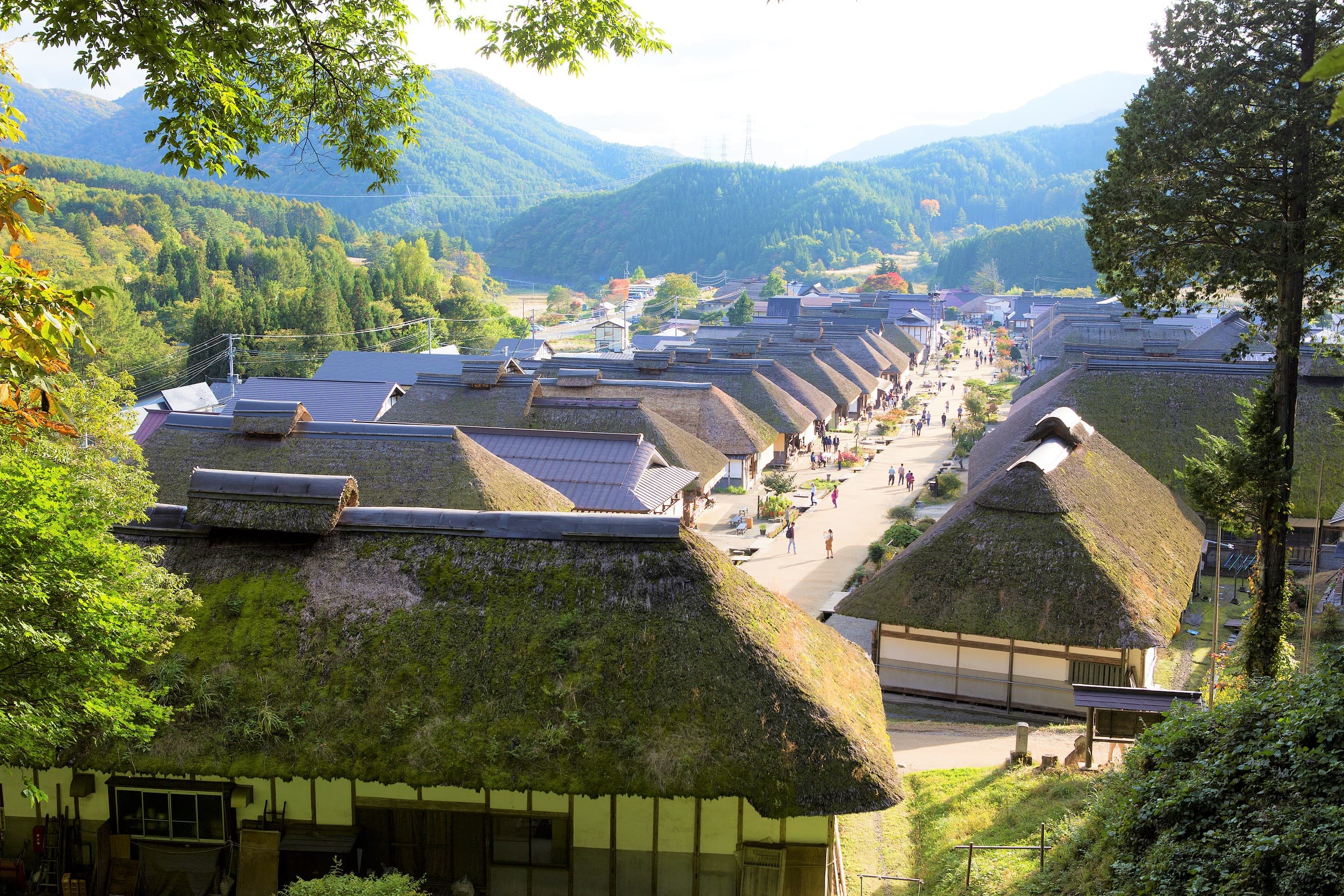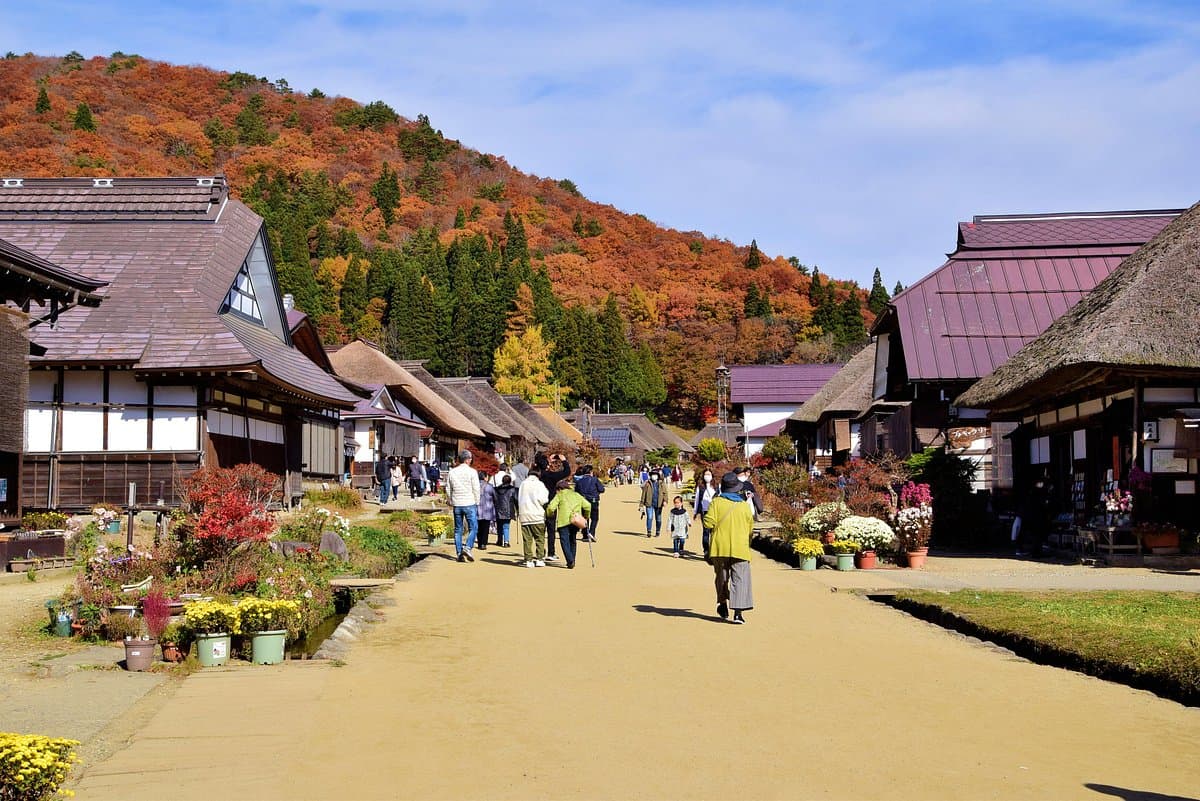
Ouchijuku is a designated Important Preservation District for Groups of Traditional Buildings, offering a rare and authentic window into Japan's Edo period. This former post town, once a vital stop on the Aizu West Road connecting Aizu-Wakamatsu to Nikko, has meticulously preserved its unique architectural style, characterized by thatched-roof houses lining an unpaved main street. It stands as a living museum, allowing visitors to experience the atmosphere of a bygone era.
Visitors consistently praise the village's picturesque charm, especially the stunning views from the observation deck overlooking the entire town. Many highlight the unique culinary experience of 'negi soba,' where a large green onion serves as both a utensil and an ingredient, though some note it can be challenging to eat. The souvenir shops, often housed within the traditional buildings, are appreciated for their variety and local handicrafts, with reviewers finding them more distinct than typical tourist traps. However, some visitors find the village to be primarily a 'shopping arcade' and suggest that those who have visited similar traditional villages might find it less novel.
To make the most of your visit, plan for 1-2 hours to explore the main street, climb to the observation deck, and enjoy a meal. Arriving early on weekdays is recommended to avoid crowds, as parking can fill up quickly, especially during peak seasons like autumn foliage or snowy winters. While many shops and restaurants are open, some reviewers note that during colder months or off-peak times, certain establishments might close early. Bringing cash is advisable for smaller shops and food stalls. The village is particularly beautiful in winter with snow, but visitors should be prepared for cold weather and potentially icy paths.
Access to Ouchijuku often involves a combination of train and bus. From Kita-Senju Station, take the Tobu Limited Express Liberty Aizu to Yunokami Onsen Station. Note that while Tobu Railway accepts IC cards, Yagan Railway and Aizu Railway, which are part of the route, may not, so be prepared with cash for tickets. From Yunokami Onsen, a local bus (often requiring reservations) or a taxi can take you to Ouchijuku. For those driving, parking is available for a fee (around 500 yen), with some reviewers mentioning a free but more distant parking option. The drive itself, especially from Aizuwakamatsu (about 40 minutes) or from National Route 121, involves scenic mountain roads, which can be challenging in winter; drivers are advised to use engine braking and maintain distance.
A common complaint is that the village can feel small and quickly explored, especially if expectations are set too high for extensive historical exhibits beyond the aesthetic. To mitigate this, focus on the unique cultural aspects like the negi soba, the craftsmanship in the shops, and the overall ambiance rather than expecting a large-scale historical theme park. Some reviewers also mention that the village can get very crowded with tour buses, diminishing the 'back in time' feel; visiting during off-peak hours or seasons can help avoid this.