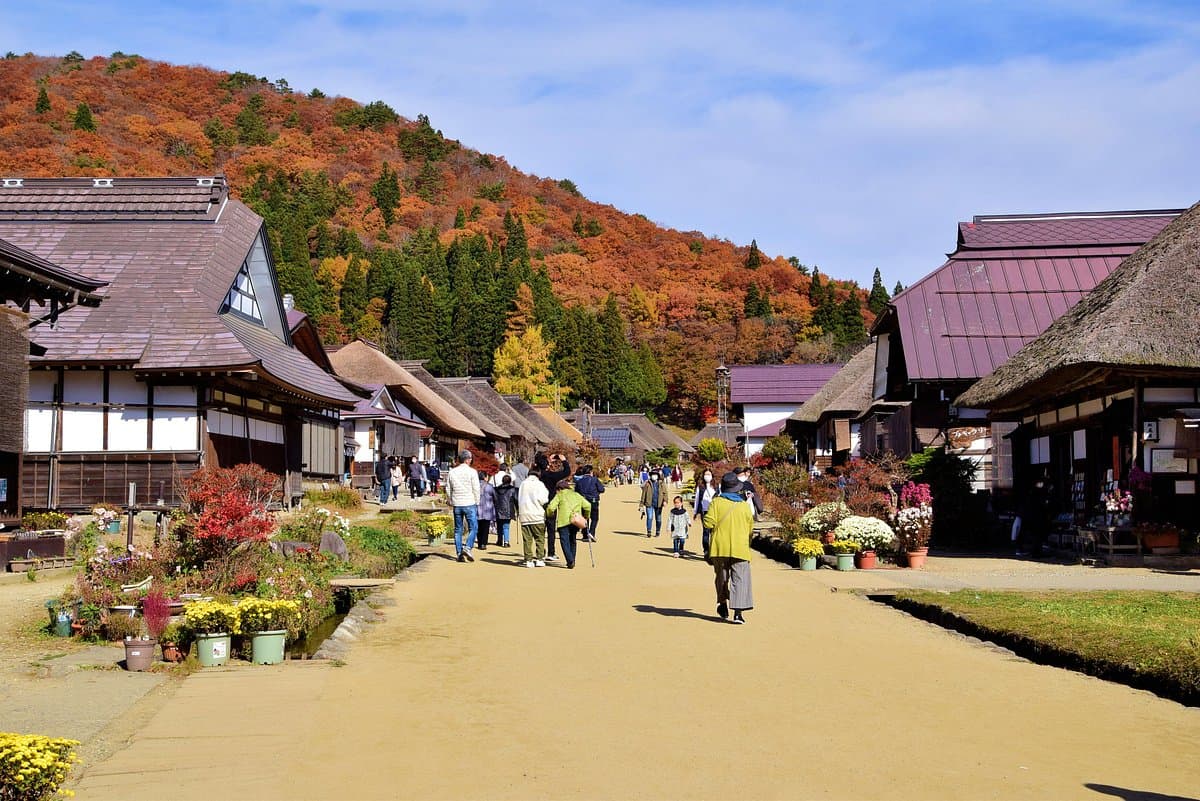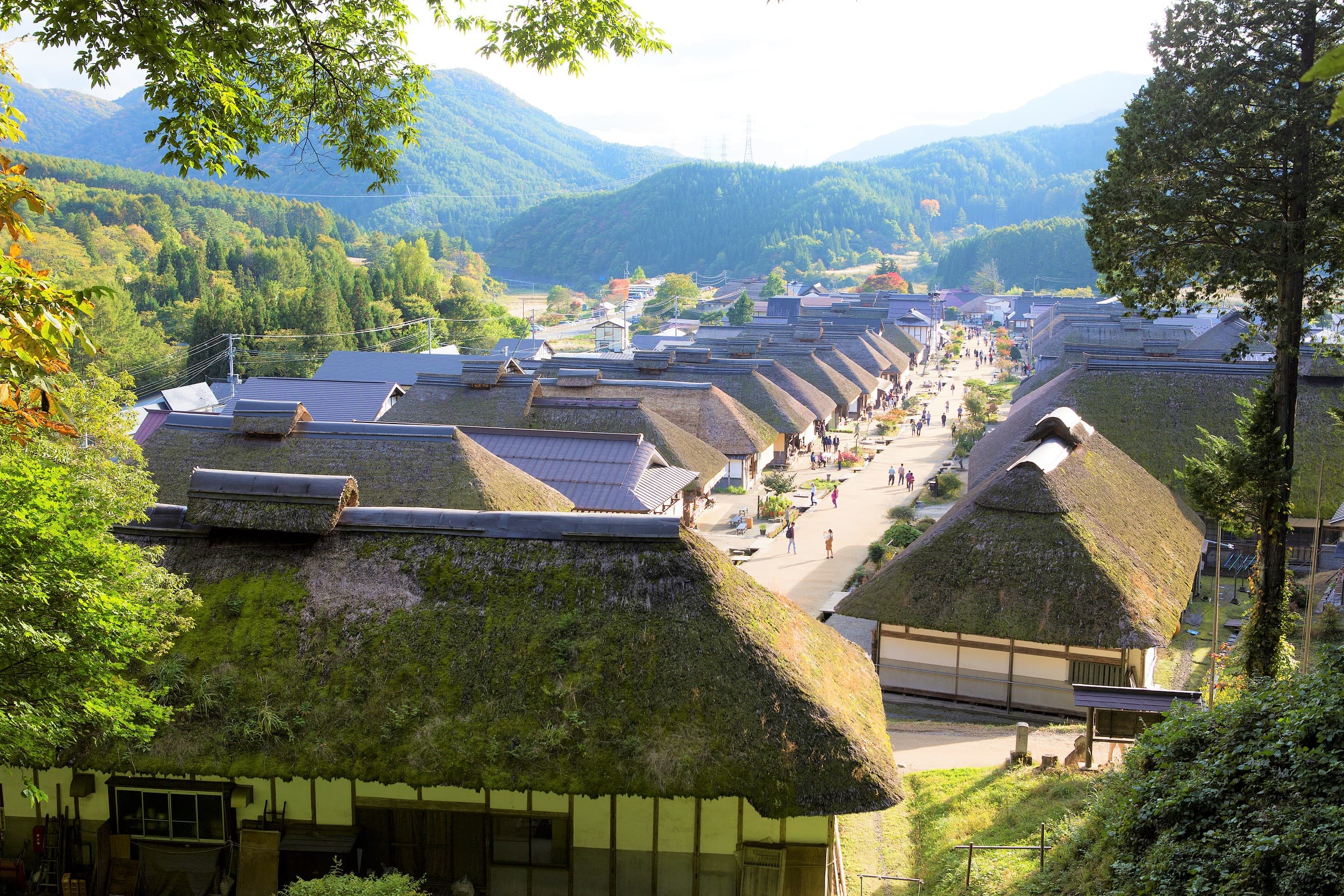
Ouchi-juku is a historic post town in Fukushima Prefecture, renowned for its exceptionally well-preserved Edo-period (1603-1867) architecture. It served as an important stop on the trade route connecting Aizuwakamatsu and Nikko. In 1981, it was designated as a National Important Preservation District for Groups of Traditional Buildings, ensuring its unique character remains intact for future generations.
Visitors consistently praise the village's authentic atmosphere, often comparing it favorably to other historic sites like Shirakawa-go, noting Ouchi-juku's relative tranquility due to fewer crowds. The main street is lined with approximately 50 thatched-roof houses, many of which have been converted into charming souvenir shops, local restaurants, and traditional guesthouses. A highlight for many is the opportunity to taste local Fukushima delicacies, particularly the unique soba noodles eaten with a leek as a utensil, which reviewers describe as both delicious and a memorable experience. The scenic beauty, especially when viewed from the mountain lookout, is frequently mentioned as a must-see, with some visitors noting the stunning contrast of the thatched roofs against a snowy backdrop in winter or vibrant autumn colors.
To make the most of your visit, plan to spend around 2-3 hours exploring the village. While there is no admission fee, budget for food and souvenirs. Reviewers suggest visiting during different seasons, as each offers a distinct charm; cherry blossoms in spring, lush greenery in summer, vibrant foliage in autumn, and picturesque snowscapes in winter. Early mornings are recommended to avoid larger crowds, although many visitors note that Ouchi-juku generally feels less crowded than other popular historical villages. Dress warmly if visiting in colder months, as it can be windy and chilly, even in spring.
Ouchi-juku is best accessed by car, as public transport options are limited and often require transfers. Reviewers who drove found it a convenient stop. For those relying on public transportation, the nearest train station is Yunokami Onsen Station on the Aizu Railway. From there, local buses or taxis are required to reach Ouchi-juku. Be aware that bus schedules can be infrequent, so planning ahead is crucial. Parking is available, though it can fill up during peak seasons like Golden Week.
A common observation is that while the village is beautiful, some find it to be a relatively small area to explore. To mitigate this, engage with the local shops and restaurants, try the unique soba, and take the short walk up to the viewpoint for panoramic photos. While some compare it to Shirakawa-go, managing expectations regarding its scale can enhance the experience.