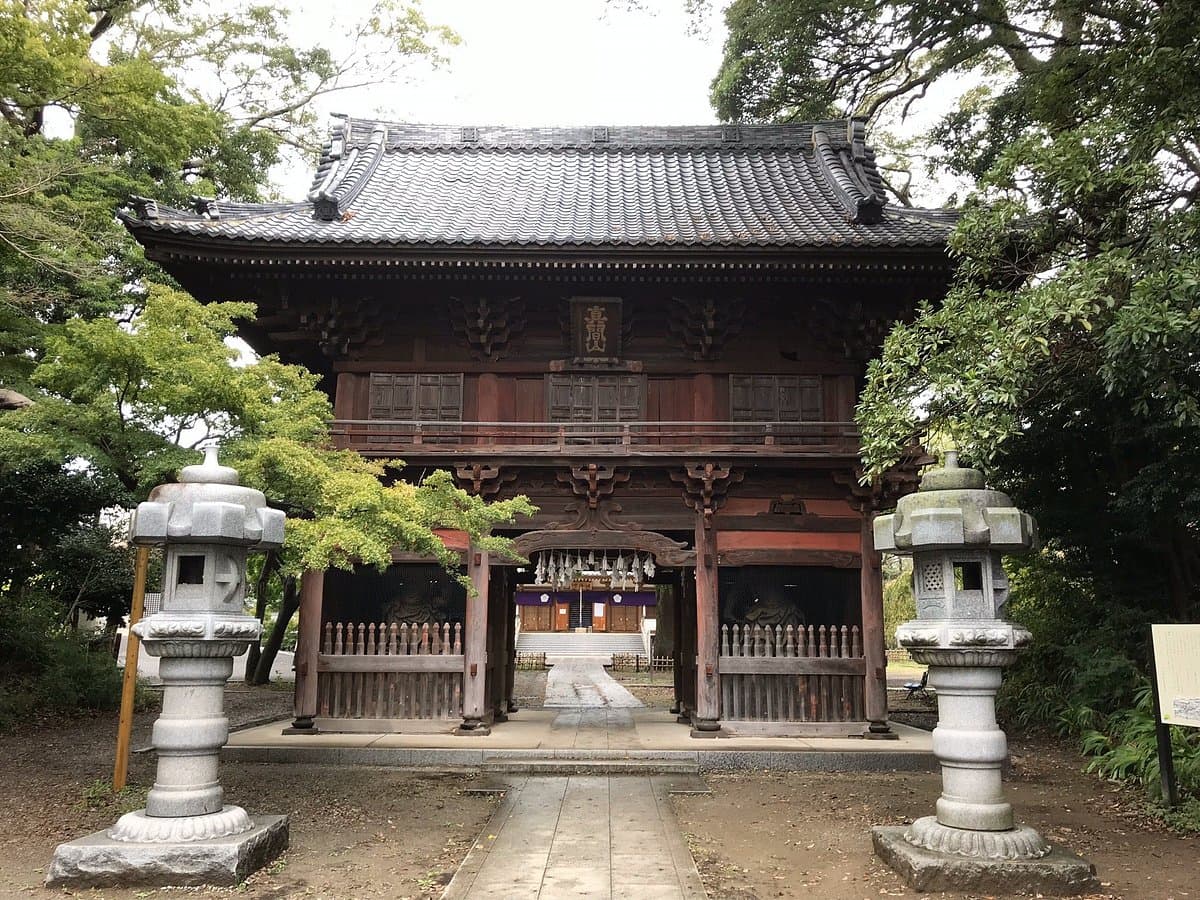
Tekona Reijindo is a distinctive shrine in Ichikawa, Chiba, dedicated to the legendary figure of Tekona. Her story, rooted in the ancient town of Mama, tells of a beautiful and kind-hearted woman whose overwhelming allure led to tragic consequences. This legend, immortalized in the classical Man'yōshu poetry collection, forms the spiritual foundation of the shrine, which was established in 1501 after Tekona reportedly appeared in a priest's dream. Today, the shrine is revered as a protector of children and pregnant women, offering blessings for good luck and safe childbirth, and is also sought out by those wishing for lasting romantic relationships.
Visitors often appreciate the shrine's quiet, reflective atmosphere, which provides a peaceful escape from the urban bustle. The historical depth, tied to ancient Japanese poetry and local folklore, is a significant draw for those interested in cultural narratives. Many find the story of Tekona poignant and unique, distinguishing this shrine from more conventional religious sites. While not a grand architectural marvel, its significance lies in its rich narrative and the local devotion it inspires.
To fully appreciate Tekona Reijindo, visitors should allocate about 30-60 minutes to explore the grounds and reflect on the legend. The shrine is best visited during daylight hours, as its charm is in its historical context and peaceful ambiance rather than illuminated displays. There are no specific items to bring, but a respectful demeanor is always appropriate. Combining a visit here with the nearby Kamei-in temple, where the well believed to be used by Tekona is located, enhances the experience.
The shrine is conveniently accessible by public transport. It is approximately a 10-minute walk from either Ichikawa-Mama Station or Kōnodai Station. Both stations are well-connected, making it relatively easy to reach from central Tokyo. Walking from the station allows visitors to experience the local neighborhood before arriving at the tranquil shrine.
Common complaints are generally few, primarily stemming from visitors expecting a larger or more visually striking attraction. Those anticipating grand architecture or extensive exhibits might find it underwhelming. To mitigate this, approach the visit with an appreciation for its historical and legendary significance rather than its physical scale. Understanding the story of Tekona beforehand will greatly enhance the experience.