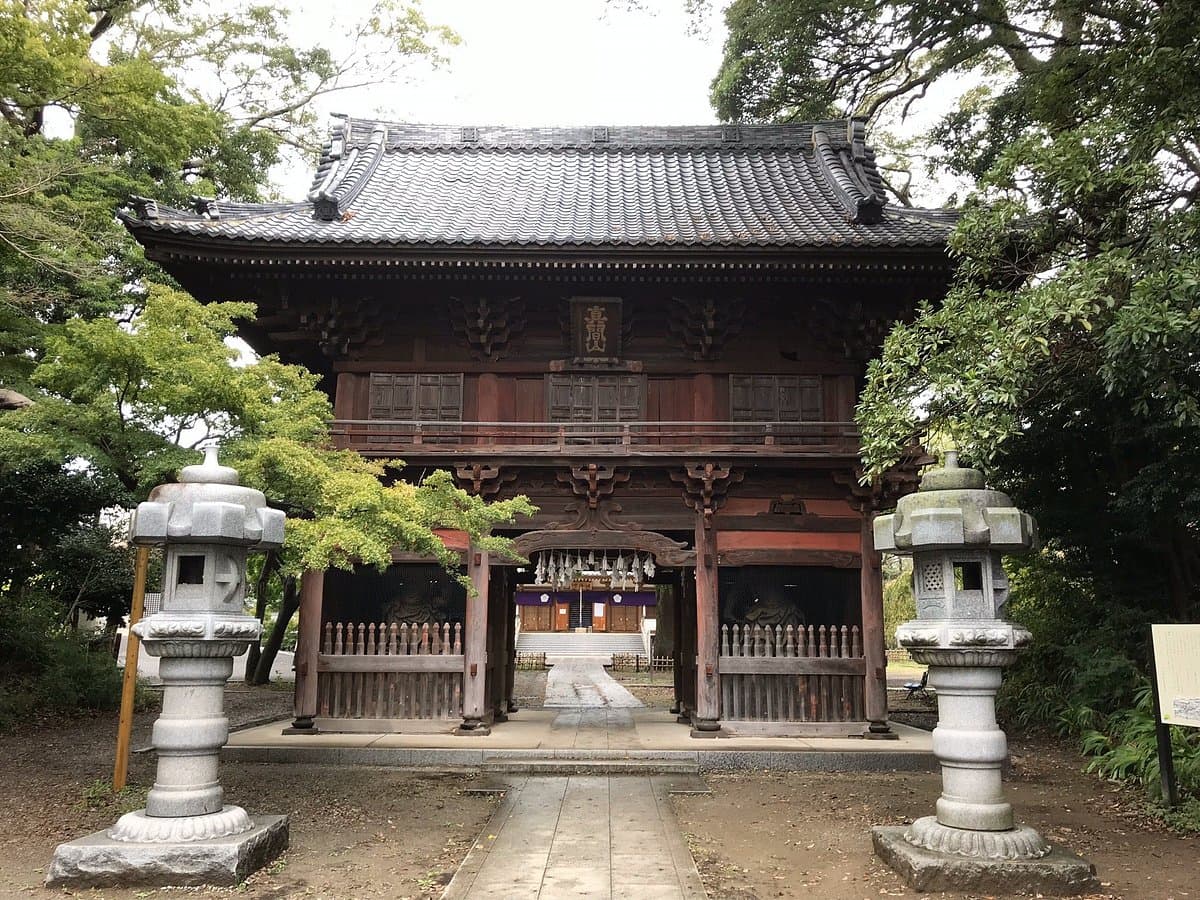
Namida-ishi, meaning "tear-stone," is a unique and somewhat eerie feature found within the ancient Guhō-ji Temple complex in Ichikawa, Chiba. This particular stone block, situated on the 27th step of the temple's long, steep stone staircase, stands out due to its constant dampness and mossy appearance, contrasting with the dry, sharp-edged steps around it. Its significance lies in the local legend of a master carpenter, Suzuki Nagayori, who, after his ship carrying building materials for a Tokugawa shogun's shrine got stuck, used the stones for Guhō-ji instead. Upon discovery, he committed seppuku on these very steps, and it is said his tears and blood perpetually soak into this one stone, forever marking his tragic end.
Visitors to Guhō-ji Temple often seek out this specific step, drawn by the intriguing legend. While some are captivated by the historical and folkloric narrative, others approach it with a more skeptical eye, pondering the possibility of a natural spring. Regardless of belief, the stone serves as a tangible link to a dramatic local story, adding a layer of mystery to the temple visit. Reviewers note that the stone is indeed visibly wet and mossy, making it easy to identify among the other steps.
To fully appreciate Namida-ishi, visitors should allocate a short amount of time, perhaps 15-30 minutes, as it is a single point of interest within the larger temple grounds. The best time to visit would be during daylight hours to clearly see the stone's distinct appearance. There are no specific items to bring, but comfortable shoes are advisable for navigating the steep stone steps. The wet block is located on the left side as you ascend the steps, among the second sets from the bottom, making it relatively easy to find.
Guhō-ji Temple is accessible by public transport. The nearest train station is Ichikawa Station, which is served by the JR Sobu Line. From Ichikawa Station, the temple is a moderate walk, or visitors can take a local bus. Driving is also an option, though parking availability at the temple itself may be limited, so checking local parking facilities beforehand is recommended. The temple is situated in a residential area, and the approach involves navigating local streets before reaching the main entrance.
Common complaints are rare regarding Namida-ishi itself, as it is a simple, natural curiosity. However, some visitors might find the steepness of the temple steps challenging. To mitigate this, take your time ascending and descending, and use handrails if available. The temple grounds are generally well-maintained, but as with any outdoor historical site, weather conditions can affect the experience, so plan your visit on a clear day if possible.