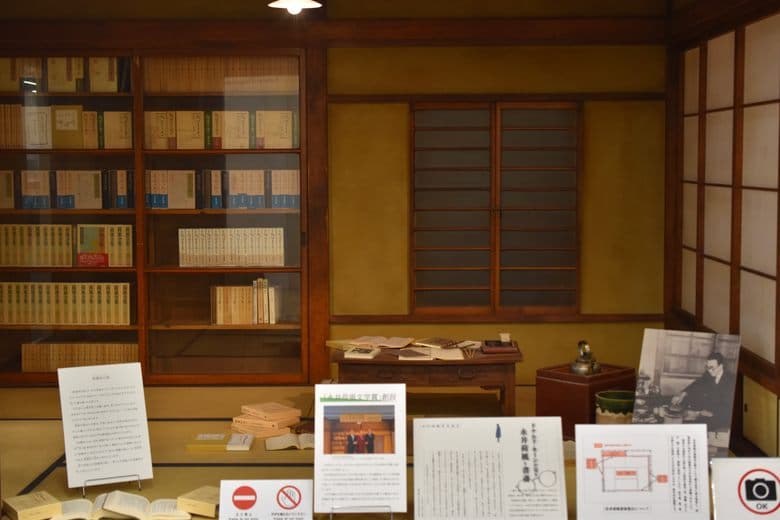
Kafū Nagai's Study is a small, yet significant, exhibit located within Ichikawa City Hall. It preserves and displays the workspace of Kafū Nagai, a prominent Japanese author known for his detailed portrayals of Tokyo's downtown life and demimonde. The exhibit features Nagai's actual bookshelf and faithful replicas of other furniture, offering a tangible connection to the literary figure who sought a quieter life in Ichikawa after his Tokyo home was destroyed.
Visitors consistently note that this is a very modest display, not a grand museum. It's appreciated by those with a specific interest in Japanese literature or Nagai's works, as it provides a unique insight into his personal environment. The exhibit's free access and location within a public building are often highlighted as convenient, making it an easy stop for those already in the area. Reviewers suggest managing expectations, as it is a small corner exhibit rather than a dedicated attraction.
To make the most of your visit, allocate about 15-30 minutes. Since it's inside a city hall, it's best visited during weekday business hours. There's no need to bring anything specific, and photography is generally permitted, though discretion is advised. It's a quiet, reflective space, so visitors recommend approaching it with an appreciation for its historical and literary context rather than expecting an interactive experience.
Ichikawa City Hall is accessible via public transport. The nearest station is Ichikawa Station, served by the JR Sobu Line and the Toei Shinjuku Line (via direct service). From Ichikawa Station, the City Hall is typically a 10-15 minute walk. Alternatively, local buses may also service the area. Driving is also an option, and parking facilities are usually available at city halls, though it's advisable to check for specific parking availability and fees beforehand.
The primary 'complaint' or rather, common observation, is its small size and limited scope. Visitors expecting a large museum or extensive exhibition might be underwhelmed. To mitigate this, approach the visit with the understanding that it is a preserved study, a snapshot of a writer's life, rather than a comprehensive biographical display. Its value lies in its authenticity and connection to a significant literary figure.