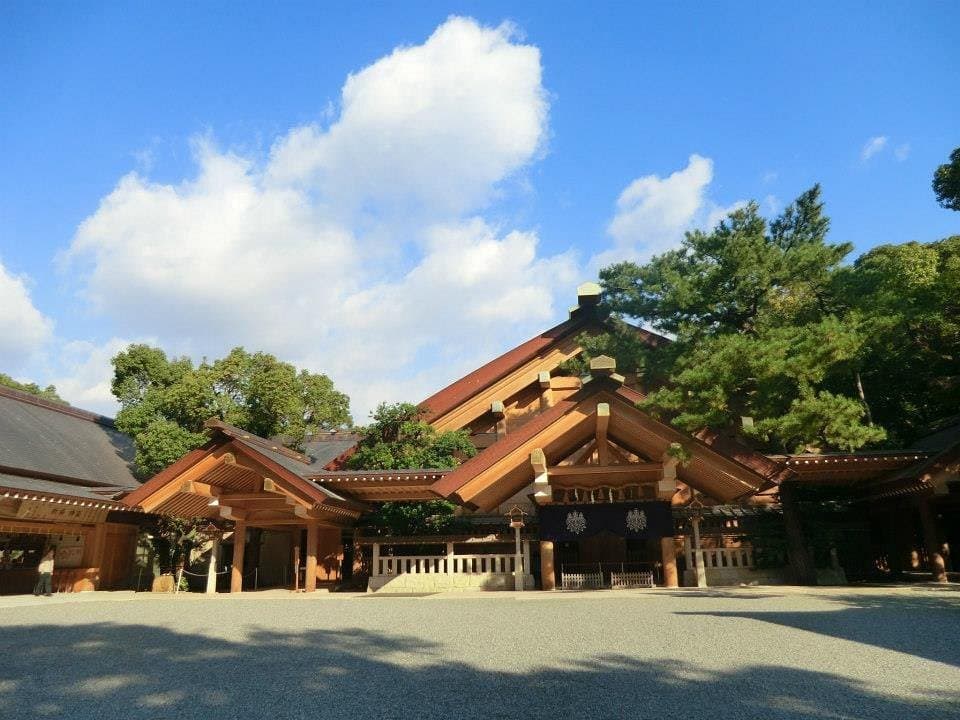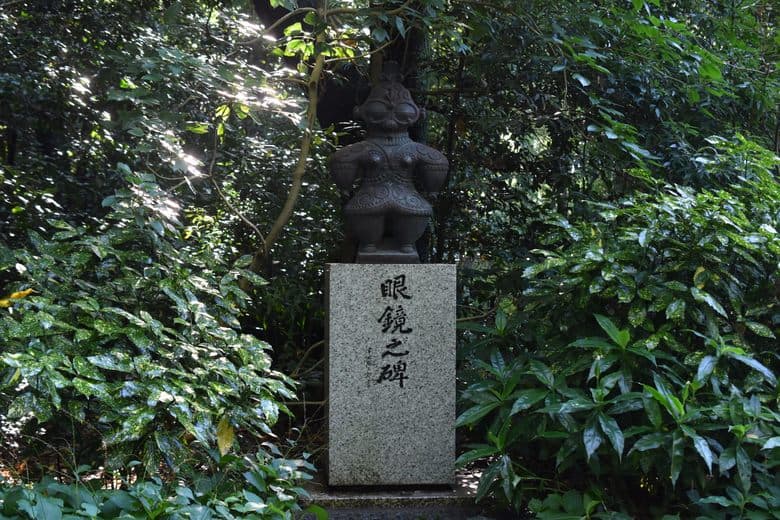
The Meganenohi, or Monument to Eyeglasses, is an intriguing and somewhat whimsical monument situated within the extensive grounds of Atsuta Jingu, one of Japan's most important Shinto shrines. While Atsuta Jingu itself is renowned for housing the sacred Kusanagi-no-tsurugi sword and its deep historical significance, the Meganenohi offers a surprising modern twist. It's a replica of a Shakōki-dogū, an ancient clay figurine from the Jōmon period, known for its distinctive, goggle-like eyes, which inspired its dedication to eyeglasses.
Visitors consistently describe the monument as an unexpected and surreal sight. Its alien-like appearance, tucked away in a wooded corner, often elicits amusement and curiosity. Reviewers appreciate the humor in its dedication, noting the clever connection between the ancient idol's design and modern eyewear. It serves as a brief, lighthearted interlude during a visit to the otherwise solemn shrine, often prompting smiles and photo opportunities.
To best experience the Meganenohi, allocate only a few minutes for viewing, as it is a small, singular monument. It's best visited during daylight hours, as part of a larger exploration of Atsuta Jingu. There are no specific items to bring for this monument itself, but comfortable walking shoes are recommended for navigating the shrine grounds. As it's free to visit and located within a major attraction, there are no specific money-saving tips beyond enjoying it as part of your shrine visit.
Atsuta Jingu is well-connected by public transport. The nearest stations are Atsuta Station (JR Tokai Line) and Jingu-mae Station (Meitetsu Line). From either station, the main entrance of Atsuta Jingu is a short walk, typically 5-10 minutes. The Meganenohi is located within the shrine grounds, so follow the signs for the various sub-shrines and gardens. Driving is also an option, with parking available at the shrine, though public transport is often more convenient in Nagoya.
Common complaints are rare for such a minor attraction, but some visitors might find it less impressive if they are not aware of its unique backstory or expect a grander monument. To mitigate this, approach it with an open mind, appreciating its quirky nature and the clever historical-cultural link it represents, rather than as a standalone major sight.