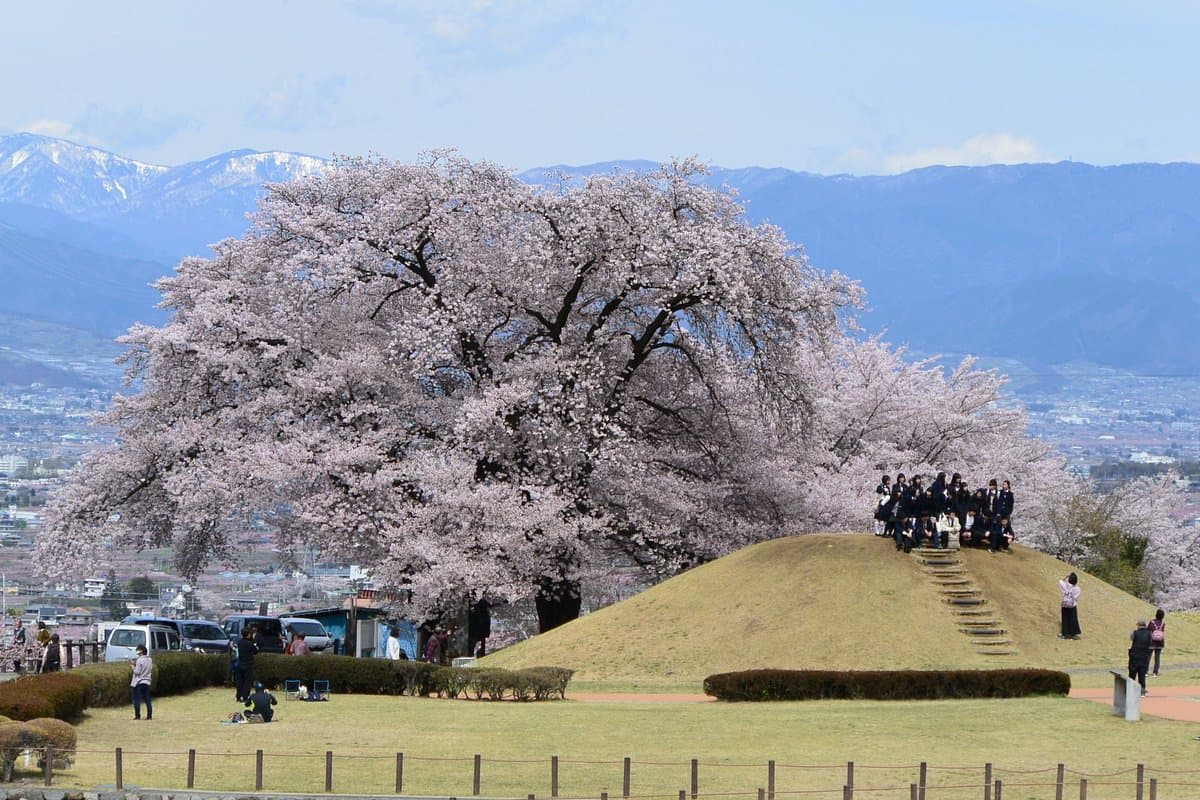
Yashiro Furusato Park is a significant local site in Fuefuki, Yamanashi Prefecture, known for its historical burial mounds and panoramic natural scenery. It serves as an open-air museum of ancient Kofun period tombs, including the large keyhole-shaped Choshizuka tomb and the round Sakazukitsuka tomb, offering a glimpse into Japan's ancient past. Beyond its archaeological importance, the park is celebrated for its elevated position, providing sweeping views of the Kofu Basin and the majestic Southern Alps.
Visitors consistently praise the park's serene atmosphere and the stunning vistas, particularly highlighting the beauty during the cherry and peach blossom seasons. Reviewers note that the vibrant blooms transform the park into a truly picturesque setting, making it an ideal spot for photography and leisurely strolls. The combination of historical artifacts and natural splendor is a recurring theme in positive feedback, with many appreciating the opportunity to experience both in one location.
To make the most of a visit, it is recommended to allocate approximately 1 to 2 hours, allowing ample time to explore the tombs and enjoy the views. The best time to visit is undoubtedly during spring, specifically when the cherry and peach trees are in full bloom, typically from late March to early April. Bringing a camera is highly advisable to capture the scenic landscapes. While there are no specific warnings about what to skip, visitors should be prepared for some walking, as the park covers a considerable area.
Yashiro Furusato Park is located at 2223-1 Oka Yashirocho, Fuefuki, Yamanashi Prefecture. Given its location, reaching the park typically involves driving or taking a local taxi from a nearby train station. Public transport options directly to the park might be limited, so planning transportation in advance is recommended. There is usually parking available for those who drive.
Common complaints are not widely reported, but visitors should be aware that outside of the blossom season, the park's appeal might be primarily historical rather than scenic. To mitigate this, consider visiting during the recommended spring period or focusing on the archaeological aspects if visiting at other times of the year.