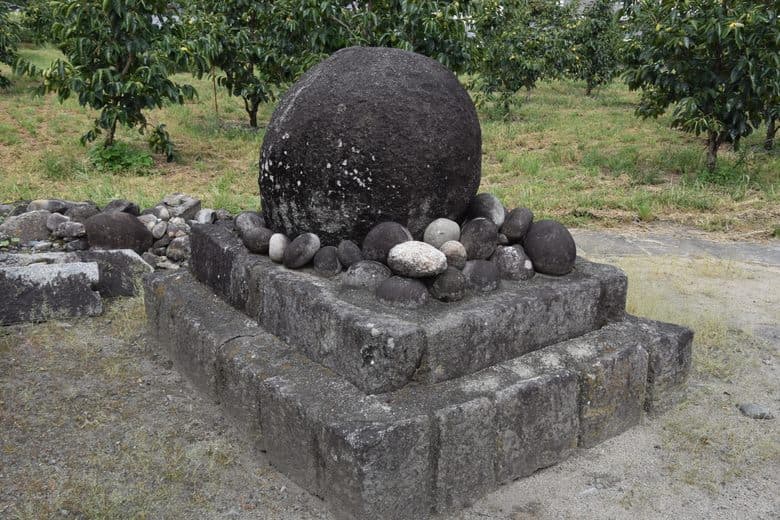
The Stone God of Nanoka-Ichiba, known locally as Maruishi-gami, is a significant example of a unique folk belief found predominantly in Yamanashi Prefecture. These 'spherical stone gods' are enigmatic objects of primitive animistic worship, with their origins and exact methods of veneration often debated even among folklorists. The Nanoka-Ichiba stone is particularly notable as the largest of its kind, revered by locals and carefully maintained on a pedestal of smaller stones.
Visitors interested in local culture and unusual historical practices will find this site intriguing. It offers a quiet, contemplative experience, distinct from the bustling atmosphere of more conventional tourist attractions. Reviewers often highlight the sense of discovery in encountering such an ancient, yet still respected, object in a modern setting. It's a place for those who appreciate the subtle nuances of local traditions rather than grand spectacles.
To make the most of your visit, allocate a short amount of time, perhaps 30 minutes, as the site itself is small. There are no facilities or guides, so come prepared with any information you wish to reference. It's best visited during daylight hours for clear viewing. Keep an eye out for other, smaller Maruishi-gami in local gardens or by roadsides, as this is a common practice in the area and adds to the cultural immersion.
The Stone God is located in the Nanoka-Ichiba neighborhood of Yamanashi City. While specific public transport details are not widely available in reviews, Yamanashi City is accessible by train. From Yamanashishi Station, the site would likely require a local bus or a taxi, or a walk if you are exploring the neighborhood on foot. Driving might be an option, but parking availability in residential areas can be limited.
A common 'complaint' or observation is the lack of extensive interpretive signage or tourist infrastructure. This is not a site designed for mass tourism, and its charm lies in its understated authenticity. To mitigate this, visitors should research the Maruishi-gami phenomenon beforehand to fully appreciate its cultural significance.