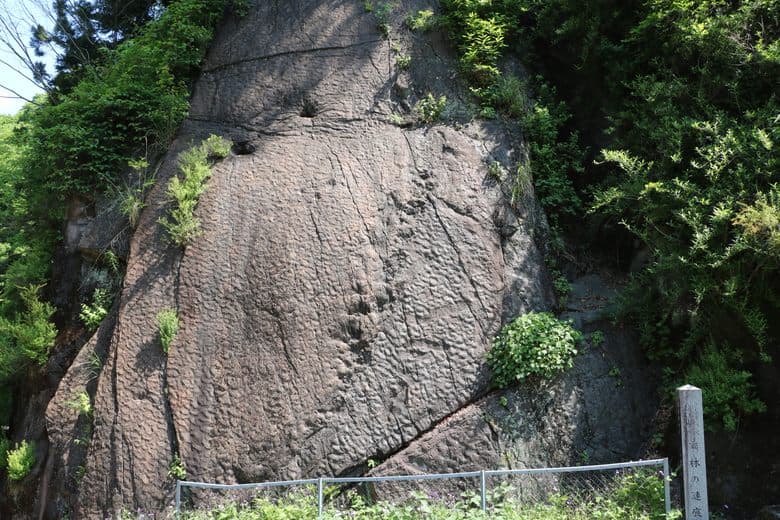
The Sebayashi Ripple Marks, also known as Sazanami-iwa or "ripple rock," represent a significant geological and paleontological site in Japan. Discovered during road construction in 1953, this mountain cliff initially revealed ancient ripple marks. Further research by Gunma University in the 1960s identified "strange holes" alongside these marks as over 50 dinosaur footprints, marking the first fossil track discovery in Japan. This finding transformed the area, leading Kanna to brand itself as a "dinosaur kingdom" and establish the Kanna Dinosaur Center.
Visitors interested in paleontology will find the site intriguing for its historical significance and the tangible evidence of prehistoric life. Reviewers often highlight the unique experience of seeing actual dinosaur footprints in their natural setting. However, the visual impact of the footprints themselves can be subtle, and some visitors might find them less dramatic than expected. The site is best appreciated by those who understand its scientific importance rather than expecting a grand visual spectacle.
Given its remote location, visitors should plan their trip carefully. It is advisable to wear comfortable walking shoes, as reaching the site involves a significant walk from the nearest public transport. Bringing water and snacks is also recommended, as amenities are limited in the immediate vicinity. A visit of 1-2 hours is generally sufficient to observe the ripple marks and footprints. The best time to visit is during daylight hours, preferably on a clear day, to ensure good visibility of the rock formations.
Reaching the Sebayashi Ripple Marks requires some effort. The site is located along Route 299 in Kanna. Public transport options are limited; from the nearest bus stop, it takes approximately an hour to reach the ripple marks on foot. Driving is often the most practical way to access the area, though specific parking information is not widely available in reviews. Visitors should confirm local bus schedules and consider the walking distance when planning their journey.
A common complaint among visitors is the site's difficult accessibility and the lack of extensive facilities. To mitigate this, it is crucial to research transportation options thoroughly before departing. Combining a visit with the Kanna Dinosaur Center, which is home to impressive fossil collections including specimens of the Sanchūryū, can enhance the overall experience and make the journey more worthwhile.