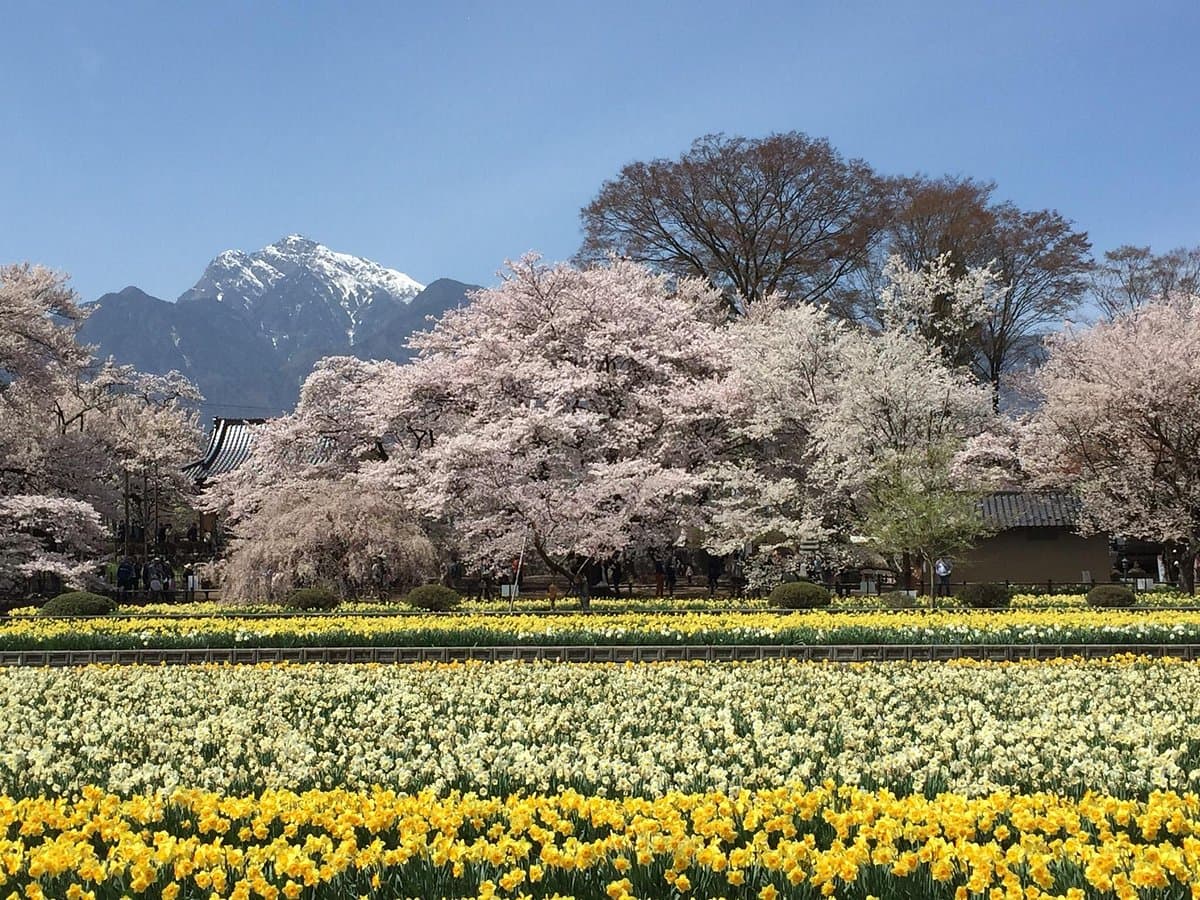
Jisso-ji Temple is a historically significant Buddhist temple located in Hokuto, Yamanashi Prefecture. Its primary claim to fame is the Yamataka Jindai Sakura, an ancient cherry tree designated as a National Natural Monument. This tree is considered one of Japan's three great cherry trees and is estimated to be around 2,000 years old, making it a living testament to the region's natural and cultural heritage.
Visitors consistently praise the beauty of the temple grounds, especially during the cherry blossom season when the Jindai Sakura is in full bloom. Reviewers highlight the serene atmosphere and the picturesque scenery created by the numerous cherry trees and daffodils covering the area. The temple offers a peaceful retreat and a chance to witness a truly ancient natural wonder. While the main attraction is the Jindai Sakura, the overall ambiance of the temple and its surrounding gardens contribute to a memorable experience.
To make the most of a visit, it is highly recommended to plan during late March to early April, when the cherry blossoms are typically in full bloom. Visitors should allocate approximately 1 to 2 hours to leisurely explore the temple grounds, admire the ancient tree, and take photographs. There are no specific items to bring beyond standard travel essentials, but comfortable walking shoes are advisable. The temple is generally not crowded outside of peak cherry blossom season, offering a more tranquil experience.
Jisso-ji Temple is located at 2763 Yamataka Mukawacho, Hokuto, Yamanashi Prefecture. While specific public transport details are not consistently mentioned in reviews, accessing the temple typically involves a combination of train and local bus or taxi from major stations in the Yamanashi area. Driving is also a viable option, and parking facilities are usually available on site or nearby, especially for those traveling by car to explore the wider Hokuto region.
A common observation is that outside of the cherry blossom season, the temple, while still peaceful, may not offer the same visual spectacle. To mitigate potential disappointment, visitors should manage expectations if visiting during other times of the year. The focus shifts from the vibrant blossoms to the historical significance of the ancient tree and the quiet spiritual atmosphere.