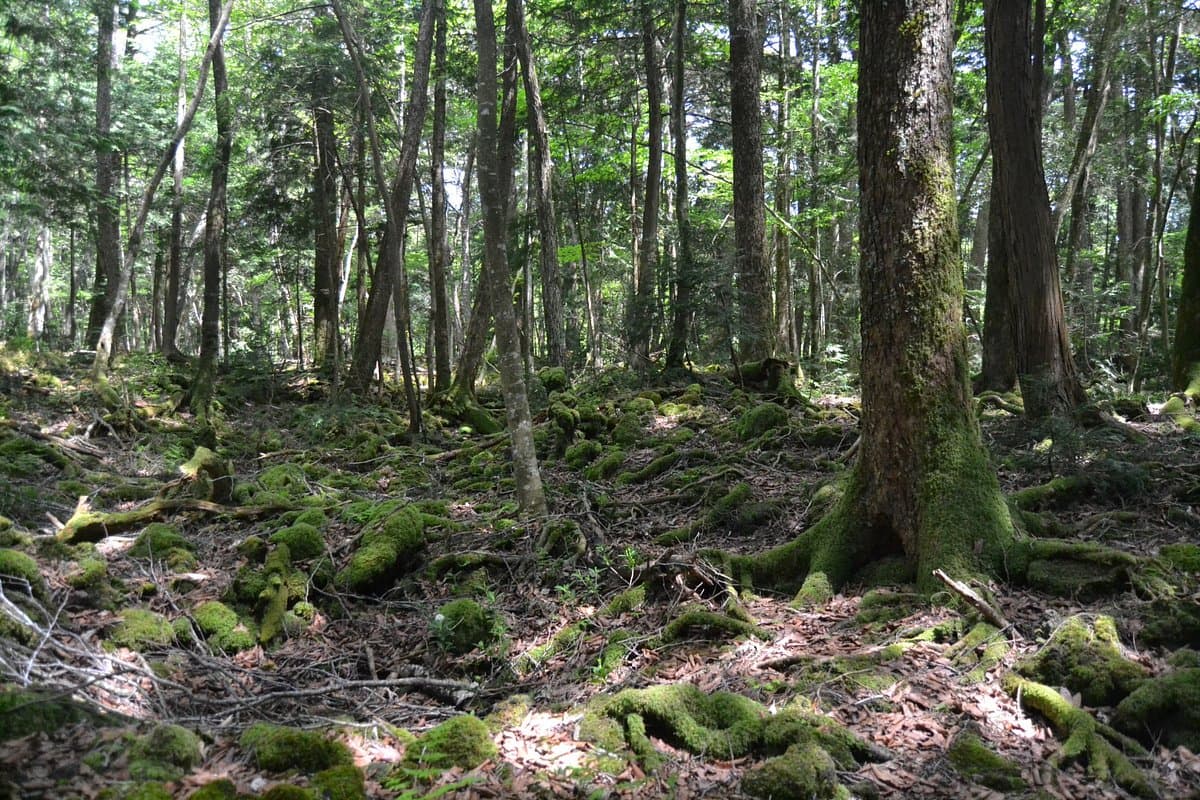
Aokigahara Forest, famously known as the "Sea of Trees" (Jukai), is a dense, ancient forest located at the northwestern base of Mount Fuji. Its unique ecosystem, characterized by trees growing on hardened lava flows from the 864 AD eruption of Mount Fuji, creates a surreal and often silent environment. Beyond its well-known, darker associations, the forest is a significant natural wonder, showcasing how life reclaims and thrives on volcanic terrain.
Visitors consistently praise the forest's profound tranquility and lush greenery. Many describe it as a beautiful, peaceful, and even magical place, with moss-covered rocks, twisting tree roots, and an abundance of ferns creating a vibrant, almost otherworldly landscape. The silence is frequently highlighted, offering a stark contrast to urban environments. Reviewers often combine their visit with explorations of the nearby Wind and Ice Caves, noting the convenience of walking between them through the forest. The unique geological features, such as trees growing out of lava crevices, are a major draw, providing excellent photo opportunities and a sense of wonder.
For a rewarding visit, wear sturdy hiking shoes, as trails can be rocky due to the underlying lava. Many suggest spending 1-2 hours exploring the designated paths, which are generally flat and easy to navigate. While the forest is beautiful year-round, visiting on a clear day allows for better views and more comfortable walking. Bringing water and snacks is advisable, as amenities within the forest are limited. Several visitors recommend combining the forest walk with a visit to the nearby lava caves (Wind Cave, Ice Cave, Bat Cave), which offer additional geological insights and can be accessed via paths through Aokigahara.
Aokigahara is easily accessible by public transport. Many visitors utilize the Retro Bus (Green Line) from Kawaguchiko Station, alighting at stops like Saiko Bat Cave or Wind Cave. A 2-day sightseeing bus ticket is often recommended for cost savings and flexibility in exploring the wider Fuji Five Lakes area. The trailheads for popular routes are typically a short walk from these bus stops. Driving is also an option, with parking available at the cave entrances.
A common concern among visitors is the forest's reputation. While the forest is indeed associated with a somber history, reviewers emphasize that sticking to the marked trails ensures a safe and serene experience. Going off-trail is strongly discouraged due to the risk of getting lost in the dense, disorienting terrain and poor cellular reception. Signage, though sometimes limited in English, generally guides visitors effectively. Some visitors mention feeling a sense of unease, but many find the natural beauty and peacefulness to be the dominant experience, urging others not to be deterred by its notoriety.