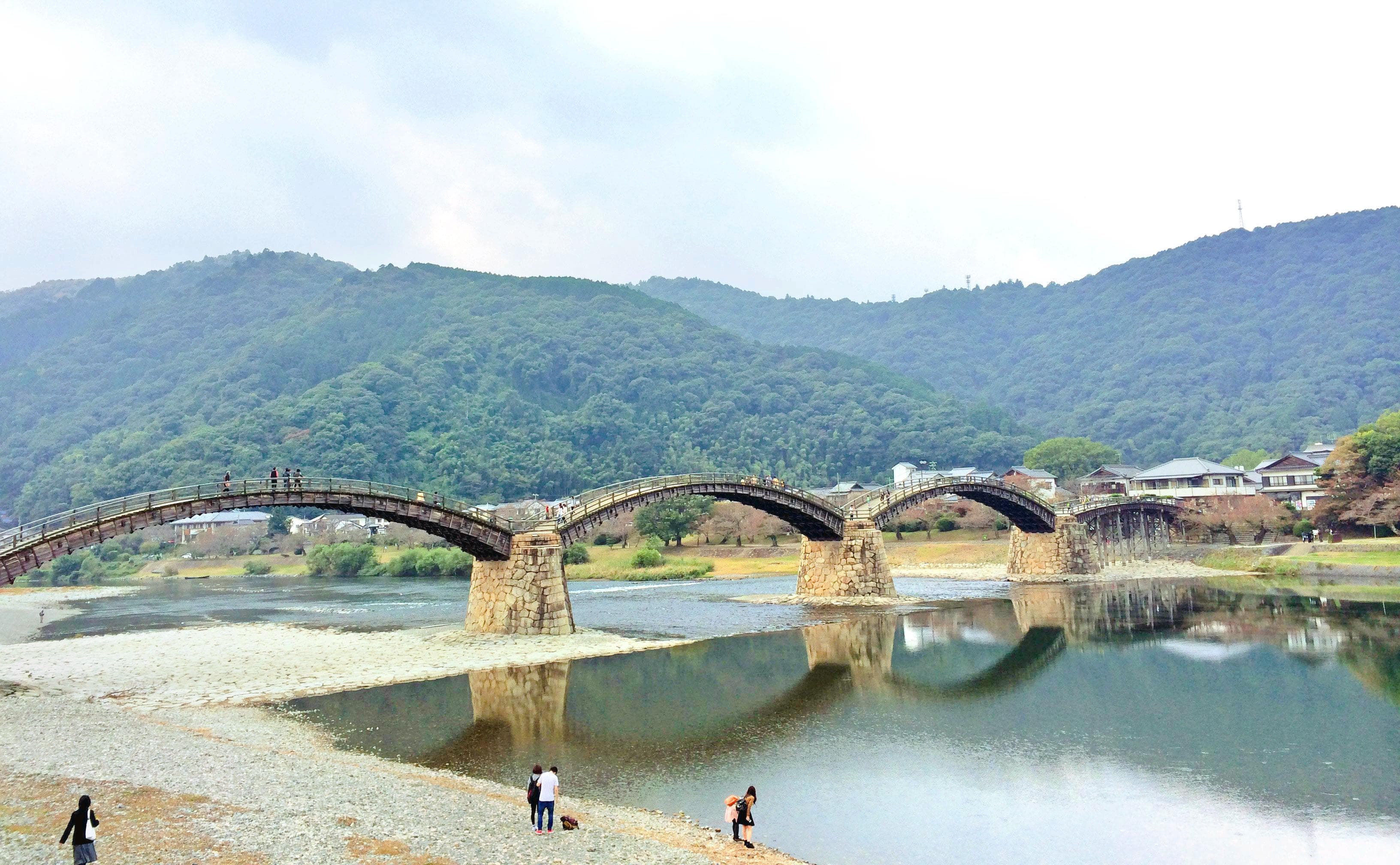
The Kintaikyo Bridge, often cited as one of Japan's three most famous and unusual bridges, is a magnificent five-arched wooden structure spanning the Nishiki River in Iwakuni. Originally built in 1673, its sophisticated interlocking timber construction, without the use of nails, showcases remarkable Edo-period engineering. Though it has been rebuilt multiple times due to natural disasters, notably after a typhoon in 1950, each reconstruction meticulously adheres to the original design, preserving its historical integrity and unique aesthetic.
Visitors are consistently captivated by the bridge's elegant arch shape and the intricate craftsmanship visible from both above and below. Many describe the experience of walking across as unique, noting the gentle slopes and mini-steps on each arch. The surrounding area, including Kikko Park and Iwakuni Castle (accessible via cable car), is frequently highlighted as enhancing the visit, offering a comprehensive half-day excursion. Reviewers often recommend purchasing a combined ticket for the bridge, cable car, and castle, which offers better value. The bridge's beauty is particularly lauded during cherry blossom season in spring and when autumn leaves change color, with many finding it a perfect spot for photography and leisurely strolls.
For a fulfilling visit, allocate about 1.5 to 3 hours, especially if you plan to explore Kikko Park and Iwakuni Castle. Many suggest visiting in the late afternoon to enjoy both daylight views and the illuminated bridge at night. Wear comfortable, non-slip shoes, as the bridge's wooden surface and steps can be slippery, especially in wet weather. Don't miss the local specialty: soft-serve ice cream with an astonishing variety of flavors, available in shops just across the bridge. To save money, consider the combined ticket for multiple attractions.
Reaching the Kintaikyo Bridge is straightforward. From JR Iwakuni Station, take a local bus (approximately 15-20 minutes, 300 yen one way) directly to the Kintaikyo bus stop, which is a short walk from the bridge. For those arriving by Shinkansen, Shin-Iwakuni Station is also an option, though less frequent Shinkansen services stop there. From Shin-Iwakuni, a bus or taxi (around 1600 yen) will take you to the bridge. While driving is an option, parking can be challenging, especially on busy days, so public transport is often recommended. The bridge itself is not suitable for strollers or wheelchairs due to its steps, so visitors with mobility concerns should be aware.
A common point of discussion among visitors is the fee to cross the bridge. While some find it a minor inconvenience, most agree it's a small price for the unique experience and maintenance of such a historical structure. Some reviewers mention that the current bridge is a relatively recent rebuild, which can temper expectations for those anticipating an entirely original 17th-century structure. However, the faithful reconstruction ensures the historical design and engineering principles are preserved, offering an authentic glimpse into its past.