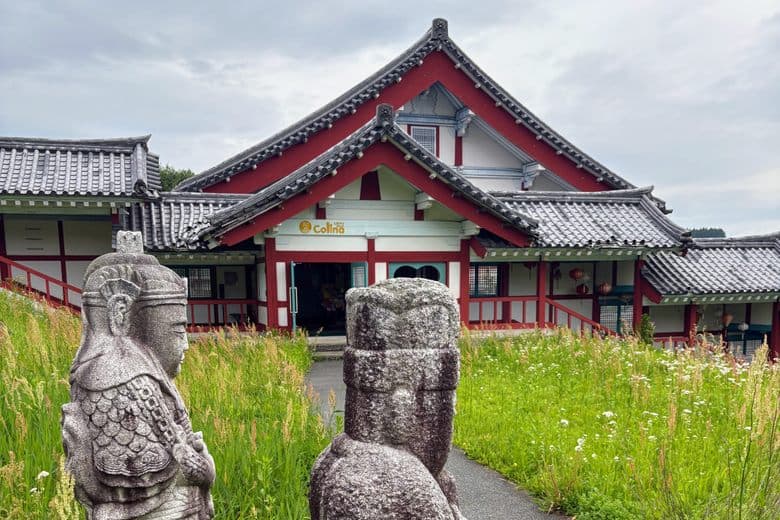
Tozawa Goryeo Hall, or Koryo-kan, is a distinctive roadside station in Japan's Yamagata Prefecture that serves as a vibrant hub for Korean culture. It stands as a testament to the historical ties between Korea and this region, particularly the significant Korean population that settled here in the mid-20th century. The complex, with its majestic curved roofs and guardian statues, offers visitors a unique cultural experience that feels wonderfully out of place in the Japanese countryside.
Visitors consistently praise the unexpected cultural immersion this site provides. Many are delighted by the wide array of Korean products available, from K-pop merchandise and beauty products to unique snacks and fizzy drinks, often remarking on the feeling of being transported to a Korean convenience store. The hanok-style restaurant, with its gorgeous turquoise ceiling, is frequently highlighted for its authentic Korean dishes like bibimbap, which reviewers find delicious and satisfying. The blend of Korean tradition with local Yamagata artistry, particularly seen in the kokeshi dolls depicting a king and queen, is also a point of interest for many.
For a fulfilling visit, plan to spend around 1-2 hours exploring the complex, including time for a meal. It's best visited during daylight hours to fully appreciate the architectural details and the surrounding views. Consider bringing a cooler if you plan to purchase perishable Korean food items. While there are no specific warnings about what to skip, visitors suggest focusing on the unique Korean offerings rather than expecting typical Japanese roadside station fare. This location is particularly appealing to those who enjoy unique cultural experiences and are open to unexpected discoveries.
Tozawa Goryeo Hall is located along a scenic drive in Yamagata Prefecture. As a roadside station (Michi-no-Eki), it is primarily accessible by car. There is ample parking available on-site. While specific public transport options directly to the hall are not widely mentioned in reviews, visitors typically incorporate it as a stop during a road trip through the region. The proximity to the Mogami River, where boat rides are available a short drive away, suggests it can be combined with other local attractions.
Common complaints are rare, but some visitors might find the selection of non-Korean items limited if they are expecting a broader range of typical Japanese souvenirs. To mitigate this, approach the visit with an open mind, focusing on the unique Korean cultural experience it offers rather than a conventional Japanese roadside stop.